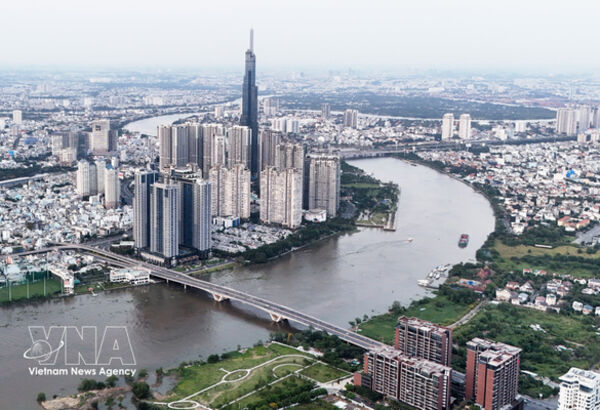
Despite mounting short-term external challenges, Vietnam’s medium-term economic outlook remains highly positive, with the country expected to continue as one of the region’s growth bright spots.
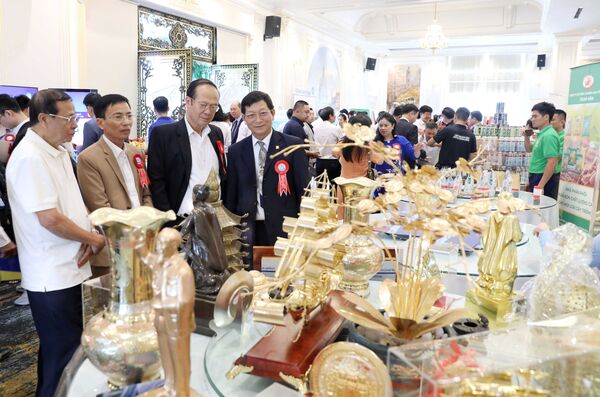
Amid the rapid growth of the digital economy and cultural industries, Vietnam’s advertising sector is entering a new phase of transformation. No longer just a communications tool, advertising now connects technology, production, branding and markets. With advances in AI, digital data, LED technology and modern printing, the industry is well positioned for breakthrough growth in the new era.
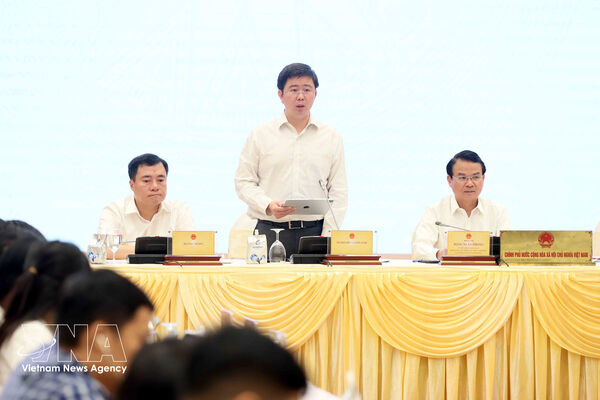
Deputy Prime Minister Nguyen Van Thang has described the foreign-invested sector as a major bright spot in Vietnam’s economy. He made the remark at the 6th Vietnam Connect Forum that took place in Hanoi recently under the theme: “Foreign-invested and domestic private sectors joining forces for sustainable growth in a new era.”
Entering the 2026–2030 period, Vietnam’s tourism industry is undergoing a strong transformation, with focus shifting from extensive growth to quality-oriented development, and the green economy and cultural experiences placed at the centre of tourism strategies.
Rather than relying solely on natural advantages, Khanh Hoa province is shifting towards a more integrated development model linking tourism, trade and investment to create new growth momentum.
The scheme defines digital technology as a foundational industry, positioning it as a key growth driver to lift productivity, quality, and national competitiveness.
Tourism experts noted that Vietnam’s affordable travel costs, attractive tourism services, scenic beaches, rich cultural heritage and diverse cuisine continue to make the country a popular destination for Chinese visitors.
The strong inflow of foreign investment is driving a recovery in recruitment demand across many key industrial hubs, particularly in electronics, precision engineering, semiconductors and logistics.
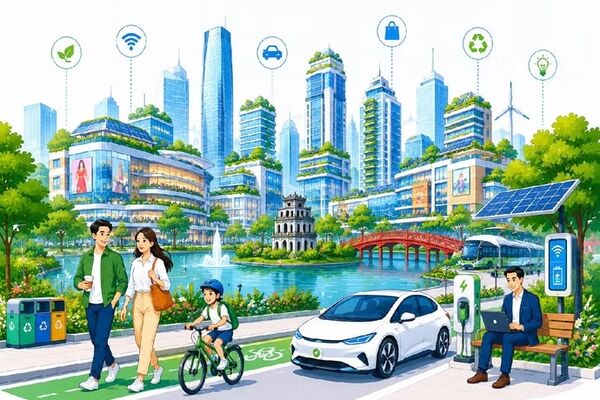
By 2035, Hanoi aims to become a green, smart and modern city, as well as an important regional centre for finance, commerce and innovation. Its gross regional domestic product (GRDP) is expected to reach approximately 200 billion USD, with per capita GRDP exceeding 18,800 USD.
A key target under the new plan is the establishment of five digital technology incubators, or Deeptech Hubs, at universities and research institutes with strong potential. The education ministry also plans to launch a training programme for 1,000 outstanding technology entrepreneurs and develop criteria for selecting and supporting startup ecosystems within educational institutions.
Vietnamese firms invested nearly 714 million USD abroad in the first four months of 2026, up 2.3-fold year-on-year, according to the National Statistics Office under the Ministry of Finance.
Bui Thi Minh Hoai was re-elected President of the the Vietnam Fatherland Front (VFF) Central Committee for the 2026-2031 tenure at the first conference of the 11th-term VFF Central Committee, held before the closing session of its 11th National Congress on May 13 morning in Hanoi.
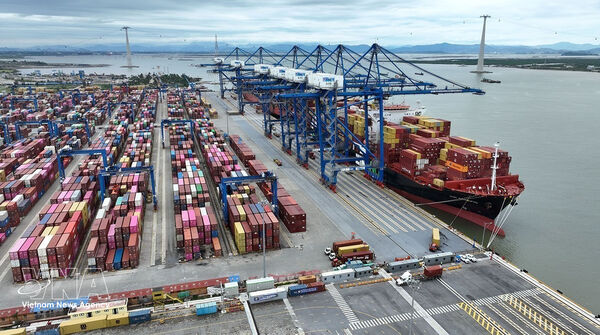
In the first four months of 2026, seven export items recorded turnover exceeding 5 billion USD, accounting for 69.1% of the country’s total export value. Among them, electronics, computers and components topped the list with 43.624 billion USD.
Party General Secretary and President of Vietnam To Lam on May 12 received a visiting delegation from Laos' Vientiane capital, led by Athsaphangthong Siphandone, member of the Lao People’s Revolutionary Party Central Committee, Secretary of the Vientiane Party Committee and Chairman of the municipal People’s Council.
The 11th National Congress of the Vietnam Fatherland Front (VFF) for the 2026-2031 term officially opened in Hanoi on May 12, with Party General Secretary and State President To Lam in attendance.
The Government and VFF Central Committee have worked in lockstep to foster great national unity, roll out social welfare, strengthen public outreach and political system building, enhance oversight and social criticism, fight corruption and wastefulness, improve legal and policy frameworks, and advance people‑to‑people diplomacy.
Through the VIPC Summit 2026, Vietnam aims to reaffirm its commitment to building a transparent, competitive and internationally integrated investment environment, while promoting new financial mechanisms and institutions to make science, technology, innovation and digital transformation strategic growth motivation in the coming years.
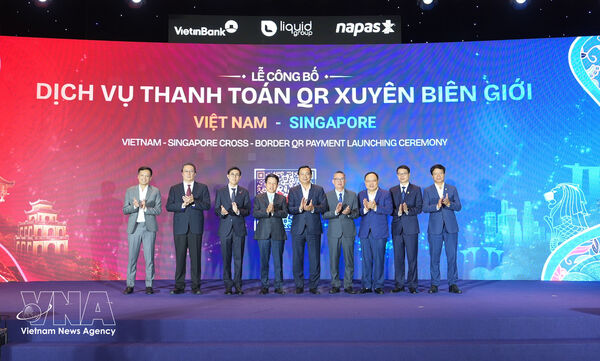
Deputy Minister of Public Security Sen. Lieut. Gen Pham The Tung told the forum that Vietnam’s financial and banking industry is racing through a digital overhaul, creating major opportunities as the country aims for double-digit growth in 2026 and beyond.
Looking ahead to 2035, Vietnam envisions becoming a comprehensive and sustainable digital nation where all transactions between citizens and government agencies are conducted online. National databases, with population data at the core, will be interconnected and efficiently utilised to support smart governance and real-time decision-making.