AI – unmissable opportunity for Vietnam: Experts
AI also emerges as a key enabler for Vietnam's ambition to build financial and technology hubs. Applications can boost efficiency, automate workflows, cut costs, and sharpen data analytics, which are essential pillars of a modern financial system.
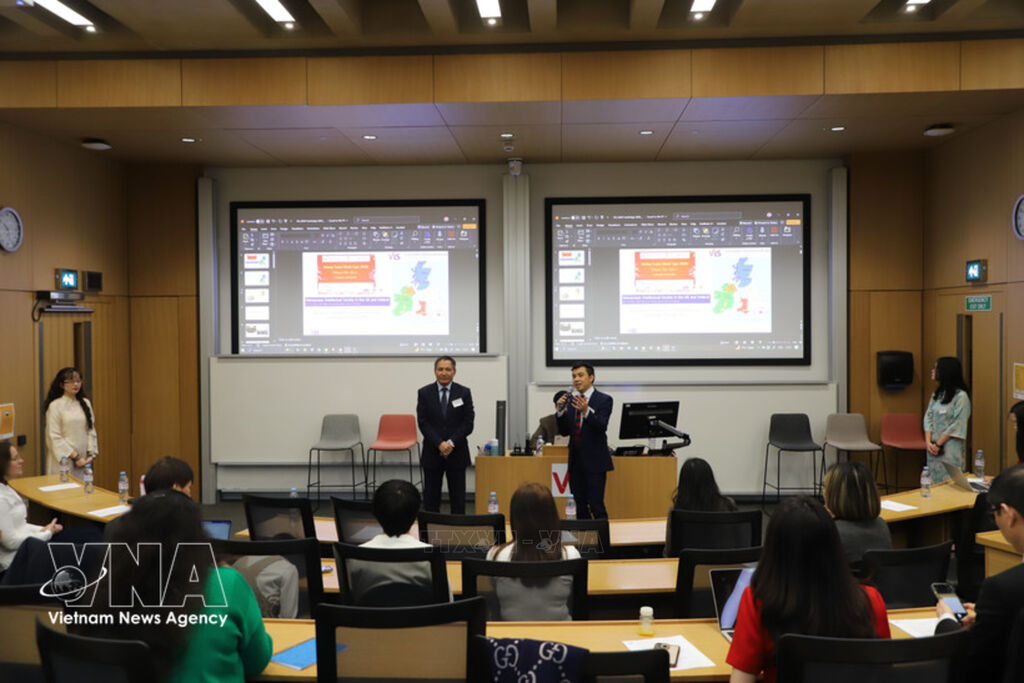
A seminar on AI use hosted by the Vietnam Intellectual Association in the UK and Ireland in February 2026. (Photo: VNA)

London (VNA) – With the Law on Artificial Intelligence entering into force on March 1, 2026, the debate has moved beyond whether to embrace the technology to how best to develop and deploy it in a systematic, effective manner tailored to national circumstances.

Technology experts from the UK, Ireland, and Denmark see Vietnam as well-positioned to advance AI, provided it acts decisively and crafts a suitable strategy.

Peter Bom, CEO of Denmark-based SMT Data, told the Vietnam News Agency’s reporters in London that the UK benefits from deep collaboration between universities and academia, producing a wealth of research that extends beyond current capabilities to projections five to ten years ahead. Vietnam stands to gain considerably by engaging proactively and adapting these insights to its local context.

Beyond research, AI use is prevalent in European corporate sectors where both triumphs and setbacks offer valuable lessons. According to Bom, there are numerous examples of companies that have successfully applied AI, experiences from which Vietnam can certainly learn.

According to experts, effective AI adoption requires a well-defined strategy, especially around data governance and identification of goals. Bom underscored the need to embrace AI while enabling firms to leverage it fully, backed by explicit policies. This starts with pinpointing precise goals and the value AI can deliver, alongside tight coordination to ensure data consistency, reliability, and verification from diverse sources.

Prof. Long Tran-Thanh from the University of Warwick noted Vietnam's solid progress relative to Southeast Asia, though a distance remains from global tech leaders

In Vietnam’s current AI landscape, the finance and banking sector leads in effective application. Yet substantial untapped potential exists in health care, education, and agriculture, which are tied to practical challenges in developing countries.

Long lauded the UK as a premier global AI research centre and a strong potential partner of Vietnam, particularly in AI training and foundational studies.

On resources for AI growth, Assoc. Prof. Dr Harry Nguyen from Ireland’s University College Cork described Vietnam as one of the proactive nations ready to capitalise on the AI surge, with notable strengths in workforce scale and quality.

Recent years have seen Vietnam establish numerous universities and AI research centres, cultivating a new cohort of young researchers and launching new projects. Specialised conferences and journals are proliferating, deepening integration into global research networks.

Overseas Vietnamese intellectuals represent another vital asset, Nguyen said, adding they always look toward Vietnam with a keen interest in contributing to its tech and AI progress.

For AI strategy, Nguyen identified quality data as the cornerstone. Building, collecting, and managing data, paired with developing large and smaller language models attuned to Vietnamese culture, will enable effective rollout across private and public sectors.

AI also emerges as a key enabler for Vietnam's ambition to build financial and technology hubs. Applications can boost efficiency, automate workflows, cut costs, and sharpen data analytics, which are essential pillars of a modern financial system.

Against that backdrop, AI transcends a passing technological fad to serve as a powerful engine for innovation and sharper economic competitiveness in the years to come./.


Related News

Resolution 57: High-tech solutions applied to tackle pollution in Hanoi’s rivers

A project to rehabilitate the Lu and To Lich rivers marks a breakthrough with the application of Germany’s modern pipe jacking technology, enabling underground construction while safeguarding existing urban infrastructure. The adoption of advanced science and technology solutions will help collect about 75,000 cu.m of wastewater each day for treatment, underscoring Hanoi’s determination to revive its rivers and move towards a digital society and a sustainable green environment.

See Also

Vietnam’s overseas investment rises 2.3-fold in first two months

During the period, 36 new overseas projects were granted investment certificates with total registered capital from Vietnamese investors reaching 532.4 million USD, up 2.3 times compared to the same period last year. In addition, three projects adjusted their capital with an additional 7.8 million USD, 1.5 times higher than a year earlier.

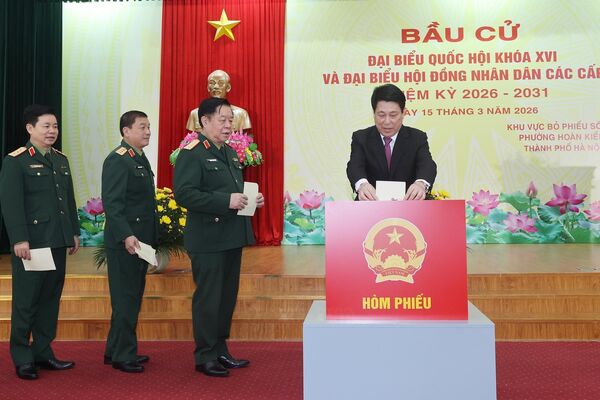
President Luong Cuong casts ballot in Hanoi’s Hoan Kien ward

State President Luong Cuong attended the opening ceremony and cast his vote in the election of deputies to the 16th National Assembly (NA) and People’s Councils at all levels for the 2026–2031 tenure at Polling Station No. 26 in Hoan Kiem ward, Hanoi, on the morning of March 15.

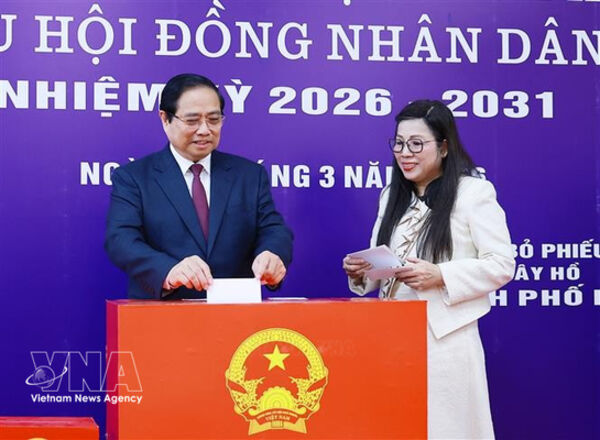
PM votes in Hanoi as nationwide election underway

Commending Tay Ho ward for its thorough preparations, particularly at Polling Station No. 21, the PM urged the election committee to facilitate early voting and ensure every eligible voter can fully exercise their rights and responsibilities.

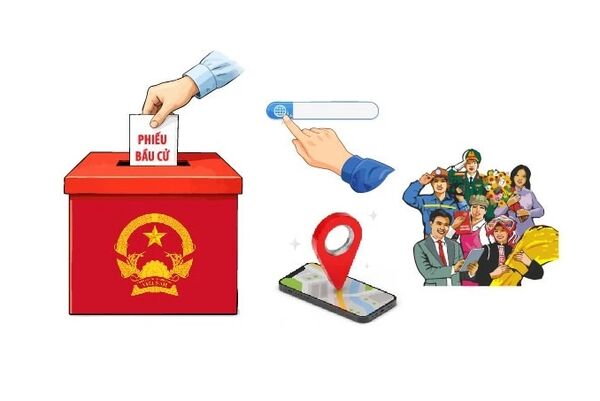
Digital map for 2026–2031 National Assembly and Hanoi People’s Council elections

To enhance public communication and promote digital transformation in election work, the Hanoi chapter of the Vietnam Fatherland Front has introduced a digital map of information on the election of deputies to the 16th National Assembly and the Hanoi People’s Council for the 2026–2031 term. The digital map helps expand the application of information technology and digital transformation in providing services and information to voters across the city.

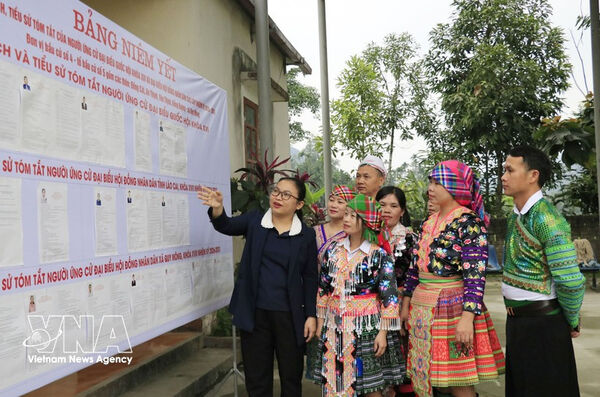
The choice that heralds a new tenure

Choosing "the right representatives"—deputies with integrity, talent, vision, and the courage to act and take responsibility—will enhance the operational quality of the NA and People’s Councils, ensuring the efficiency and effectiveness of the state apparatus over the next five years.

PM calls for accelerated space technology development in Vietnam

Vietnam aims by 2030 to achieve a mid-level position in space science and technology development within Southeast Asia, and after 2030 to build national capabilities to independently develop satellite technologies and apply space data to address global challenges and national security needs.

Vietnam affirms capability, standing in UN peacekeeping operations

This marks the first time a Vietnamese peacekeeping training course has been recognised by the UN as meeting its standards, representing a significant milestone in the country’s training capacity and international integration in the peacekeeping field. The recognition highlights not only the professional achievements of the organising unit but also Vietnam’s capability, responsibility and credibility in fulfilling international commitments to peace and security.

Hanoi adorned with flags and flowers ahead of election day

On March 15, 2026, voters nationwide will elect deputies to the 16th National Assembly and People’s Councils at all levels for the 2026–2031 tenure. The event is a major political occasion, allowing citizens to exercise their democratic rights and choose representatives for the next five years.