 |
| Indian actresses in a shoot in Vietnam (Photo: nhandan.vn) |
Hanoi (VNA) – Recently, major Indian film projects have opened up exciting opportunities to showcase Vietnam's stunning landscapes and rich culture to global audiences, choosing locations across Quang Tri, Ninh Binh, Da Nang, Cao Bang, and other areas.
Building on the success of "Love in Vietnam", the first official India – Vietnam co-production released in 2025, the upcoming "Silaa" and related projects are filming extensively in Quang Tri, Ninh Binh, Cao Bang, and Quang Ninh provinces. These productions go beyond scenic backdrops by weaving in local culture, presenting Vietnam as a vibrant and lived-in destination.
In contrast to past international shoots that relied solely on vistas while sidelining local talent, these Indian films feature Vietnamese actors, thus enhancing authenticity and narrative depth. Crews have also agreed to create promotional tourism clips for screening at 1,000 Indian cinemas.
Quang Tri has gained spotlight attention, with "Silaa" choosing Son Doong Cave, En Cave, the Tu Lan cave system, and Phong Nha Cave as key sites. To optimise this opportunity, the central province is working closely with the Ministry of Culture, Sports and Tourism, the Phong Nha - Ke Bang National Park management board, and private companies to support the film crew.
At a recent international conference in Ninh Binh, Bollywood directors and producers praised many Vietnamese localities for their potential as major regional filming hubs.
Deputy Minister of Culture, Sports and Tourism Ho An Phong highlighted Vietnam's strong advantages, affirming that selections by leading film nations will drive inbound tourism, particularly from India.
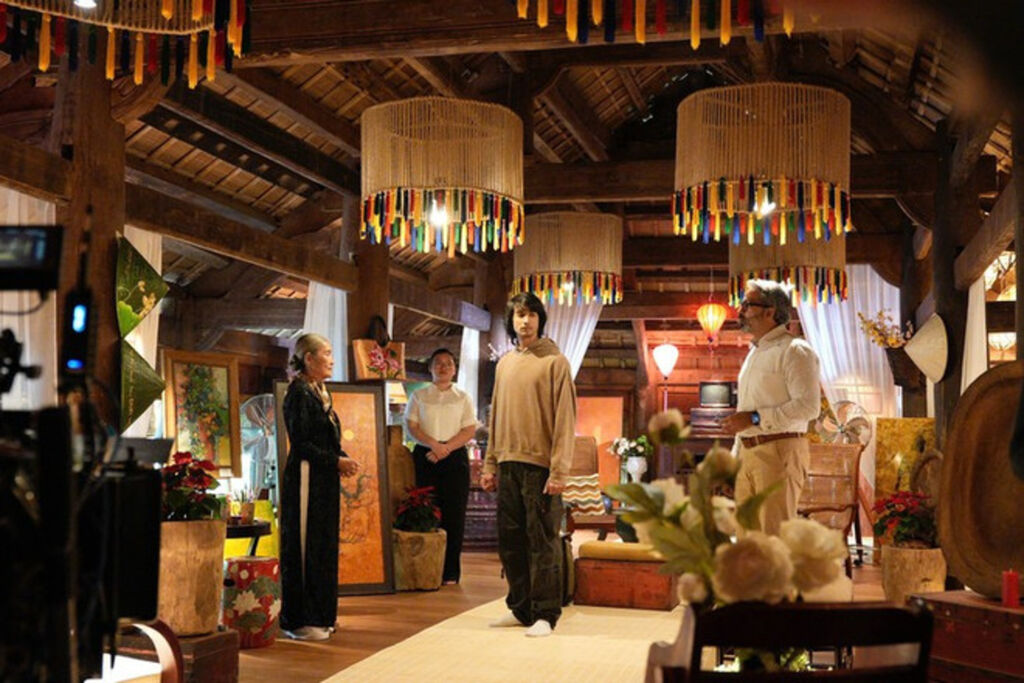 |
| Vietnamese and Indian actors in a scene (Photo: nhandan.vn) |
Many cities and provinces are ramping up infrastructure, tourism facilities, and support services to accommodate incoming productions, aligning with broader goals to tie cinema to sustainable tourism development.
Indian experts noted that Bollywood's output of about 1,500 films annually reaches vast audiences in South Asia, the Middle East, Africa, and parts of Europe, making each Vietnam-shot movie equivalent to a high-impact marketing campaign far cheaper than conventional ads.
Nguyen Trung Khanh, Director of the Vietnam National Authority of Tourism, called for coordinated incentives like tax rebates or cost subsidies, modelled on Thailand and the Republic of Korea (RoK), to attract more crews. He added that filming permits, equipment rules, and access to heritage or protected sites must be simplified, transparent, and uniform nationwide to reduce delays and build producer confidence.
Vietnam should also invest in film infrastructure, including modern studios, post-production facilities, internationally compliant gear storage, and skilled local crews focused on safety, he said.
Experts recommended that filming destinations proactively develop "film tourism" products such as themed trails, guided tours, photo spots, exhibitions and performances tied to the films to prolong promotional effects. Coordinated campaigns should enlist stars, directors, and crews as ambassadors while amplifying digital outreach in key markets like India, the US, and the Republic of Korea.
Another priority is safeguarding sensitive environments and heritage, particularly caves, forests, and world heritage sites, through rigorous crew management, site monitoring, waste management, and safety protocols to maintain pristine conditions.
Ultimately, they advocated an intersectoral coordination mechanism involving the Ministry of Culture, Sports and Tourism, local authorities, tourism and film companies, and international partners to shape a long-term vision. Once cinema and tourism are strategically connected can Vietnam emerge as an appealing destination for global filmmakers and strongly popularise its image, substantively contributing to economic growth and cultural value promotion./.