 |
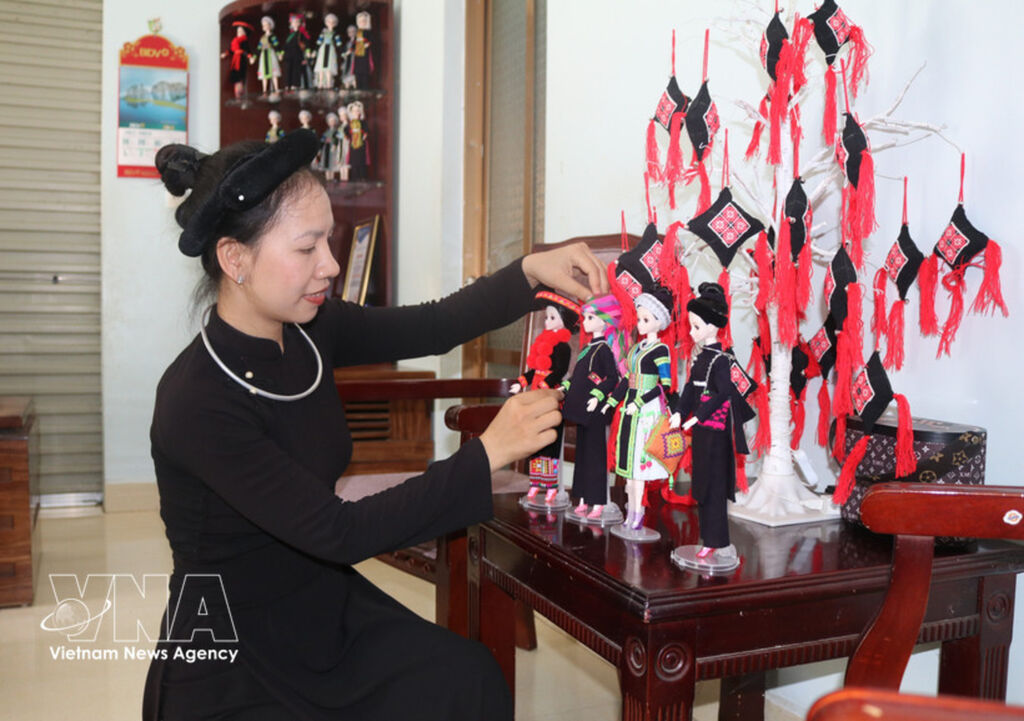
| Tran Thi Xuan Quynh with “peace amulet” products of Red Dao ethnic minority people in Cao Bang province (Photo: VNA) |
Cao Bang (VNA) – Amid rapid industrial development, many traditional cultural values face the risk of fading. Yet in Cao Bang, local communities have steadfastly preserved traditional crafts, bringing indigenous products to domestic and international markets and helping to create a distinctive tourism identity for the mountainous province.
Craft villages – a highlight for visitors Beyond its majestic landscapes, Cao Bang attracts visitors through the opportunity to experience local culture, particularly in traditional craft villages.
French tourists Davir and his wife Liero said this is their second visit to explore Phja Thap incense village, Dia Tren paper-making village, Phuc Sen indigo dyeing village, and Luong Noi brocade weaving village.
The people here are gentle, diligent, and their skilful hands produce exquisite, eco-friendly products, Davir said. Brocade weaving is among the province’s most emblematic crafts. Tay artisan Nong Thi Thuoc from Luong Noi village has been working at the loom for over 50 years.
Weaving brocade requires patience and precision; each pattern draws inspiration from nature, such as rice flowers, bird wings, and streams, she said, adding that artisans must remember every detail to weave from the reverse side without a template, and a single piece can take several days.
Though modest in economic value, she preserves the craft as a treasured heritage. Brocade items such as scarves, bags, and decorations are increasingly popular with tourists. The Dao Tien people in Hoai Khao are known for their wax-resist technique on indigo fabric, producing white patterns on deep blue.
The Nung An community in Quang Uyen forms much of the workforce in incense, handmade paper, and indigo dyeing villages. In Dia Tren paper-making village, families have practised the craft for decades, completing all stages from soaking bark and pounding pulp to sheet formation.
The durable, ivory-white paper is used in daily life and traditional ceremonies. Linking cultural preservation with sustainable tourism From vibrant brocade and fragrant herbal incense to rustic handmade paper, each product tells the story of its community. In recent years, alongside tourism, many traditional values have become tourism products.
Locals both preserve heritage and innovate to share the province’s unique identity. In 2025, Cao Bang’s pavilion at the First Autumn Fair showcased artisans performing traditional Then singing, playing the Tinh (a traditional Vietnamese music instrument), brocade weaving, and culinary demonstrations, attracting large crowds. Cultural products are widely promoted at fairs and tourism events.
From brocade and herbal incense to local foods such as rolled cakes, black jelly, rice crackers, and smoked sausages, these offerings enrich the cultural landscape. According to Deputy Director of the provincial Department of Culture, Sports and Tourism Nong Thi Tuyen, these crafts have become “ambassadors” promoting Cao Bang’s tourism image. At renowned sites such as Ban Gioc Waterfall, Pac Bo relic site, and Mat Than Mountain, visitors not only admire the scenery but also engage in cultural activities organised by locals. In Khuoi Ky ancient stone village, many Tay households have developed community-based tourism, inviting visitors to make traditional cakes, hear local stories, and enjoy Then singing and Tinh performances. These experiences deepen understanding of local culture and add meaning to travel.
Ethnic minority communities not only preserve crafts but also actively teach younger generations. Then singing clubs, brocade weaving groups, and culinary teams attract wide participation, integrating heritage into daily life. Many families have turned traditional crafts into businesses, gradually transforming cultural values into economic products. Cao Bang now has 174 One Commune One Product (OCOP) items, over half produced or initiated by locals, including brocade, black jelly, five-coloured rice noodles, and tourism souvenirs, with improved designs, quality, and markets.
These initiatives align with Cao Bang’s strategy to preserve cultural heritage while fostering socio-economic development. The provincial People’s Committee emphasises linking preservation with tourism to create sustainable livelihoods. In Quang Uyen commune, craft village workers maintain traditional identities while innovating products for tourism, increasing incomes.
From traditional clothing and signature dishes to the traditional Then singing, ethnic minority communities in Cao Bang quietly preserve local culture. Through skill, diligence, and pride, they safeguard heritage while serving as “cultural ambassadors,” promoting Cao Bang and advancing sustainable cultural and socio-economic development./.