 |
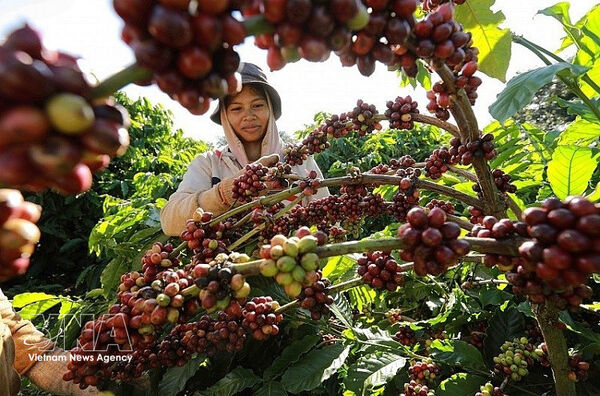
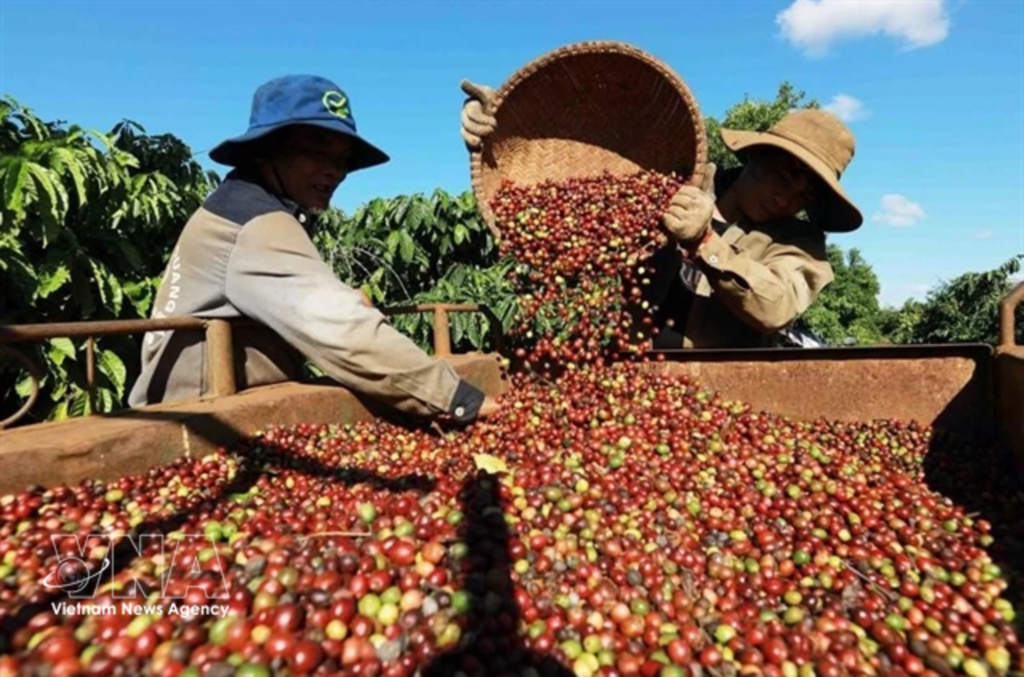
| Farmers harvesting coffee.(Photo: VNA) |
Hanoi (VNS/VNA) - Vietnam is one of the world’s leading coffee exporters and the largest producer of Robusta coffee, yet it captures only a limited share of industry value as most coffee is exported raw while the highest profits lie in processing, trading and branding.
This imbalance has become one of the defining challenges facing the industry. As global consumers place greater emphasis on quality, traceability and sustainability, Vietnam is increasingly looking beyond export volumes and seeking ways to create more value from every bean it produces.
Against this backdrop, the Global Coffee Alliance (GCA) sees an opportunity for Vietnam, particularly the Central Highlands, to become a global coffee hub that brings together every stage of the value chain from production and processing to technology, culture and tourism.
Behind this vision lies a fundamental challenge that has long limited the development of Vietnam’s coffee industry: information asymmetry.
A representative of Intimex Buon Ma Thuot told the Thoi bao Ngan hang (Banking Times) online newspaper that the industry's biggest weakness today is not technology or capital but a lack of transparency and equal access to information.
“Farmers have little access to market data. They sell based on prevailing purchasing prices but often lack visibility into long-term market trends and consumer demand. International buyers, meanwhile, typically have a much clearer understanding of such information,” the company noted.
As a result, coffee growers often find themselves in a reactive position when prices fluctuate. When prices rise, they rush to sell to secure profits. When prices fall, they often lack the information needed to determine whether they should hold inventory or adjust production strategies.
This dynamic has made the coffee value chain less resilient and more difficult to upgrade, he said.
It is against this backdrop that the GCA has introduced the concept of Coffee Citizens, a digitally connected network designed to bring together all stakeholders in the coffee ecosystem.
The model aims to connect farmers, cooperatives, processors, exporters, retailers and consumers through a shared digital infrastructure. Information related to cultivation, harvesting, processing and distribution would be digitised and made transparent across the entire supply chain.
Le Hoang Diep Thao, CEO of King Coffee, said the model's core value lies in closing the information gap that has long disadvantaged farmers. Greater transparency would allow farmers to play a more active role in the value chain rather than remaining its weakest link, she said.
Despite its potential, turning the Coffee Citizens vision into reality will not be easy.
One of the biggest challenges is technological infrastructure and digital adoption. Most coffee farms in Vietnam remain small-scale operations and many farmers have limited digital capabilities. Without strong support from businesses and government agencies, participation in a digital ecosystem may prove difficult.
Data standardisation and verification also present significant challenges. Any global platform requires common standards to ensure that information remains accurate, consistent and trustworthy.
Ultimately, technology is only a tool. The more important task is creating governance mechanisms and building trust among participants. Without trust and collaboration, even the most advanced digital systems will struggle to deliver meaningful results.
Despite these challenges, industry leaders believe initiatives such as the GCA and the Coffee Citizens model could help reposition Vietnam’s coffee sector.
Rather than competing primarily on volume and low costs, the industry has an opportunity to compete on quality, transparency and value creation in line with evolving global consumer expectations./.