 |
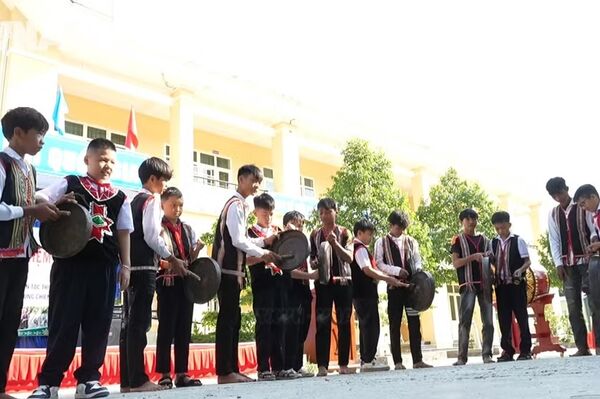
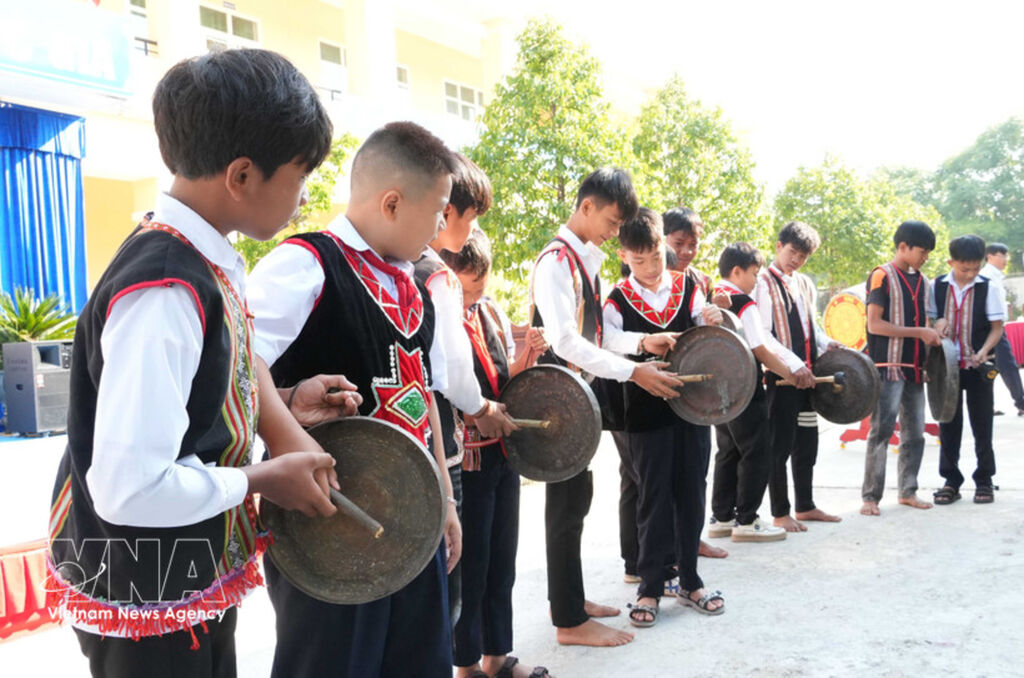
| Quang Ngai introduces gong culture and xoang dance into schools, helping preserve, promote and spread the value of traditional cultural heritage. (Photo: VNA) |
Hanoi (VNA) – The Politburo’s Resolution No. 80-NQ/TW on the development of Vietnamese culture is a significant policy breakthrough, with its commitment to allocate at least 2% of annual state budget expenditure to create new momentum for sustainable national development.
Policy breakthrough for cultural development
Resolution 80 affirms that investment in culture is investment in the country’s future and sustainable growth, while calling for a fundamental shift in the mobilisation of resources for cultural development, with the State taking a leading role.
A key target outlined in the resolution is to ensure adequate funding for culture by earmarking at least 2% of the total annual state budget expenditure for the sector, with allocations set to increase gradually in line with practical demands. The move demonstrates the State’s role not only as a funding provider but also as a driver of the broader cultural investment ecosystem.
For the first time, a Party resolution has introduced a specific spending threshold for culture, marking a shift from investment that is tied to a binding financial commitment. The policy reflects the view that culture should stand alongside the economy as a pillar of national development.
Public investment priorities under the resolution include grassroots cultural activities, heritage preservation, innovation, human resource development, cultural industries and digital technology applications.Vietnam also plans to continue upgrading cultural infrastructure, prioritising national-scale institutions such as museums, theatres and arts centres, while improving the effectiveness of grassroots cultural and sports facilities suited to different regions and ethnic groups.
At its first session, the 16th National Assembly adopted a resolution on Vietnamese cultural development, reaffirming the minimum 2% budget allocation and encouraging greater mobilisation of social resources for the sector.
According to Minister of Culture, Sports and Tourism Lam Thi Phuong Thanh, the NA resolution helps institutionalise three key breakthroughs identified in Resolution 80, namely improving mechanisms to mobilise cultural resources, nurturing cultural and artistic talent, and promoting science, technology, innovation and digital transformation to generate new drivers for cultural growth.
Focus on effective spending
Discussing the 2% allocation policy, National Assembly deputy from Ninh Binh province Tran Van Khai said the policy is necessary, but that implementation will depend on how resources are distributed.
He stressed that attention should be paid to funding allocations for grassroots cultural institutions, heritage conservation, digital transformation, digital cultural security and digital workforce training. Without clear priorities, the policy risks meeting spending targets without delivering strategic impact, he warned.
Associate Professor Dr Bui Hoai Son, a standing member of the NA’s Committee for Cultural and Social Affairs, described the minimum 2% commitment as a major step forward in policymaking, reflecting a more comprehensive understanding of culture’s role in national development.
However, he emphasised that higher spending alone would not automatically translate into better outcomes. The decisive factors, he said, are how resources are managed, which priorities are selected and how oversight mechanisms are enforced.
“If resources are spread too evenly without focus, it will be difficult to create breakthroughs,” Son said, calling for a results-oriented approach to cultural investment governance.
He proposed three priority areas for investment. The first is people, including artists, artisans, grassroots cultural workers, managers, cultural-industry personnel, and young creative talent. The second is essential cultural infrastructure, especially in the digital sphere, such as libraries, museums, theatres, creative spaces, data infrastructure and heritage digitisation platforms.
The third priority is strategic programmes with broad social impact, including safeguarding endangered heritage, commissioning major cultural works, supporting key cultural industries and promoting Vietnam’s cultural brand globally.
According to Son, concentrating resources on areas with strong spillover effects would generate far greater impact than equal distribution across sectors.
He also highlighted the need to rethink how cultural investment is measured. Success, he said, should be assessed not only by completed projects or disbursed funds, but also by broader benefits such as improved public access to culture, stronger community ties, better heritage protection, greater market reach for cultural products, and enhanced Vietnam’s national image.
In his view, the 2% allocation should be regarded not simply as public spending, but as a strategic investment in soft power, human development and the country’s long-term sustainability.To maximise effectiveness, he called for transparent allocation criteria, clear accountability, and the use of State funding as seed capital to attract additional social investment./.