 |
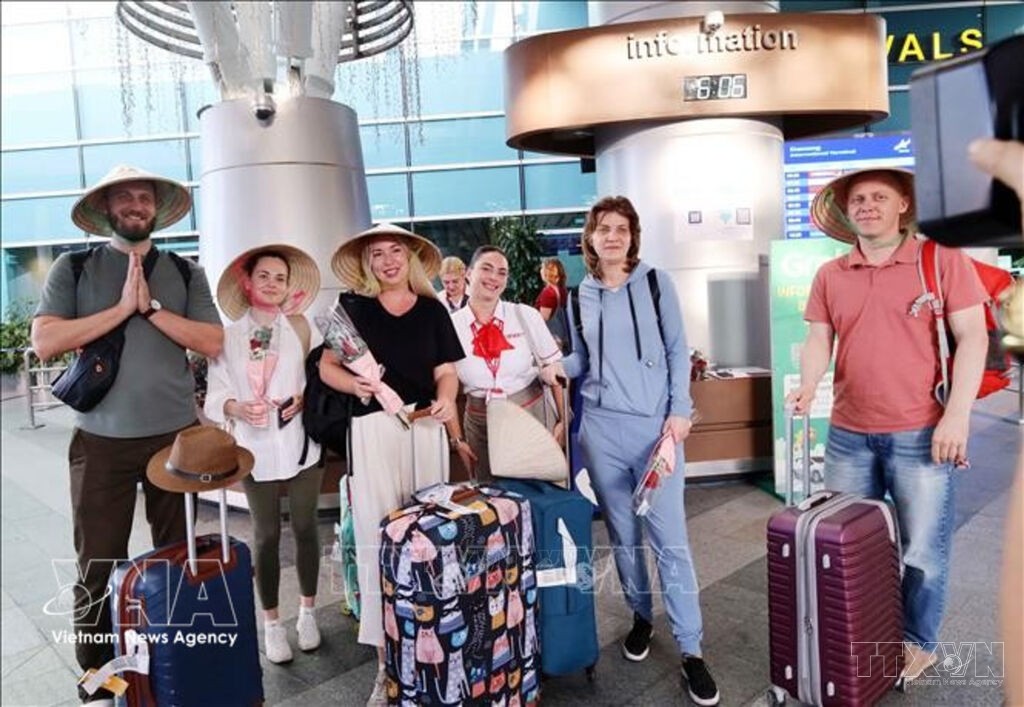
| In the first eight months of 2026, Da Nang welcomed more than 411,000 visitors from Russia and other CIS countries, up 94.2% year on year and accounting for around 5.8% of the city's total international arrivals. Russian arrivals alone reached nearly 300,000, up 151.4%, making Russia the city's seventh-largest international tourism market. Da Nang's tourism sector is stepping up efforts to tap the Russia and CIS markets, focusing on long-stay and high-spending visitors while expanding air connectivity, digital promotion and tourism products tailored to market demand. (Photo: VNA) |
Da Nang (VNA) – The central city of Da Nang is stepping up efforts to tap the Russian and Commonwealth of Independent States (CIS) tourism markets as visitor numbers from the region rebound strongly, helping diversify the city's international tourist base.
Nguyen Thi Hoai An, Deputy Director of the city's Department of Culture, Sports and Tourism, said Da Nang welcomed more than 411,000 visitors from Russia and other CIS countries in the first eight months of 2026, up 94.2% year-on-year and accounting for about 5.8% of total international arrivals.
Russian arrivals alone reached nearly 300,000, soaring 151.4% and making Russia the city's seventh-largest international tourist market.
The strong rebound has boosted not only visitor numbers but also demand for beach resorts, wellness, gastronomy and cultural experiences in Da Nang and Hoi An. Visitors from the region also tend to stay relatively long, making them a good fit for the city's resort-oriented tourism products, An said.
Improved air connectivity has been a key driver. During summer 2026, there were 16 flights from CIS destinations to Da Nang a week, while charter flights from several Russian cities were also operated.
Digital promotion has further boosted visibility. A campaign on the Yandex ecosystem reached about 17.2 million users in Russia and the CIS, generating 63.4 million impressions. Searches for Da Nang on Yandex nearly tripled during the campaign compared with the same period last year.
Thu Nguyen, Business Development Director at Yandex Ads Vietnam, said destination stability, visa policies and promotion were important factors in tourists' choices.
She suggested Da Nang focus not only on visitor numbers but also on target segments, spending capacity and travel preferences to develop suitable products and avoid being positioned as a low-cost destination.
For the rest of 2026, Da Nang plans to work with airlines, travel firms and market partners to sustain Russian and CIS arrivals while developing higher-value products combining beach holidays, wellness, golf, gastronomy, culture and heritage.
The city also plans to organise famtrips and presstrips, support air connectivity, maintain promotion on Yandex and prepare to attend MITT Moscow 2027, strengthening its presence in the market and encouraging local businesses to develop and promote tourism products.
In the first eight months, Da Nang's accommodation establishments served about 14.25 million visitors, up 24.9% year-on-year, while accommodation and catering revenue reached approximately 46.93 trillion VND (1.83 billion USD), up 25.1%.
The city aims to welcome more than 19.1 million visitors in 2026, including around 8.7 million foreigners, while improving the quality of tourism growth and enhancing the sector’s contribution to the city’s economy./.