 |
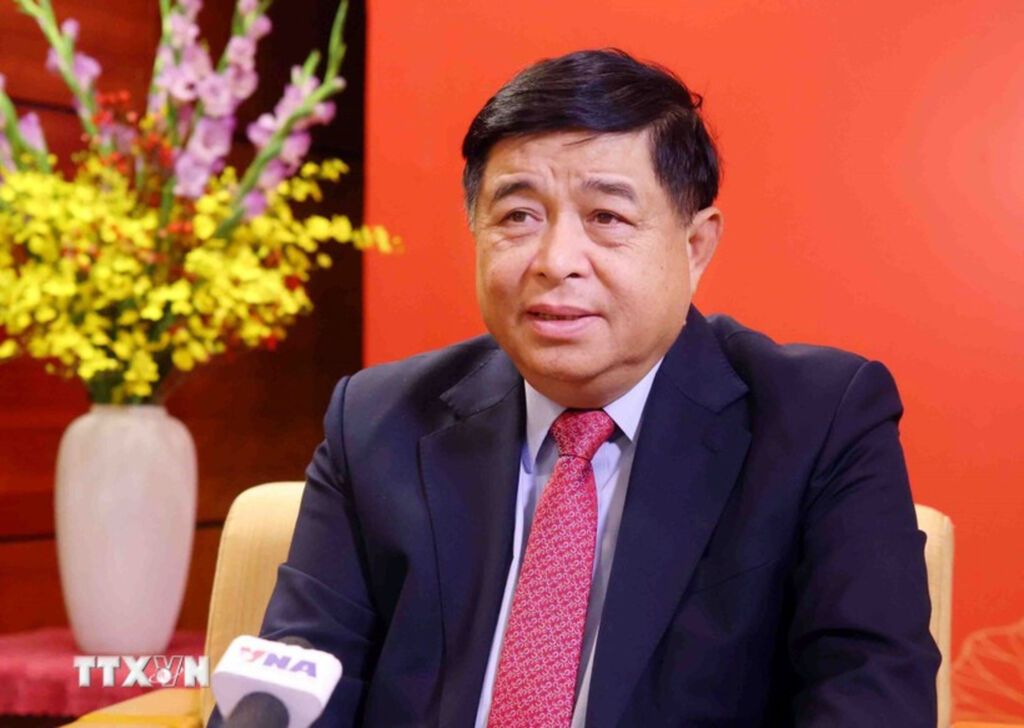
| Deputy Prime Minister Nguyen Chi Dung (Photo: VNA) |
Hanoi (VNA) - Deputy Prime Minister Nguyen Chi Dung affirmed determination to build a clean and strong Government’s Party Organisation, pooling the collective strength to successfully bring the the 14th National Party Congress’s Resolution to life during an interview recently granted to the Vietnam News Agency.
Dung, who is also member of the Party Central Committee and member of the Government Party Committee’s Standing Board, outlined three key solution groups to achieve the three strategic breakthroughs mandated by the 14th Party Congress.
The first centres on bold institutional breakthrough to dismantle obstacles and unleash resources. He underscored a resolute shift away from the restrictive mindset of prohibiting what cannot be tightly controlled, moving instead from ex-ante controls to ex-post supervision, and from a management-oriented approach to a pro-development one. Decentralisation and delegation of authority will accelerate at both central and local levels. Key priorities include advances in sci-tech, innovation, and digital transformation; growth across private, state and foreign-invested sectors, nurturing startup ecosystem, new production forces, along with new business models and production methods.
The second is a focus on highly skilled workforce and talent retention. This entails building a contingent of officials with integrity and competence matching their responsibilities, armed with innovative thinking, strategic vision, modern governance capacity, and a deep commitment to public service.
The third involves sustained, sweeping upgrades to socio-economic infrastructure, particularly strategic transport infrastructure like the North–South high-speed railway, urban rail systems in Hanoi and Ho Chi Minh City; rail links with neighbouring countries, expressways, and airports such as Long Thanh, Gia Binh, and Phu Quoc; and major seaports like Lien Chieu and Can Gio. Parallel efforts will target technology infrastructure encompassing data centres, artificial intelligence, and 5G rollout, alongside energy systems. Such investments are deemed essential to sustaining double-digit economic expansion in the years ahead and realisng the ambition of attaining developed, high-income status by 2045.
As Vietnam enters a new stage of development, he said the Government Party Committee has identified sci-tech, innovation, and digital transformation as a key breakthrough to enhance national governance capacity, while laying the groundwork for rapid and sustainable growth.
According to him, core priorities include overhauling mindsets, leadership approaches, and management practices throughout the entire system for greater flexibility and effectiveness through the use of technology and digital data.
Special focus will fall on building a contingent of officials at all levels, particularly those at strategic level and agency heads with deep expertise in sci-tech and innovation.
Reforms in the formulation and issuance of schemes and action plans will ensure the Party’s policies and guidelines on these fronts yield maximum results, converting them into actionable steps across sectors and agencies.
Administrative reform, IT application, and digital transformation will gain momentum, supported by a unified, integrated, and interoperable data system to facilitate seamless access, sharing, and use.
The last is developing digital, knowledge-based and circular economies with high value added, while hastening digital transformation, green and energy transition in tandem with workforce upskilling.
Building on these foundations, the Government Party Committee will continue driving strong changes in awareness and action among officials and Party members, positioning them as trailblazers in sci-tech, innovation, and digital transformation, contributing to building a modern, transparent, and effective public administration, Dung said.
On Party building, he highlighted upcoming efforts to build a politically, ideologically, and ethically strong Party, tightly linked to the ongoing studying and following of Ho Chi Minh thought, morality, and style. This is a continuous and central task directly underpins the Party Organisation’s internal strength.
A major anticipated advance lies in personnel work and Party building. Emphasis will target enhanced personnel training, planning, assessment, rotation, promotion, appointment, deployment, and incentive policies.
Inspection, supervision, and Party discipline enforcement will see marked improvements in quality and efficacy, coupled with intensified campaigns against corruption, wastefulness, and other malpractices.
The Government Party Committee urged all subordinate Party committees, organisations, officials, and members throughout its structure to unite closely, act with shared resolve, bolster self-reliance and confidence, embrace proactive renewal and innovation, and pursue decisive breakthroughs, with unwavering commitment to forging a thoroughly clean and strong Party Organisation within the Government, he added./.