 |
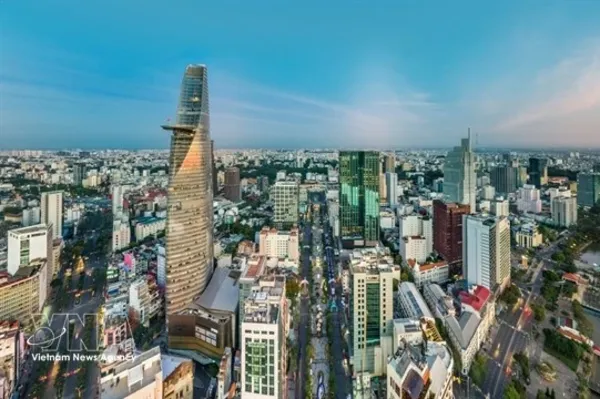
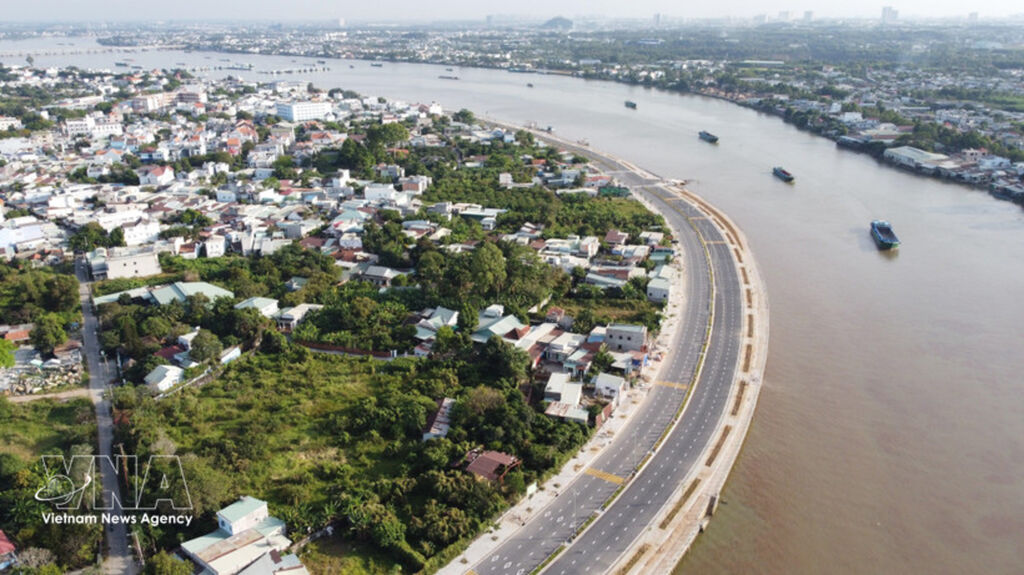
| The Dong Nai River corridor economic axis, along with the Free Trade Zone and the Airport Urban Area, is expected to become a new growth pole for Dong Nai. (Photo: VNA) |
Hanoi (VNA) – Lawmakers on April 20 showed strong support for a plan to establish Dong Nai as a centrally-run city, saying the southern locality is well-placed to become a major growth hub for both the Southeastern region and the country.
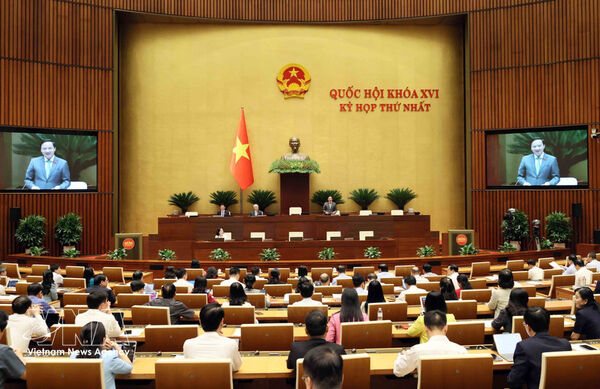
At the ongoing first session of the 16th National Assembly (NA), deputies discussed the Government’s proposal, noting that Dong Nai meets all statutory criteria and holds significant potential thanks to its strategic location, robust economy, and rapidly improving infrastructure.
According to the Government proposal, Dong Nai serves as a vital gateway linking Ho Chi Minh City with the Central Highlands, the south-central coastal region and the Mekong Delta. With an increasingly modern transport network, expanding industrial base and logistics services, as well as the under-construction Long Thanh International Airport, the province is emerging as a multi-centre, multi-functional urban area with strong regional spillover effects.
Deputies agreed that upgrading Dong Nai to a centrally-run city would mark a major shift in development and governance, enabling it to better connect with and complement Ho Chi Minh City while enhancing its role as a regional connectivity hub and a gateway for international integration.
General Phan Van Giang, Deputy Prime Minister and Minister of National Defence, emphasised that Dong Nai not only meets urban criteria but also holds strategic importance in national defence and security. He highlighted the role of Long Thanh airport and key locations such as Long Binh and Tri An Lake in strengthening the defence posture.
Economically, Dong Nai ranks among the country’s top localities, with GRDP standing fourth nationwide and per capita GRDP fifth.
NA deputy Tran Hoang Ngan noted that the province currently hosts 58 industrial parks with over 2,800 projects worth some 37 billion USD, with plans to expand to 89 industrial parks alongside an economic zone and a high-tech park.
However, the lawmaker stressed the need for careful planning to ensure sustainable development. Ngan underlined the importance of managing industrial wastewater and solid waste to protect the Dong Nai River, a crucial water source for the entire Southeastern region.
He also called for stronger policies on worker housing, suggesting the development of rental housing clusters and dormitories to accommodate the mobile labour force.
Vice Chairwoman of the NA’s Committee for Legal and Judicial Affairs Nguyen Thi Thuy said the upgrade would create new momentum for Dong Nai to grow, contributing more effectively to regional and national development.
Vu Hong Van, Secretary of the Dong Nai Party Committee, emphasised the province’s readiness to serve as a driving force for growth, aiming for budget revenues of 150 trillion VND this year.
If approved, Dong Nai will become Vietnam’s seventh centrally-run city, opening up a new development space for the Southeastern region and the country as a whole. The six existing centrally-run ciites are Hanoi, Hai Phong, Hue, Da Nang, Ho Chi Minh City and Can Tho./.