 |
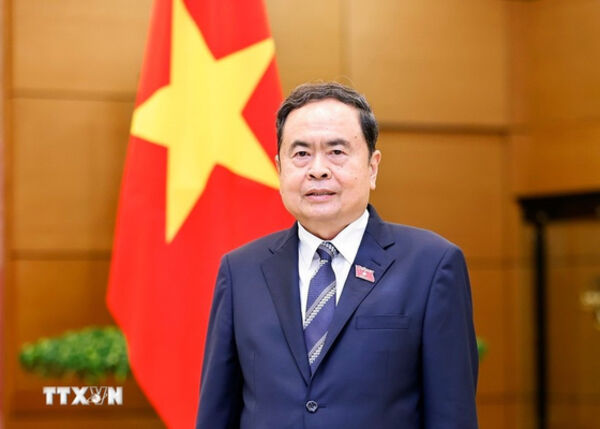
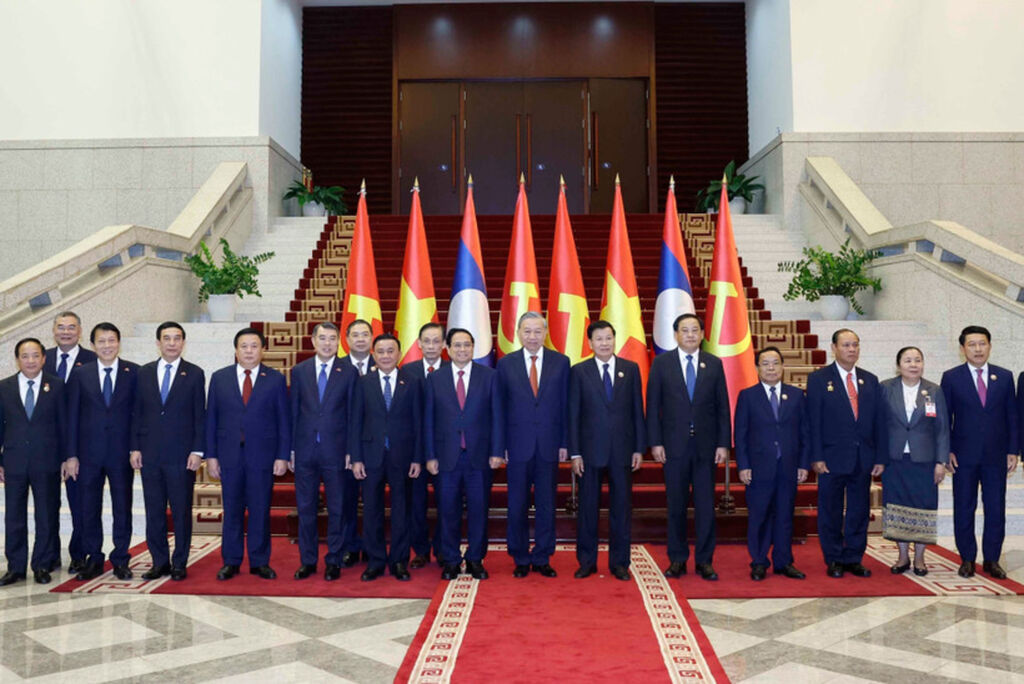
| Party General Secretary To Lam (7th from right) and Party General Secretary and President of Laos Thongloun Sisoulith (6th from right) co-chair the High-Level Meeting between the Communist Party of Vietnam and the Lao People’s Revolutionary Party on December 2, 2025. (Photo: VNA) |
Hanoi (VNA) – Lao Ambassador to Vietnam Khamphao Ernthavanh has stressed that bilateral cooperation in education and training and people-to-people exchanges from 2026 onwards will continue to serve as a strategic bridge, directly contributing to high-quality human resources development and sustainable growth in each country, while helping to consolidate the solid social foundation of bilateral ties.
In an interview granted to the Vietnam News Agency on the occasion of the New Year 2026, Ambassador Khamphao Ernthavanh highlighted the concept of “strategic cohesion” within the architecture of the great friendship, special solidarity, and comprehensive cooperation between the two countries, which has recently been elevated by high-ranking leaders during the State visit to Laos by Party General Secretary To Lam from December 1–2, 2025.
The ambassador said that the upgrade marks an important step forward, continuing the long-standing tradition of solidarity and close comradeship forged during the struggles for independence and nation building in both countries. This not only reaffirms the steadfast and loyal friendship between Laos and Vietnam, she noted, but also opens up new prospects for more substantive and effective cooperation for the benefit of the two peoples, and contributes to peace, stability and development in the region and the world.
Regarding cooperation orientations for 2026 and the new development phase ahead, the Lao ambassador underlined the need to continue prioritising fundamental and long-term areas of cooperation, in which education, training and people-to-people exchanges will remain of special importance.
In education and training, the two countries should further improve the effectiveness of their cooperation in human resources development, particularly in training personnel for Laos. At present, Vietnam is training thousands of Lao students each year. From 2026 onwards, both sides should focus more on enhancing training quality rather than quantity, aligning training content with Laos’ practical needs, with priority given to such areas as public administration, Party building, digital economy, digital transformation, energy, sustainable development and international integration.
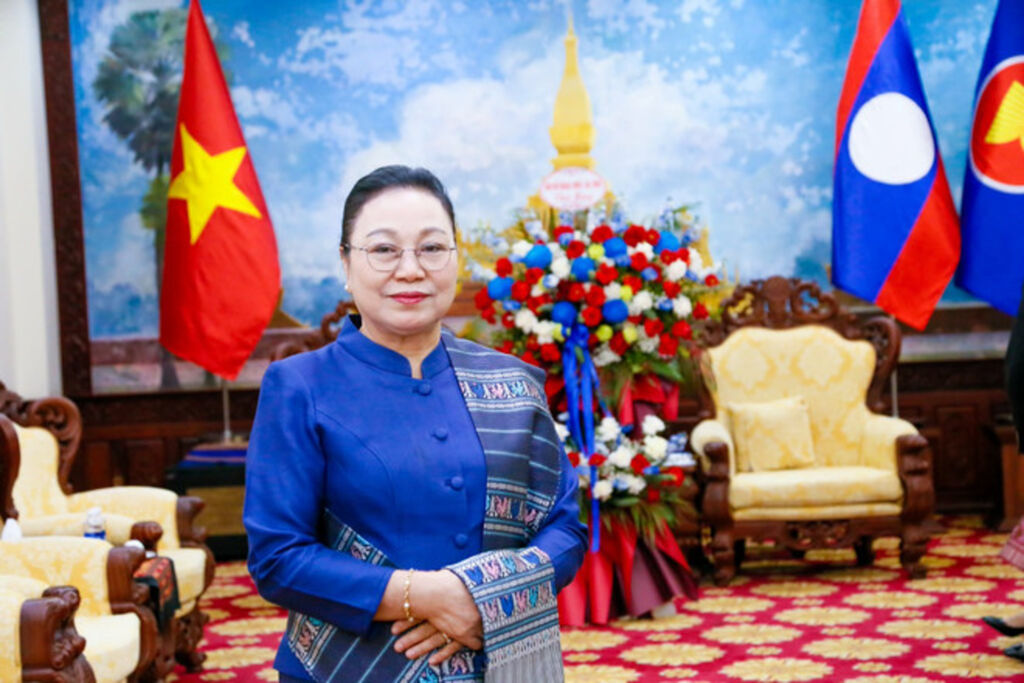 |
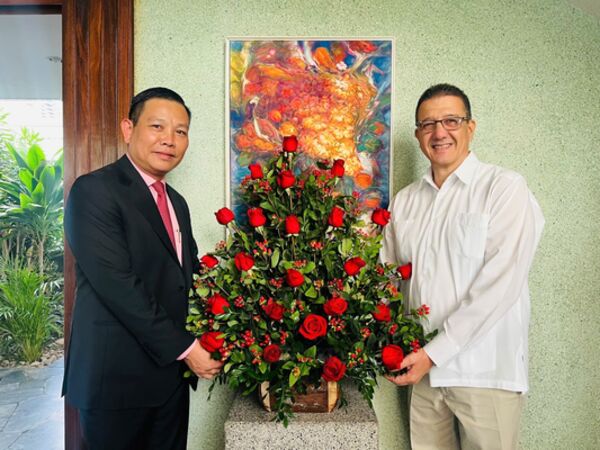
| Lao Ambassador to Vietnam Khamphao Ernthavanh (Photo courtesy of the Lao Embassy in Vietnam) |
The diplomat also proposed strengthening linkages among educational institutions, expanding the exchange of lecturers and students, increasing short-term training courses and regular cooperation programmes, and establishing a network of young officials and intellectuals to enhance exchanges and improve teaching quality in line with practical needs.
As for people-to-people exchanges, the two countries will continue to organise substantive and meaningful activities such as Culture and Tourism Weeks, as well as exchanges among youth, women and localities, while renewing content to make cooperation more result-oriented, particularly in border provinces. At the same time, both sides will make better use of digital transformation, develop shared digital cultural and educational platforms, and expand online exchange programmes to reach more young people of the two nations.
Notably, the two nations are also studying the establishment of a Laos–Vietnam Friendship University in Vientiane, which will serve as a joint learning and research environment for younger generations of both countries, helping to carry forward the great friendship, special solidarity, comprehensive cooperation and strategic cohesion between Laos and Vietnam in the years ahead, the diplomat added.
Referring to the 2026–2030 cooperation plan recently adopted at the 48th meeting of the Vietnam–Laos Inter-Governmental Committee on Bilateral Cooperation, Ambassador Khamphao Ernthavanh affirmed that the plan “lays a solid foundation for promoting trade and investment growth, infrastructure development, and strengthening economic integration between the two countries in a more effective and sustainable manner”.
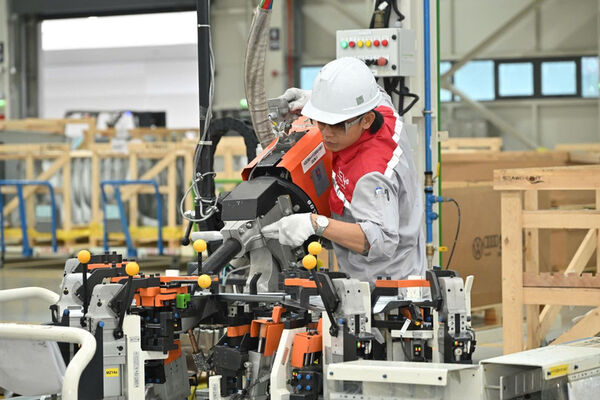
Alongside the target of raising two-way trade to over 5 billion USD, it also underscores a strategic shift in focus from expanding the number of projects to improving their quality and effectiveness, with priority given to such key areas as clean energy, high-tech agriculture, processing and manufacturing, telecommunications and finance, she said, expecting that the proportion of projects operating efficiently and making sustainable contributions to the Lao state budget and creating jobs will continue to increase significantly in the future.
In the field of infrastructure, the two sides have identified this as a “strategic breakthrough,” agreeing to accelerate East–West and North–South connectivity corridors, upgrade border gates, and transport and energy systems, while promoting digitalisation and simplifying administrative procedures to reduce transaction costs and time, enhance competitiveness, and help build regional supply chains linking Laos, Vietnam and the Mekong sub-region.
According to the ambassador, the 2026–2030 bilateral cooperation plan is not only a guiding framework but also an implementation tool to concretise the “strategic cohesion” between the two countries, creating new momentum for trade and investment growth, infrastructure development and deeper economic integration, thereby contributing to the sustainable development of each country and the wider region, added the ambassador./.