 |
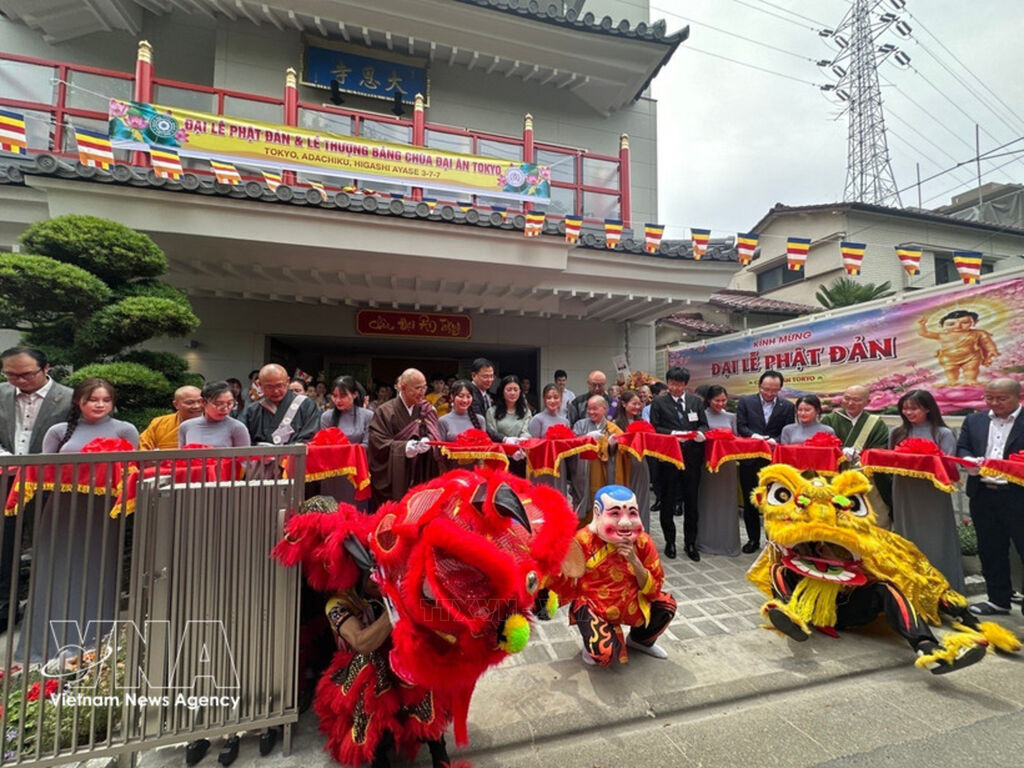
| The ribbon-cutting ceremony marks the inauguration of Dai An Tokyo Pagoda on May 31. (Photo: VNA) |
Tokyo (VNA) – A plaque-raising and ribbon-cutting ceremony was held in Japan on May 31 to officially inaugurate the first Vietnamese pagoda in Tokyo.
Speaking at the event, Vietnamese Ambassador to Japan Pham Quang Hieu described the completion and opening of Dai An Tokyo Pagoda as a special milestone for the Vietnamese community there in particular and across Japan in general.
He expressed confidence that the establishment will serve as a strong spiritual anchor for Vietnamese people living in Japan while contributing to friendship and cultural exchanges between the two countries.
In his opening remarks, Nun Thich Tam Tri, abbess of Dai An Tokyo, said the pagoda is not only a place for spiritual practice and the preservation of traditional Vietnamese cultural values among overseas Vietnamese, but also a bridge fostering cultural exchanges between the two peoples, with a shared aspiration for a peaceful, prosperous and multicultural society.
A representative of Tokyo’s Adachi ward administration extended congratulations on the official inauguration of Dai An Tokyo in the Higashi-Ayase area of the ward. The representative noted that Nun Thich Tam Tri had nurtured the aspiration of establishing a Vietnamese pagoda in the Japanese capital for around five years, aiming to provide a more accessible venue for spiritual activities and community engagement of Vietnamese residents.
The Adachi authorities expressed the hope that the pagoda will become a focal point for multicultural interaction, where Japanese and Vietnamese people could strengthen mutual understanding through cultural and spiritual activities. It is also expected to serve as a compassionate social support network for Vietnamese nationals facing difficulties such as unemployment or housing challenges.
According to the ward representative, local authorities and police will work with the pagoda to incorporate educational sessions on local customs, social norms and community life into orientation programmes organised for Vietnamese residents. Local authorities hope to cooperate with Dai An Tokyo and relevant agencies in building an open institution that is organically connected with and harmoniously integrated into the local community.
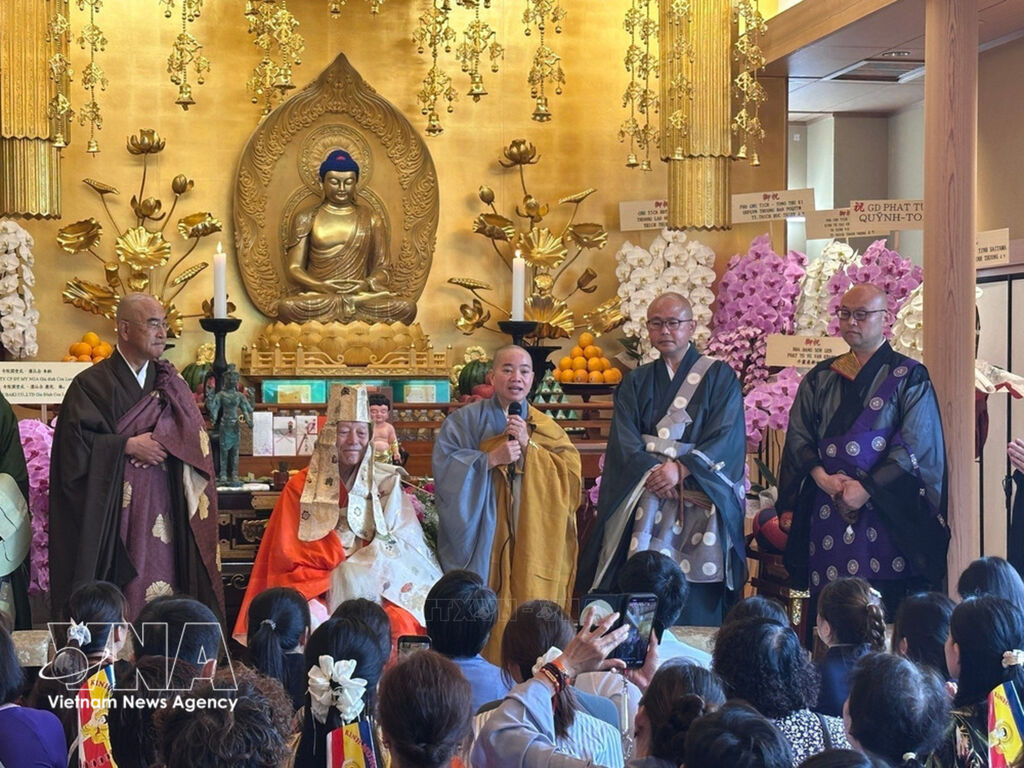 |
| Nun Thich Tam Tri, abbess of Dai An Tokyo Pagoda, delivers remarks at the Vesak celebration and the Dai An Tokyo Pagoda inauguration ceremony on May 31. (Photo: VNA) |
Speaking to VNA correspondents, Nun Thich Tam Tri said construction of the three-storey pagoda, covering approximately 440 square metres, took 49 months and faced numerous challenges, including high construction costs in Tokyo and shortages of building materials.
In addition to the sustained efforts by the Vietnamese community in Japan, the project received support and encouragement from Japanese Buddhist clergy, local residents and Adachi authorities. During the construction process, local authorities, police and the pagoda jointly organised meetings and consultations with residents in the surrounding area, helping to foster mutual understanding, consensus and stronger ties between the pagoda and the local community./.