 |
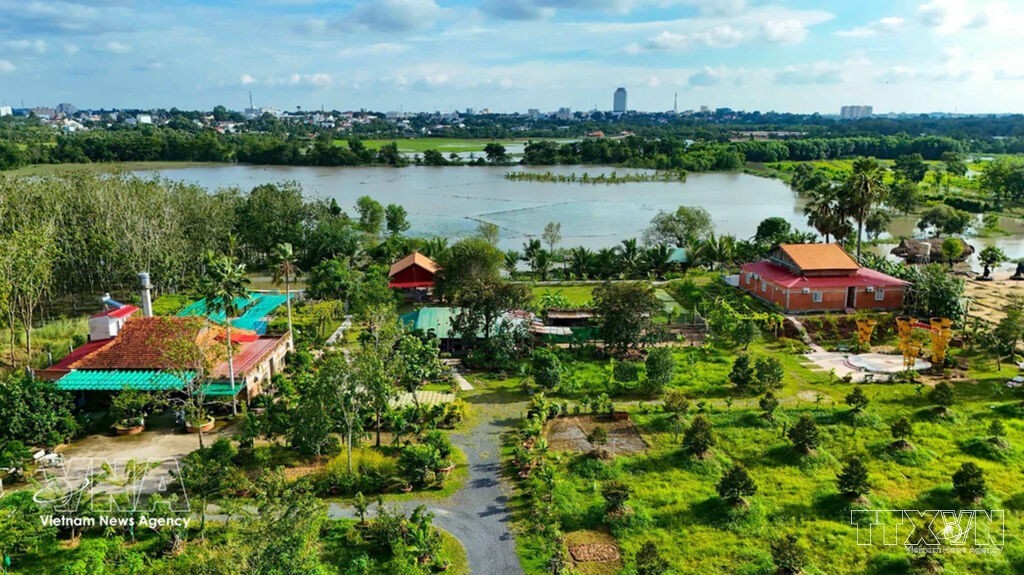
| Green farms are gaining popularity among local households, combining agricultural production with tourism experiences and helping diversify local tourism offerings. (Photo: VNA) |
Hanoi (VNA) - The 12th Green Startup Competition 2026, themed “The Path to Sustainable Development,” is taking place nationwide, highlighting a new wave of young agripreneurs who are transforming local agricultural resources and by-products into high-value products while embracing technology, circular economy principles, and creating positive social impact.
Organised by the Business Studies and Assistance Centre (BSA), the High-Quality Vietnamese Goods Business Association and partners, the competition has attracted projects from across the country. In Ho Chi Minh City and southern localities, many young entrepreneurs are moving beyond the traditional use of local agricultural products to develop commercially viable products, create jobs and generate additional value from existing resources.
Building circular value chains
Nguyen Thi Bao Hong from Dong Nai City is participating in a project on naturally grown straw mushrooms based on a circular production model. Under the model, mushroom-growing residues are used to raise earthworms, producing organic fertiliser and biomass for vegetable cultivation. Plant residues are then composted and returned to the soil, allowing the same resource to generate value through multiple stages.
Meanwhile, the Seed Armour Project from Can Tho City uses rice straw and coffee grounds combined with Trichoderma fungi and fermented organic adhesive to create a protective coating around seeds. The product is designed to improve seed preservation and support plant growth after sowing, with potential applications in forestry, forest restoration, and agriculture.
The Hoa De Brackish-Water Tilapia Fish Cake Project connects climate adaptation with local livelihoods in rice-shrimp farming regions. Rather than selling tilapia as a raw product, the project turns the fish into tasty fish cakes, while the by-products are made into protein-rich liquid fertilizer for crops.
The social impact of entrepreneurship is also becoming increasingly prominent. Handmade with NaNi uses deadstock fabric to produce fashion items, accessories, and corporate gifts, while creating livelihoods for homemakers, people with disabilities, and other vulnerable workers.
Another project turns mature coconut trunks removed during replanting into household products and works with craft households to expand production, creating additional income opportunities for disadvantaged women and people with disabilities in rural areas.
Several initiatives directly address waste management, including plans for circular biological-waste treatment facilities that avoid incineration and landfill while producing organic compost, refuse-derived fuel, recycled plastic pellets, and microbial products. Other projects are developing new materials, such as bio-based insulation from lotus stems, leather-like materials from mango peels, and household products from rice husks.
Tran Lan Anh, Co-founder and Strategic Advisor of GreenHubAsia and a member of the competition's judging panel, said young agripreneurs are increasingly pursuing circular business models that seek not only financial returns but also positive social impacts.
Technology drives deeper processing
Projects in other regions demonstrate a shift from selling raw materials to deeper processing and technology-based solutions.
The Regenerative Agriculture – Enhancing the Value of Vietnamese Rice Project in Dong Thap begins with agricultural challenges involving post-harvest rice straw, cow manure and pressure on farmland. It develops a value chain that processes straw and manure into microbial organic fertiliser and returns it to rice fields, while further processing harvested rice into ready-to-eat meals. Retort sterilisation technology is being considered to extend shelf life at room temperature.
In An Giang, the Canned Fresh Palmyra Fruit Project aims to turn a product closely associated with the Khmer community into a modern processed food for urban consumers, food-and-beverage businesses and modern distribution channels.
Meanwhile, the VK Fermented Fish Paste Project uses linh fish paste from An Giang and tiapila paste from Ca Mau to produce concentrated paste, shortening preparation time for traditional southern Vietnamese dishes. The Ngoc Tien Shrimp Cake Project adds value to freshwater shrimp by turning the meat into shrimp cakes and processing the heads and shells into shrimp sauce and organic fertiliser.
Technology is also being applied to everyday agricultural challenges. One project uses artificial intelligence to identify disease in durian trees from images, combined with orchard data and farming logs to provide recommendations. The application is available on Google Play and has recorded its first payment transactions, while a pilot is underway with agricultural input dealers and cooperatives.
The projects reflect a strong shift in entrepreneurial thinking, from finding products to sell towards identifying community problems and developing viable business models to address them. However, experts note that green products must ultimately demonstrate quality, standards, competitive pricing, production stability and real market demand.
Following the Politburo's Resolution No. 68-NQ/TW on private-sector development, dated May 4, 2025, experts said the entrepreneurial spirit and aspiration to do business have gained further momentum.
According to Vu Kim Anh, Deputy Director of BSA in charge of the Green Startup programme, judges have particularly appreciated projects from mountainous and coastal areas that make effective use of local resources and agricultural and fisheries by-products while creating opportunities for vulnerable groups.
Previous editions of the competition have helped young agripreneurs grow into established businesses, including enterprises recognised under the high-quality Vietnamese goods programme. The expanding community continues to bring Vietnamese agricultural products and local specialties deeper into domestic and international value chains./.