 |
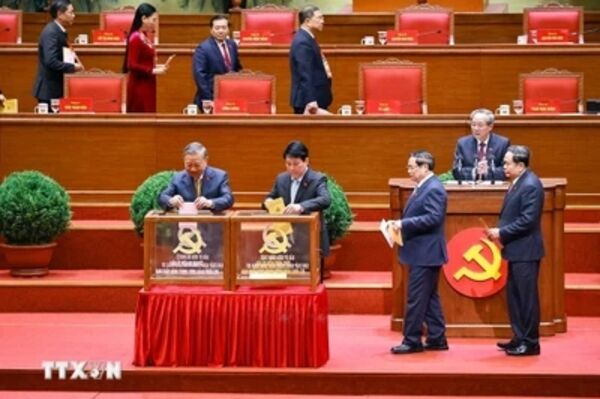
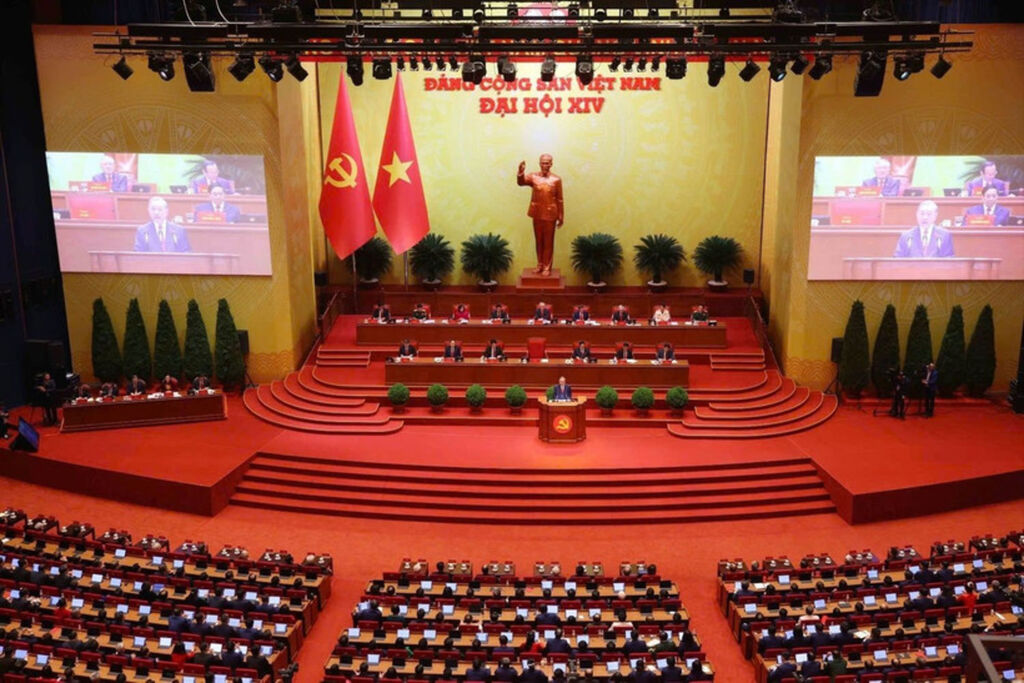
| The opening session of the 14th National Party Congress. (Photo: VNA) |
- The term of the 13th National Party Congress unfolded amid profound and unpredictable international and domestic changes, marked by the severe impacts of the COVID-19 pandemic, intensifying strategic competition, disruptions to global supply chains, risks of economic slowdown, and the intertwining of traditional and non-traditional security challenges.
Against this backdrop, the most prominent hallmarks of the 13th Congress term have been the clear demonstration of leadership capacity, political mettle, steadfast commitment to goals and ideals, and resilience in steering national development and safeguarding the Fatherland, according to an article by Major General, Associate Professor, Dr Nguyen Van Sau, Deputy Director of the Vietnam Institute of Military Strategy and History.
This was not an ordinary development phase, but a special term which took place in the context of compounded and multi-dimensional shocks. External disruptions were swift and intense, non-traditional risks increased, while digital transformation and green transition demanded a fundamental shift of the growth model. Domestically, long-standing challenges persisted, including growth quality, labour productivity, administrative discipline and an institutional framework that has yet to fully meet development demands.
In such circumstances, the “hallmark of the term” was, above all, reflected in governance capacity and the ability to organise and implement Party guidelines. Capacity refers to the ability to formulate and execute sound policies; mettle is the strength to uphold objectives under pressure; steadfastness lies in firmly maintaining ideological foundations and strategic orientation; and resilience is the state of stability and proactivity amid turbulence. Together, these qualities formed a leadership profile suited to the exceptional historical context of the 13th Congress term.
Leadership capacity during this period was characterised by the close alignment between strategic vision and implementation mechanisms. The 13th Congress set development goals towards 2030 with a vision to 2045, emphasising growth driven by science and technology, innovation, digital transformation, green and circular economy models, and enhanced economic autonomy. From a national governance perspective, leadership capacity was demonstrated through an accurate assessment of the global and domestic environment, effective institutionalisation of policies to remove bottlenecks and mobilise resources, and strengthened discipline and accountability in implementation, with results as the primary benchmark.
Political mettle emerged as a decisive factor amid competing pressures between rapid growth and sustainability, openness and autonomy, reform and social stability. The timely shift towards safe and flexible adaptation to the pandemic, coupled with economic recovery, reflected a balanced and pragmatic approach. Maintaining political and social stability, while advancing a determined campaign against corruption and misconduct with no forbidden zones or exceptions, further reinforced public trust and institutional integrity.
Steadfastness was evident in upholding the Party’s ideological foundations, the socialist-oriented development path, and the principle of placing the people at the centre of development. This steadfastness ensured unity of will and action across the political system, while allowing flexibility and creativity in policy execution. Consistent attention to social security and people’s livelihoods, especially during periods of hardship, underscored the enduring principle that the people are the foundation of national strength.
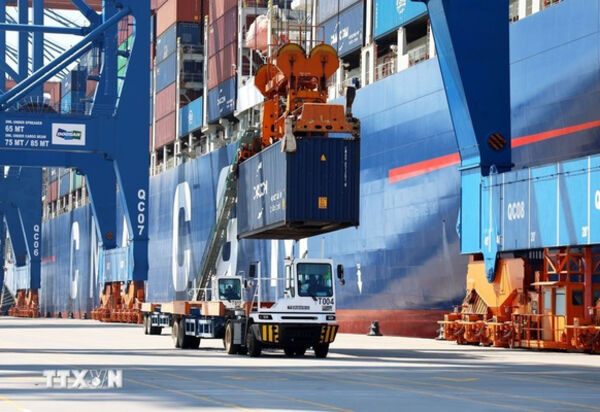
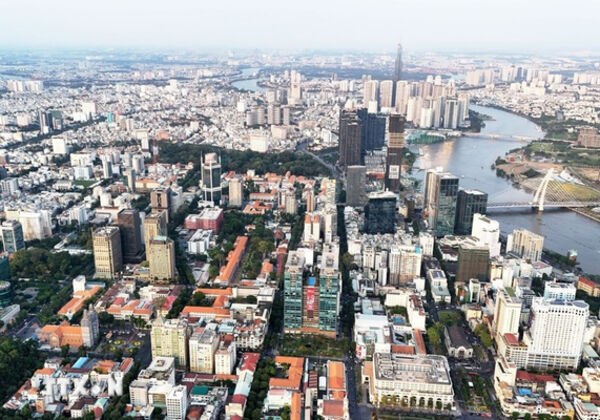
Resilience was reflected in macroeconomic stability, social welfare protection, national defence, security and foreign affairs. Despite multiple shocks, Vietnam maintained growth momentum, controlled inflation and safeguarded major economic balances. The diplomacy of independence, self-reliance and diversification and multilateralisation helped preserve a peaceful and stable environment for development, while reforms to streamline the political system enhanced governance effectiveness.
Overall, the 13th Party Congress term represented a period of adaptive governance amid volatility, while laying solid long-term foundations for development. Its hallmarks provide not only a meaningful review of the term, but also set forth the imperative to further strengthen leadership capacity, build a socialist rule-of-law state, mobilise national unity and unlock all resources to realise Vietnam’s aspiration for a prosperous and happy future in the new era./.