 |
| A performance on The Huc bridge of the temple as part of a nighttime tourism programme to discover the Ngoc Son temple on Hoan Kiem Lake, downtown Hanoi. (Photo: VNA) |
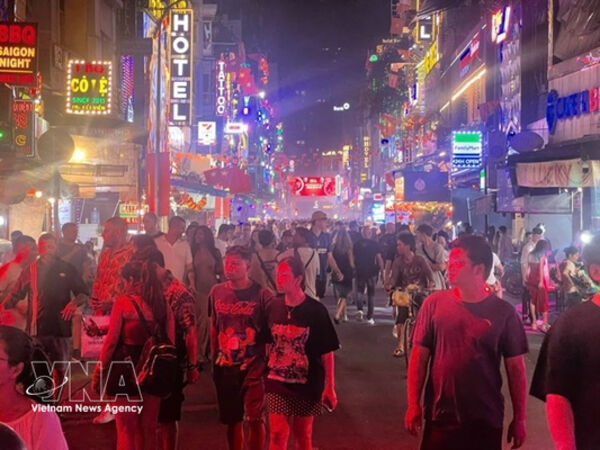
Hanoi (VNA) – The Hanoi municipal People’s Council on June 15 approved a resolution regulating investment and business activities for products and services operating at night, creating a legal framework to unlock the capital’s urban potential and promote tourism, cultural industries and economic growth.
Under the resolution, operating hours for night-time economy zones, routes and venues will be tailored to their characteristics and development objectives.
The time frame from 6:00pm to 10:00pm will be widely applied to night-time economic activities across the city. Operations from 10:00pm to 2:00am will be permitted in commercial and cultural development areas and other eligible night-time economy zones that meet required conditions and receive approval from competent authorities.
Businesses and individuals will be allowed to choose suitable services and activities, provided they obtain the necessary licences and comply with regulations on noise control, environmental sanitation, lighting, security and public order.
Meanwhile, operations from 10:00pm to 6:00am will be considered on a selective basis in designated areas that are physically separated from residential neighbourhoods and meet strict requirements regarding infrastructure, urban management, security and public safety. Authorities may also allow extended operating hours for specific events and activities, provided adequate measures are in place to minimise disruptions to local communities.
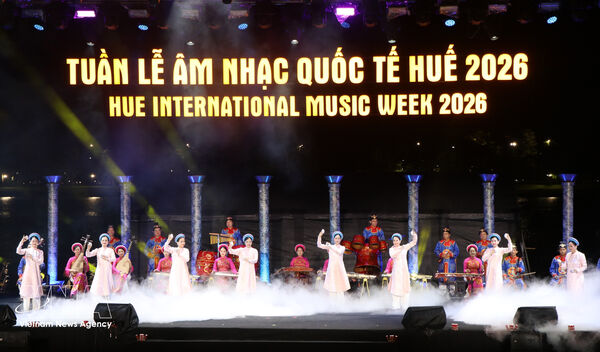
The resolution encourages a wide range of cultural, artistic and tourism activities, including performances, exhibitions, film screenings, presentations of traditional and intangible cultural heritage, and other programmes held in public spaces, pedestrian streets, heritage sites, theatres, cinemas and cultural venues.
Particular emphasis is placed on developing cultural and creative industries through contemporary art, interdisciplinary projects, technology applications and creative design initiatives that draw on Hanoi’s rich cultural resources. Tourism-related services such as night tours, cultural tourism programmes, experiential travel activities and tour guide services are also expected to play a central role in the city’s night-time economy.
The resolution also defines management models and recognition criteria for night-time economy zones. Such areas may be managed directly by state agencies, public service units, heritage site management boards, enterprises or organisations, or through coordinated management arrangements approved by competent authorities.
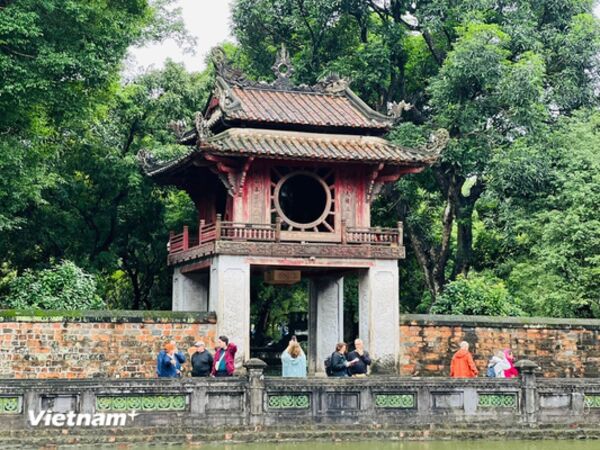
Earlier the same day, the municipal People’s Council adopted another resolution introducing support mechanisms and policies for organisations and individuals engaged in preserving, restoring and promoting cultural heritage values associated with historical sites, culturally significant areas and architectural works in Hanoi.
The city encourages private investment, sponsorship and public-private partnership (PPP) models in heritage conservation while promoting the integration of cultural heritage with education, cultural tourism, creative spaces and cultural industries, in line with the specific characteristics of each heritage asset./.