 |
| Hanoi students take part in an activity held in response to the Life-long Learning Week 2024. (Photo: VNA) |
Paris (VNA) – Hanoi is among the 72 cities from 46 countries named members of UNESCO’s Global Network of Learning Cities on December 4.
The new members were selected for their strong commitment to ensuring that people of all ages can exercise their right to education throughout life.
Among the 72 new members are 11 capital cities, including Hanoi (Vietnam), Porto-Novo (Benin), Bissau (Guinea-Bissau), Lusaka (Zambia), Cairo (Egypt), Riyadh (Saudi Arabia), Lisbon (Portugal), Ankara (Türkiye), Ashgabat (Turkmenistan), Buenos Aires (Argentina), and Caracas (Venezuela).
Thirteen countries are joining the Global Network of Learning Cities for the first time: Benin, Burkina Faso, Chile, Cyprus, Guinea-Bissau, Iraq, Lithuania, Mongolia, Niger, Turkmenistan, the US, Venezuela, and Zambia.
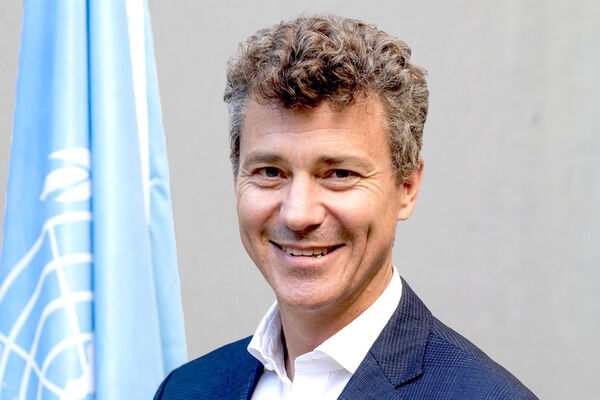
“Education transcends the classroom – it is a collective endeavour, and cities play a key role in promoting learning for all. The 72 new UNESCO Learning Cities announced today are redefining what it means to learn – turning every street, library, workplace, museum and home into a space for knowledge and innovation. By making education a priority, from early childhood through adulthood, these cities are empowering people and unlocking opportunities for all,” said Stefania Giannini, UNESCO Assistant Director-General for Education on Wednesday.
With the latest expansion, the Global Network of Learning Cities – launched in 2013 – has grown to 425 members from 91 countries, collectively supporting lifelong learning opportunities for nearly half a billion people.
UNESCO Learning Cities embedded learning into daily life and create pathways for everyone: reskilling and upskilling workers to meet fast-changing labour markets; offering literacy programmes for those who missed early schooling; equipping citizens of all ages to navigate and shape the AI era; and fostering entrepreneurship.
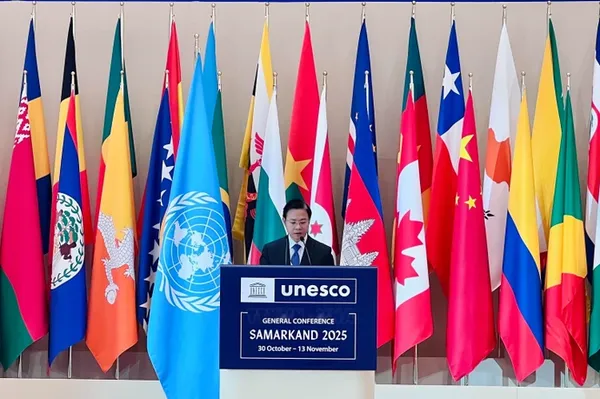
Deputy Minister of Foreign Affairs and Chairman of the Vietnam National Commission for UNESCO Ngo Le Van described Hanoi’s admission to the Global Network of Learning Cities as a step to carry out the Party and State’s policies for facilitating life-long learning and developing a learning society.
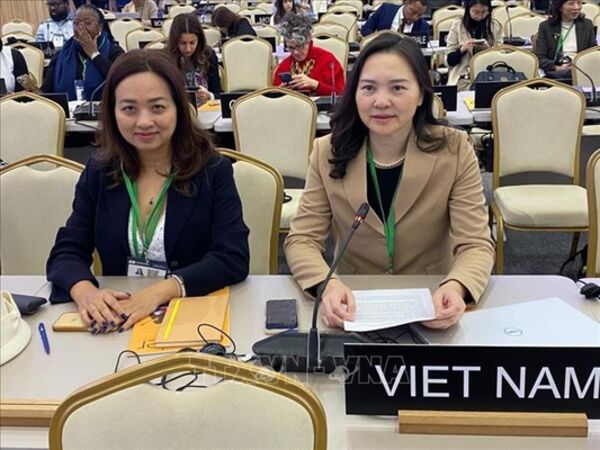
Meanwhile, Ambassador Nguyen Thi Van Anh, Permanent Representative of Vietnam to UNESCO, said this is a shared joy of Hanoi and Vietnam, marking another significant success in the fruitful cooperation between the country and UNESCO. It is also a move to implement the plan on international integration in education and training by 2030, approved by the Prime Minister in December 2024, and the Politburo’s Resolution No. 71-NQ/TW, dated August 22, 2025, on breakthroughs in education and training development.
Earlier, Sa Dec and Cao Lanh cities of Dong Thap province, Vinh city of Nghe An province, Son La city of Son La province, and Ho Chi Minh City of Vietnam had been named members of the Global Network of Learning Cities./.