Hanoi brings new life to suburban tourism villages
Hanoi has long been known for the heritage cachet of a thousand-year-old capital. Hoan Kiem Lake, the Old Quarter, the Temple of Literature, the Thang Long Imperial Citadel and a network of craft villages have given the city a singular pull.
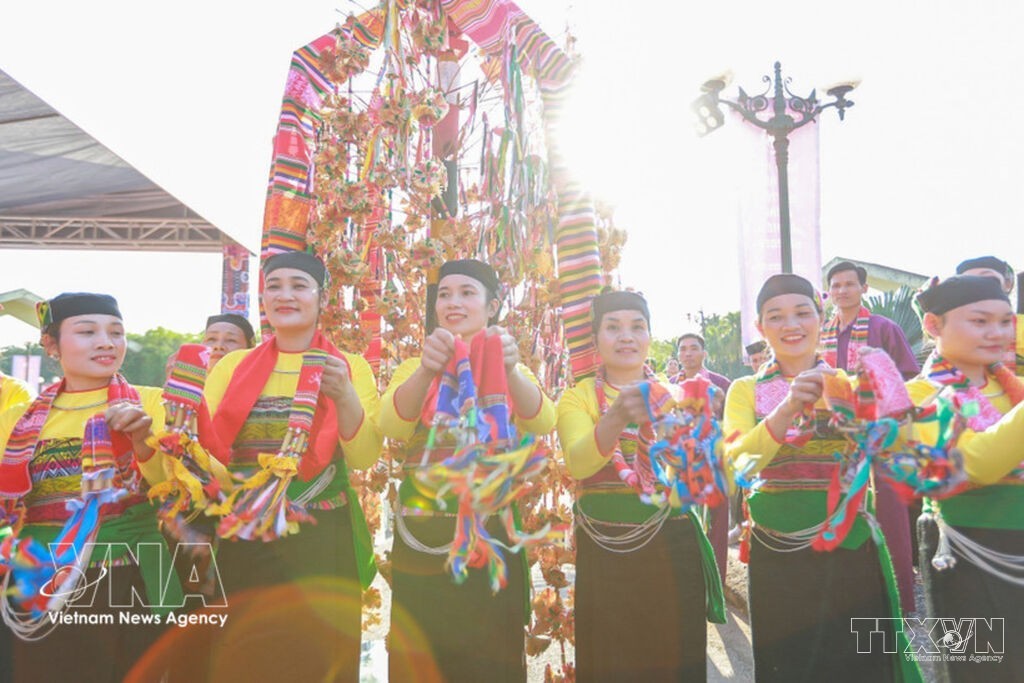
An ethnic festival at the Vietnam National Village for Ethnic Culture and Tourism (Photo: VNA)

Hanoi (VNA) - Hanoi is redrawing its tourism map, pushing beyond the postcard mainstays of Hoan Kiem Lake and the Old Quarter to woo travellers with a slate of community-based destinations in suburban areas, betting that herbal baths, stilt-house stays and rice-field cycling can turn a day-trip capital into a multi-night experience.

Winning visitors over with cultural identity

Hanoi has long been known for the heritage cachet of a thousand-year-old capital. Hoan Kiem Lake, the Old Quarter, the Temple of Literature, the Thang Long Imperial Citadel and a network of craft villages have given the city a singular pull.

But as global travel pivots sharply from ticking off landmarks to immersive experiences, Hanoi is finding a new edge in community-based tourism, where culture isn’t staged but lives in the homes, meals and daily rhythms of residents.

Nestled at the foot of Ba Vi mountain, Ban Mien has carved out a reputation for the Dao ethnic group’s herbal medicine, rituals and folk arts. Visitors there go beyond passive sightseeing, plunging into local life with Dao herbal baths, traditional cooking and lessons in medicinal plant lore.

The capital’s newest community-tourism bet is Muong Coc in My Duc commune. In early July, the municipal Department of Tourism and local authorities launched “Muong Coc – Touching Peace”, minting a new product on Hanoi’s tourism map.

About 60 kilometers from central Hanoi, Muong Coc serves up semi-mountainous scenery of rocky hills, lakes and rice paddies dotted with Muong ethnic villages. The draw isn’t concrete polish but the unvarnished simplicity of local existence. Visitors can stay in stilt houses, cycle through paddies, trek low slopes and sample dishes rich in Muong culinary tradition.

Further afield, the Vietnam National Village for Ethnic Culture and Tourism in Dong Mo offers a larger-scale proposition. Transferred to Hanoi’s control on July 1, the site is being positioned as a cultural, tourism and creative-industry hub, and a new growth pole for the city’s western part.

Far from a static museum, the village functions as a living stage where ethnic communities hold festivals, demonstrate crafts, serve traditional food and practice rituals year-round. In a single trip, tourists can roam cultural spaces from Central Highlands communal houses and Ede longhouses to Tay and Muong stilt homes and the traditional dwellings of Khmer and Cham groups.

Turning “tourism villages” into Hanoi brand

Taken together, these destinations remain in their infancy. Scale is limited, product diversity is thin, links between sites are weak, and overnight stays are short. To turn these villages into signature offerings, Hanoi needs a long-term, coordinated strategy that puts local communities at its centre.

Nguyen Tien Dat, Vice Chairman of the Hanoi Tourism Association, said operators must stop thinking in isolated attractions and start building an integrated community-tourism network. Localities are mining their own strengths in different ways, missing the connections that would forge a compelling product chain. Given that distances are modest, Dat argued, two-to-three-day experiential itineraries are well within reach.

Phung Quang Thang, Chairman of the Vietnam Green Tourism Association, said each village needs a distinct story. Muong Coc should be pitched as a Muong cultural immersion set against a semi-mountainous landscape and the unhurried pace of local life. Ban Mien should double down on Dao heritage, herbal medicine, wellness and resort-style stays. The national ethnic-culture village, meanwhile, ought to become a hub for cultural festivals, art events, craft showcases and large-scale experiential activities, spreading year-round visitor traffic, not just festival dates.

Vu Van Tuyen, Director of Travelogy, flagged the scarcity of accommodation as a critical weakness. To lengthen stays and deepen immersion, local authorities need to channel investment into quality lodgings and homestays.

Tuyen said as digital transformation accelerates, Hanoi could build a dedicated digital map for community-based tourism destinations, layering accommodation and tour bookings, online payments and multilingual interpretation onto a single platform./.
See Also

An Giang farmers enjoy bumper Summer–Autumn rice harvest and strong prices

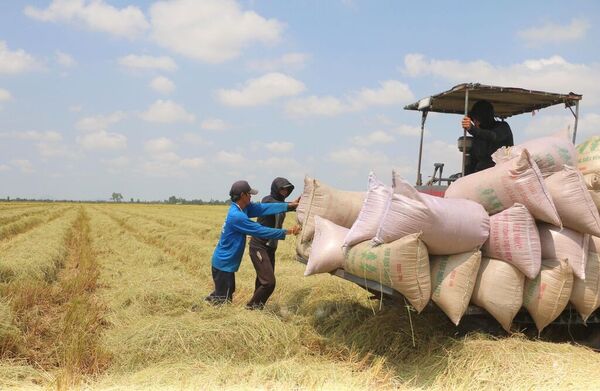
Farmers in An Giang Province are harvesting the 2026 Summer–Autumn rice crop. According to the provincial Department of Agriculture and Environment, approximately 499,496 hectares were planted for the 2026 Summer–Autumn crop. To date, more than 165,119 hectares, or about 33% of the total area, have been harvested, with yields averaging between 6.8 and 7.0 tonnes per hectare. Fresh paddy rice is being purchased directly in the fields at prices ranging from 6,800 to 7,000 VND per kilogram. Photo: Cong Mao – VNA

A Sun Group hotel's bar makes Asia's 50 Best Bars

The Hudson Rooms, the rooftop bar perched atop Capella Hanoi, has been ranked No. 46 in Asia's 50 Best Bars 2026. It marks the first time a bar in Hanoi has entered Asia's Top 50, making Vietnam one of the few countries represented in this highly respected ranking. This year, only two Vietnamese bars secured a place in the Top 50.

LED traffic information displays: New convenience on Hanoi's streets

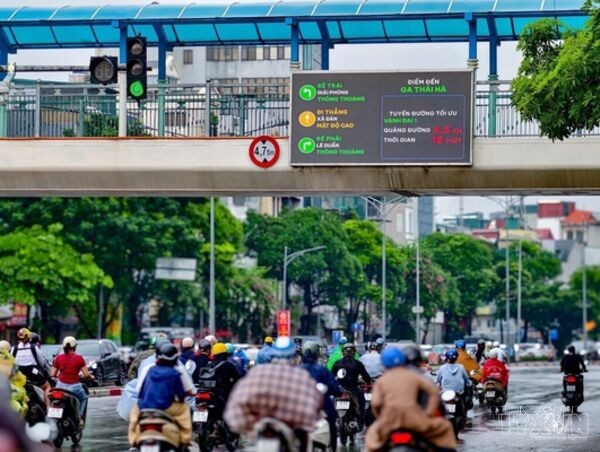
After more than one week of operation, Hanoi's Public Security Department has reported initial positive results from the deployment of 36 LED electronic displays providing real-time traffic information. The system helps road users proactively choose travel routes, supports traffic flow management and eases congestion. Drawing data from the Hanoi Traffic Control Center, the displays provide live updates on traffic conditions, congestion alerts, accidents, weather information and recommended optimal routes. Many residents have praised the system as an intuitive and useful source of information while suggesting that larger text and icons would improve visibility. Photo: Trung Nguyen – VNA

National teleconference disseminates resolutions of 14th Party Central Committee’s third session

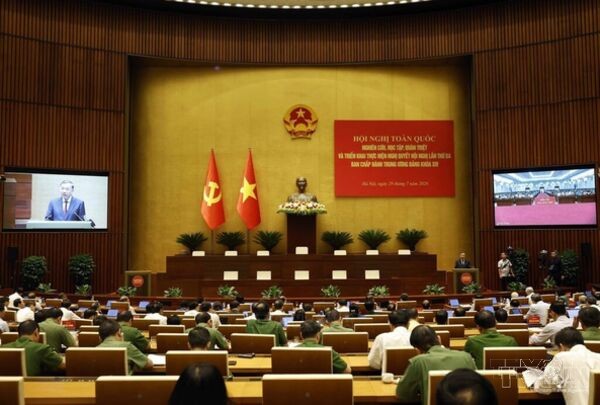
The 14th Party Central Committee’s Secretariat convened a national teleconference in Hanoi on July 29 to study, disseminate and implement the resolutions adopted at the committee’s recent third session. Party General Secretary and State President To Lam attended and delivered a keynote address. Also attending the event were Politburo members: Prime Minister Le Minh Hung, National Assembly Chairman Tran Thanh Man, and Permanent member of the Party Central Committee’s Secretariat Tran Cam Tu, along with incumbent and former Party and State leaders. Photo: VNA

Ho Chi Minh City's agricultural sector accelerates toward double-digit growth target

In the first half of 2026, Ho Chi Minh City's agricultural sector maintained steady growth across multiple areas. As it enters an acceleration phase to achieve its double-digit growth target for 2026, alongside supportive municipal policies, agricultural enterprises and cooperatives are proactively restructuring production, applying advanced technologies, expanding markets and enhancing value addition to create stronger growth momentum in the remaining months of the year. Photo: Huong Giang – VNA

Renewing thinking and action in studying and practising Ho Chi Minh's ideology, ethics, methodology and style

The Politburo recently issued Directive No. 07-CT/TW dated July 13, 2026 on "Promoting the study and practice of Ho Chi Minh's ideology, ethics, methodology and style in the new stage of development" (Directive No. 07). Officials and Party members in Da Nang City said the directive introduces many new approaches, emphasizing that following President Ho Chi Minh's example must first be reflected in political steadfastness and innovative thinking, with the spirit of daring to think, daring to act, daring to take responsibility, daring to confront difficulties and challenges, and daring to act for the common good in order to remove bottlenecks and unlock resources for development. Photo: Quoc Dung – VNA

Party, State leaders attend live television programme honouring fallen heroes

Party General Secretary and State President To Lam and other key Party and State leaders attended a live television programme titled “Sao Sang Dan Duong” (Guiding Star) on July 26 night, held to commemorate the 79th anniversary of War Invalids and Martyrs' Day (July 27, 1947–2026). Jointly organised by Vietnam Television (VTV) and the People's Committees of Hanoi, Ho Chi Minh City, Tuyen Quang and Quang Tri provinces, the programme paid tribute to heroic martyrs who sacrificed their lives for the nation while honouring the forces engaged in the search, recovery and identification of fallen soldiers' remains. Photo: VNA

Con Dao – sacred landmark at sea and vision for sustainable development

Every July, the Con Dao Special Zone welcomes tens of thousands of visitors from across Vietnam who come to offer incense in tribute to fallen heroes and martyrs. Once known as the "Hell on Earth" for its notorious prison system, Con Dao has become a place where remembrance reflects the Vietnamese tradition of gratitude while showcasing the renewed vitality of a heroic island pursuing sustainable development. Photo: Huynh Son – VNA