 |
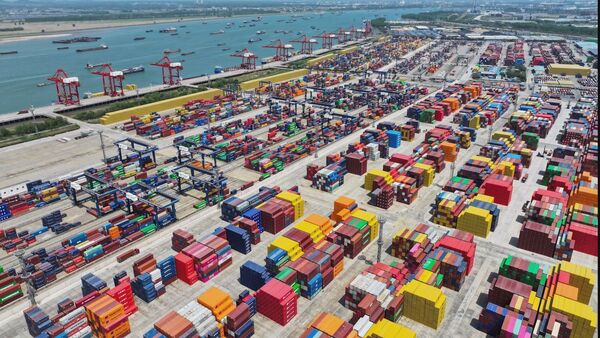
| From 4 billion USD in 2015, the size of the e-commerce market increases eightfold to reach 32 billion USD last year. (Photo: VNA) |
Hanoi (VNA) - Hanoi tops the 2025 Vietnam eBusiness Index (EBI) with 74.7 points, followed by Ho Chi Minh City with 73.5 points.
The central city of Da Nang ranks third with 28.1 points.
The average score of the rankings is 9.3 points. The gap in e-commerce development between the two major economic centres –Hanoi and HCM City– and the remaining provinces and cities is very large.
The Vietnam E-commerce Association (VECOM) has released the 2025 EBI report.
The Vietnam eBusiness Index is compiled from three component indicators: human resources and information technology infrastructure; business-to-consumer (B2C) e-commerce transactions; and business-to-business (B2B) e-commerce transactions.
VECOM’s report shows that the 1998 - 2005 period marked the formative stage of e-commerce, with a focus on building e-commerce infrastructure.
The second stage, from 2006 to 2015, was the phase of widespread adoption. Since 2016, Vietnam’s e-commerce has entered a third stage characterised by rapid growth.
Despite the impacts of the COVID-19 pandemic and global economic instability in recent years, Vietnam’s e-commerce growth rate has remained consistently high.
From 4 billion USD in 2015, the size of the e-commerce market increased eightfold to reach 32 billion USD last year.
This strong growth has been driven by several factors, including relatively high GDP growth, a young population, and strong investor interest, all of which have encouraged online shopping demand.
From the overall picture of the national economy, VECOM assessed that this year was a year of preparation for a new development phase–the fourth stage of Việt Nam’s e-commerce development.
This stage is expected to begin next year and will be marked by rapid and sustainable growth.
Profound and comprehensive changes in the formulation and implementation of policies and legal documents will play a decisive role in ensuring rapid and sustainable development of Vietnam’s e-commerce sector.
Of these, the National E-commerce Development Master Plan for 2026–2030, the E-commerce Law, and regulations on taxation, online exports, and e-commerce statistics are particularly important./.