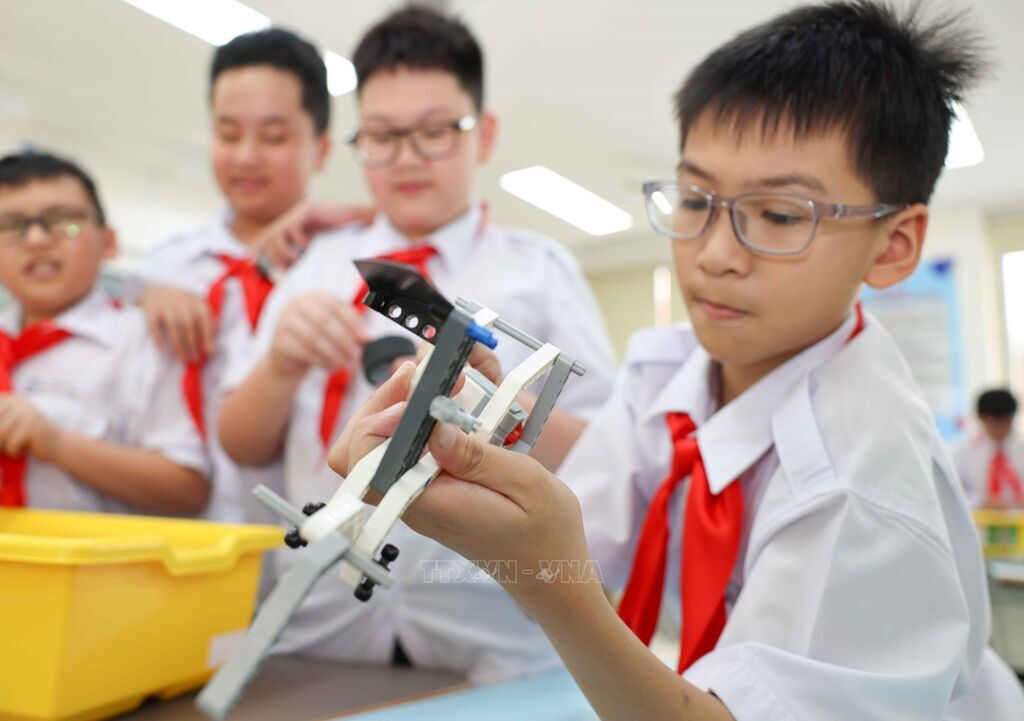
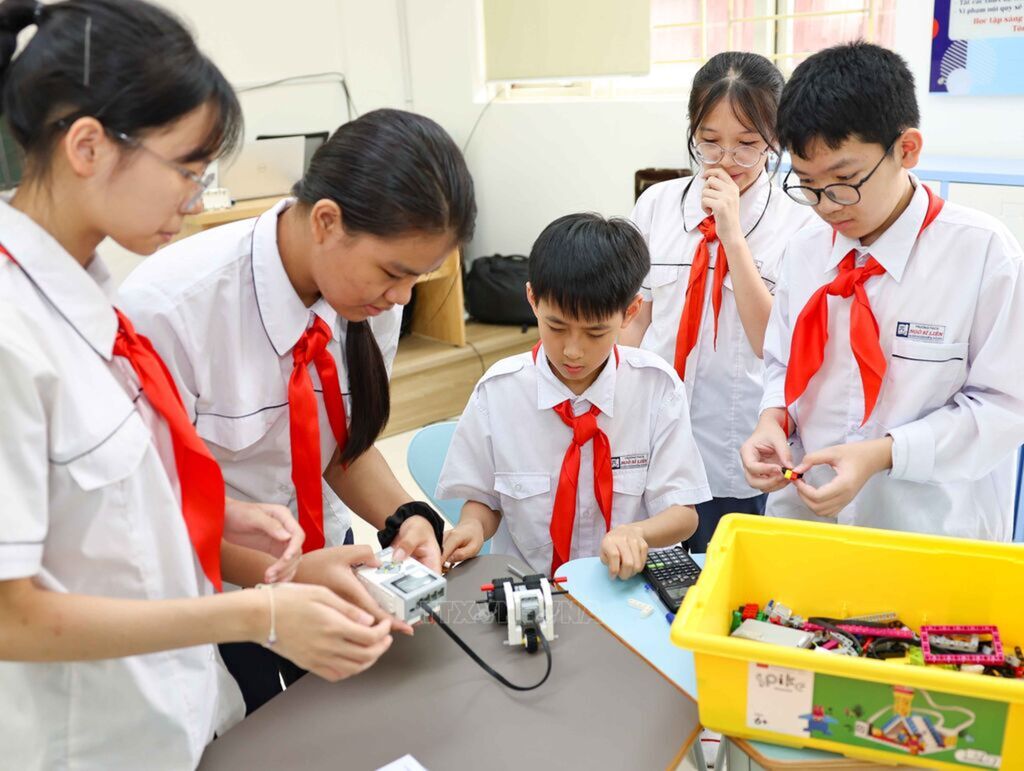
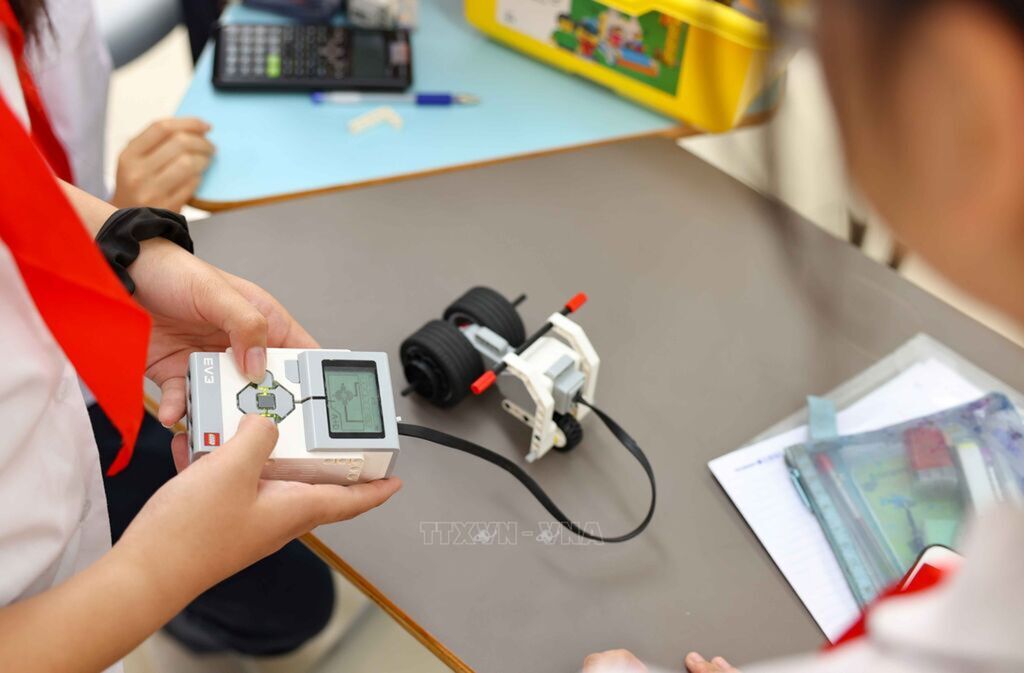
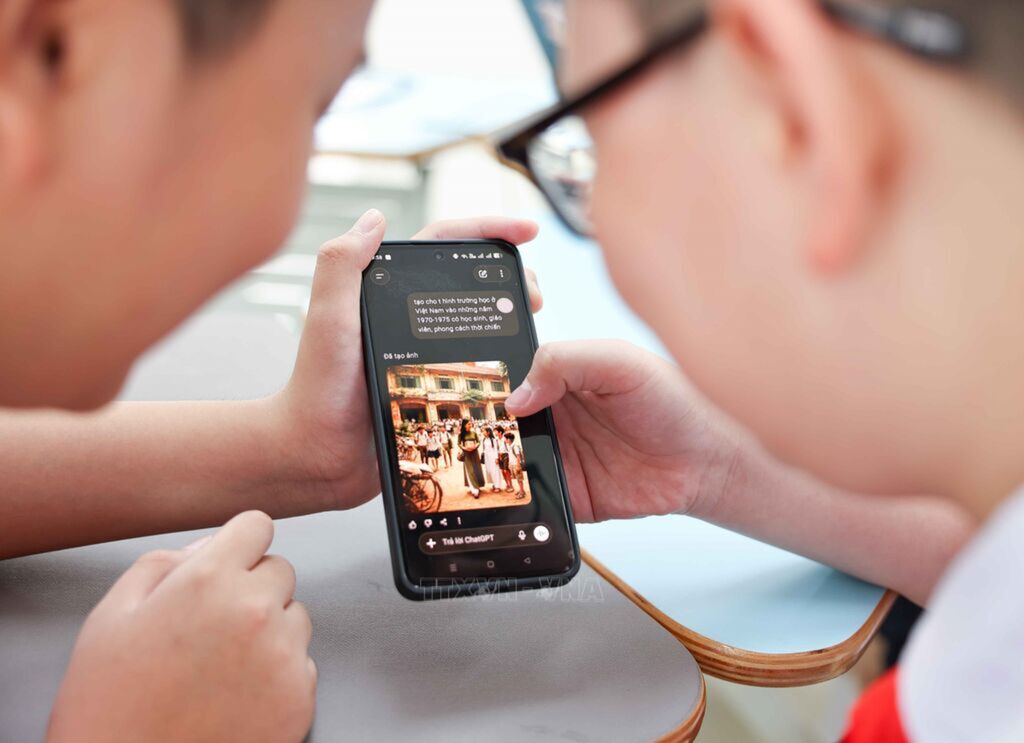
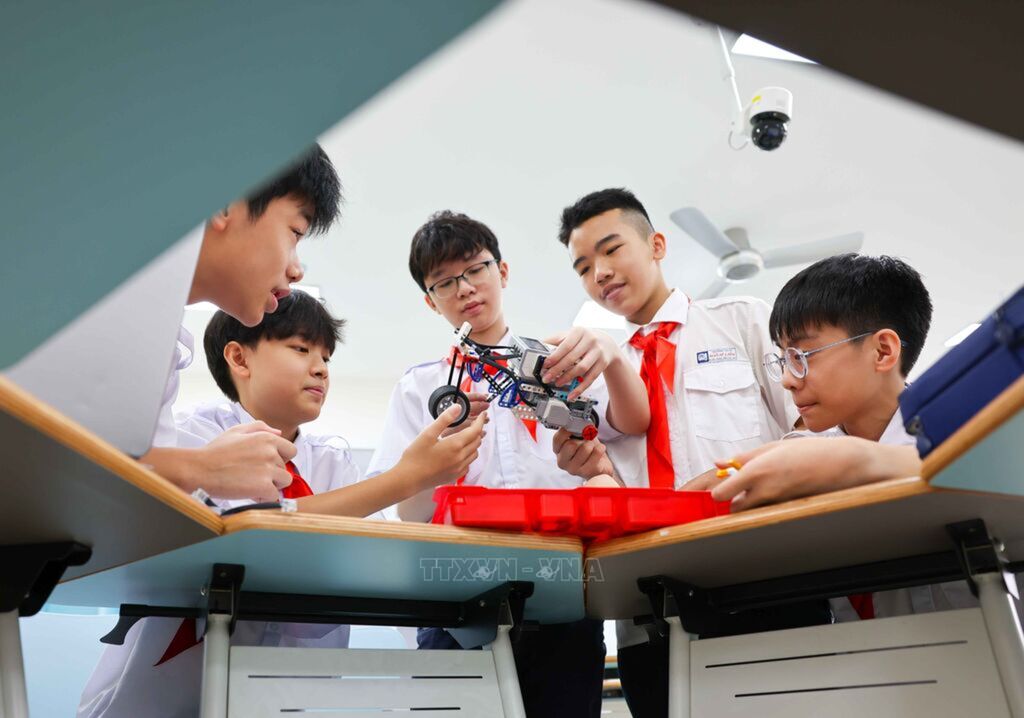
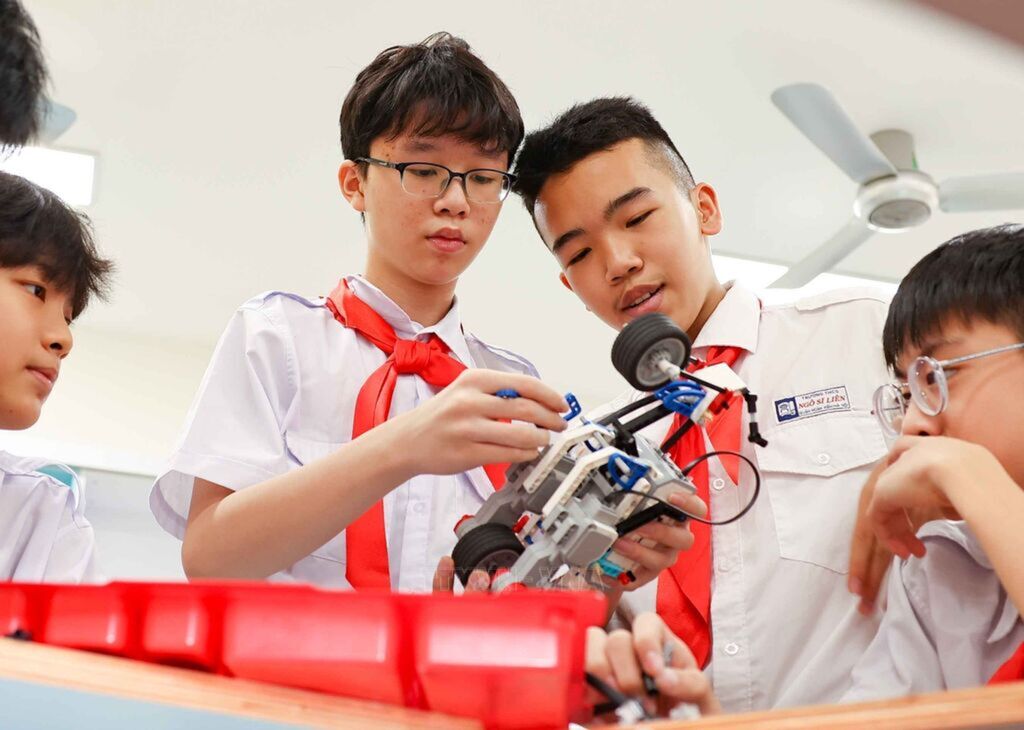
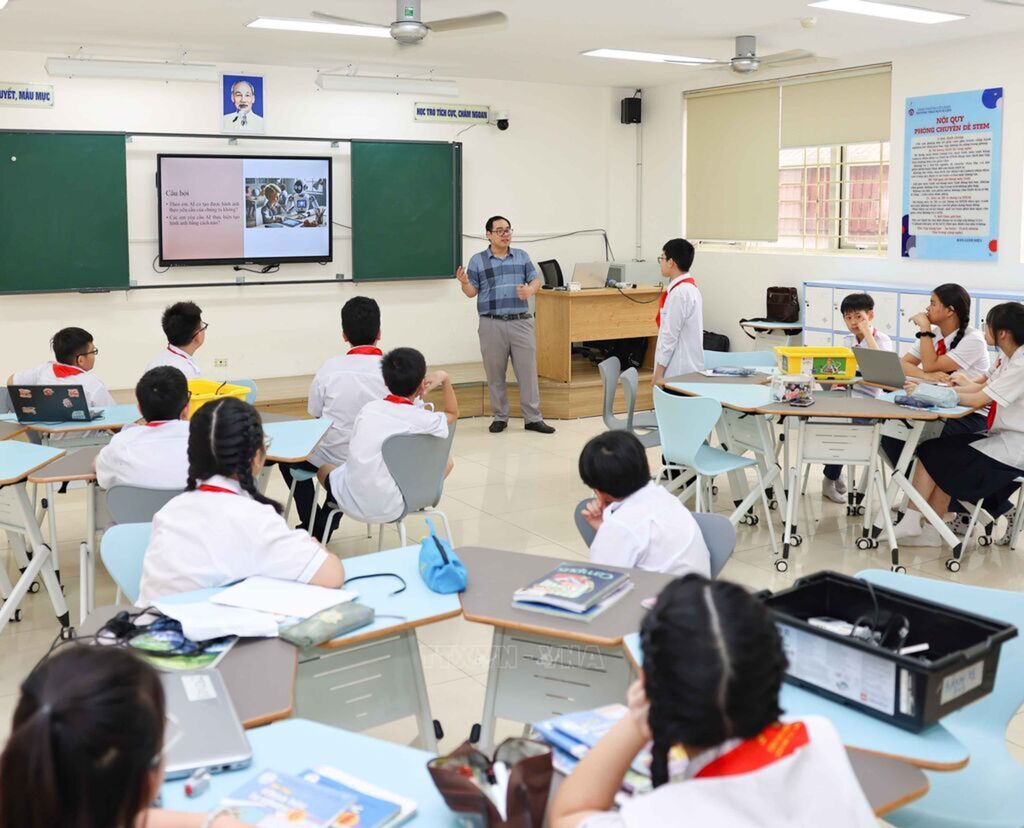
Based on the generated images, students assemble models, conduct experiments, identify errors and collaboratively improve their products for better performance. Photo: Thanh Tung – VNAThe AI–Robotics subject offers deeper practical insights as students use AI to support the design and assembly of real-world models. Photo: Thanh Tung – VNAThe assembly process helps students better understand the structure and operating principles of models, reaffirming an important point: AI is only a supporting tool, while thinking, creativity and problem-solving abilities come from humans. Photo: Thanh Tung – VNAFrom developing ideas and writing prompts describing classroom settings, teachers and students, to generating and editing images, students receive detailed guidance and hands-on practice in a systematic manner. Photo: Thanh Tung – VNAToday’s students are gradually shaping the image of digital citizens: modern, confident, adaptable, technologically minded and ready for integration in the digital era. Photo: Thanh Tung – VNAWith the theme “Students’ means of transport to school – bicycles,” students wrote prompts to generate 4–6 images simulating the assembly steps of a complete bicycle model. Photo: Thanh Tung – VNAStudents enthusiastically experiment with different prompt-writing approaches, creating images with strong personal imprints while actively exchanging ideas, discussing and collaborating during the model assembly process. Photo: Thanh Tung – VNA
Hanoi students apply AI in image creation and robot assembly design
Amid the rapid pace of digital transformation, integrating
artificial intelligence (AI) into education not only improves learning quality
but also opens up entirely new approaches to knowledge acquisition for
students. In this spirit, Ngo Si Lien Secondary School (Cua Nam ward, Hanoi)
has introduced classes on “applying AI in image creation, reconstruction and
robot assembly design,” with the participation of AI robotics experts and the
school’s IT teachers. Photo: Thanh Tung – VNA