Ho Chi Minh City launches public e-bike service to promote green transport
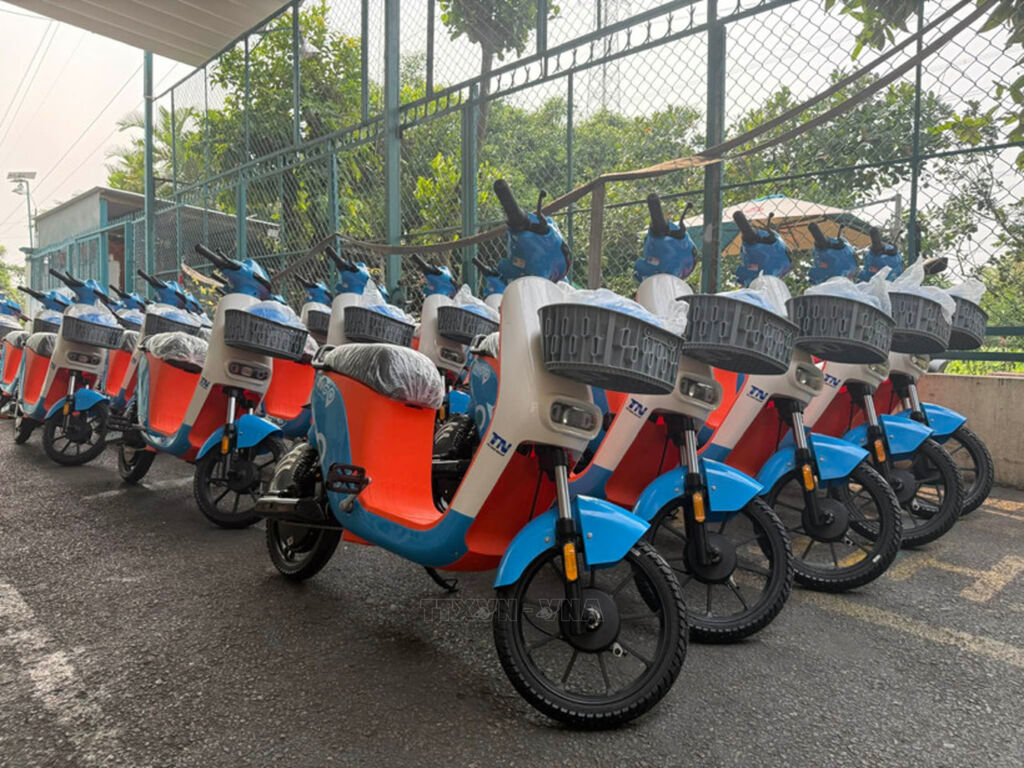
A total of 500 public e-bikes are expected to put into use across the entire station network in March, alongside the public bicycle network that has been in service since late 2021.
A total of 500 public e-bikes are expected to put into use across the entire station network in Ho Chi Minh City in March. (Photo: Ho Chi Minh City Management Centre of Public Transport)

Ho Chi Minh City (VNA) – The Ho Chi Minh City Management Centre of Public Transport under the municipal Department of Construction launched a public electric bicycle service on March 15, marking a new step in efforts to expand green urban mobility.

A total of 500 public e-bikes are expected to put into use across the entire station network in March, alongside the public bicycle network that has been in service since late 2021.

From March 15 to March 31, residents and visitors can try the electric bicycles for free for 15 minutes at a public bike station near the former Saigon Tax Trade Centre site on Nguyen Hue street.

Users can access the service by registering on the TNGo-HCM application to get a promotional code for the trial ride.

According to the centre, the development of public bicycle and e-bike services is expected to encourage residents to shift from private vehicles to public transport, helping reduce traffic congestion, limit environmental pollution, and contribute to the goal of lowering emissions in the transport sector.

After the trial period, the operator plans to charge 10,000 VND (0.38 USD) for 15 minutes, 20,000 VND for 30 minutes, 35,000 VND for 60 minutes, 60,000 VND for 120 minutes, and 110,000 VND for 240 minutes.

Residents can download the TNGo-HCM application on the App Store for iOS devices or Google Play for Android devices by scanning a QR code or searching for “TNGo-HCM”, then opening an account to use the service.

A representative of the centre said it will continue coordinating with relevant agencies to monitor the implementation process, assess operational performance and the service’s ability to meet travel demand, while gradually expanding the network across the city in the coming time.

Since late 2021, the centre has partnered with Tri Nam Group to deploy a public bicycle service in the city’s central area. The initiative forms part of Ho Chi Minh City’s plan to enhance public passenger transport while managing the use of private motor vehicles, with the aim of improving connectivity among different public transport modes.

To date, the system has operated 500 public bicycles at 52 stations in the city centre to serve residents’ travel needs./.

Related News

Major environmental targets for 2026–2030

The Resolution of the 14th National Party Congress sets several environmental targets for the 2026–2030 period, including maintaining forest coverage at 42 percent, cutting greenhouse gas emissions by 8–9 percent, treating and reusing 65–70 percent of wastewater in river basins, and expanding marine and coastal protected areas to at least 6 percent of Vietnam’s maritime area.

Green transport remains inevitable path for sustainable cities

The transition to transport powered by clean energy is becoming an inevitable trend in efforts to reduce greenhouse gas emissions, improve urban air quality and lessen dependence on fossil fuels. In Hanoi, the development of electric buses, the promotion of green transport and the gradual building of a sustainable transport system not only help realise the city’s green growth goals but also contribute to Vietnam’s commitment to achieving net-zero emissions by 2050.

See Also

Digital transformation boosts collective economy development

With just a smartphone, an internet connection and a few simple supporting devices, Nguyen Hong Kien, Director of Kien Thai Nguyen Tea Cooperative, together with his staff, can introduce products, interact with customers and sell goods directly from the production workshop. This approach allows the cooperative to reach customers more quickly, reduce intermediary costs and improve sales efficiency compared with traditional marketing methods.

Party, State leaders join Hanoi voters in Election Day

The election is taking place as the country continues efforts to advance renewal and development, with the selection of capable representatives expected to contribute to building a socialist rule-of-law state and promoting socio-economic progress.

Party General Secretary casts ballot in Hanoi's Ba Dinh ward

Party General Secretary To Lam described the election as a major national event that demonstrates the people’s freedom and right to mastery, enabling them to select capable and reputable representatives to undertake the country’s common tasks and guide national and local development while safeguarding sovereignty and territorial integrity.

Nationwide voting for 16th National Assembly, People’s Councils for 2026-2031 begins

According to the National Election Council, from 864 candidates, voters will elect 500 deputies to the 16th National Assembly (1.73 candidates per seat). For provincial-level People’s Councils, voters will elect 2,552 deputies from 4,217 candidates (1.65 candidates per seat). For commune-level People’s Councils, voters will elect 72,611 deputies from 120,873 candidates (1.66 candidates per seat).

Resolution 57: High-tech solutions applied to tackle pollution in Hanoi’s rivers

A project to rehabilitate the Lu and To Lich rivers marks a breakthrough with the application of Germany’s modern pipe jacking technology, enabling underground construction while safeguarding existing urban infrastructure. The adoption of advanced science and technology solutions will help collect about 75,000 cu.m of wastewater each day for treatment, underscoring Hanoi’s determination to revive its rivers and move towards a digital society and a sustainable green environment.

Voting hours set for March 15, 2026 election

Election day for deputies to the 16th National Assembly and People’s Councils at all levels for the 2026–2031 tenure has been set for March 15, 2026. Under the regulations, voting takes place from 7.00 a.m. to 7.00 p.m. on the same day. Depending on local conditions, the Election Committee may decide to start voting earlier, but not before 5.00 a.m., or end later, but no later than 9.00 p.m. on the same day.