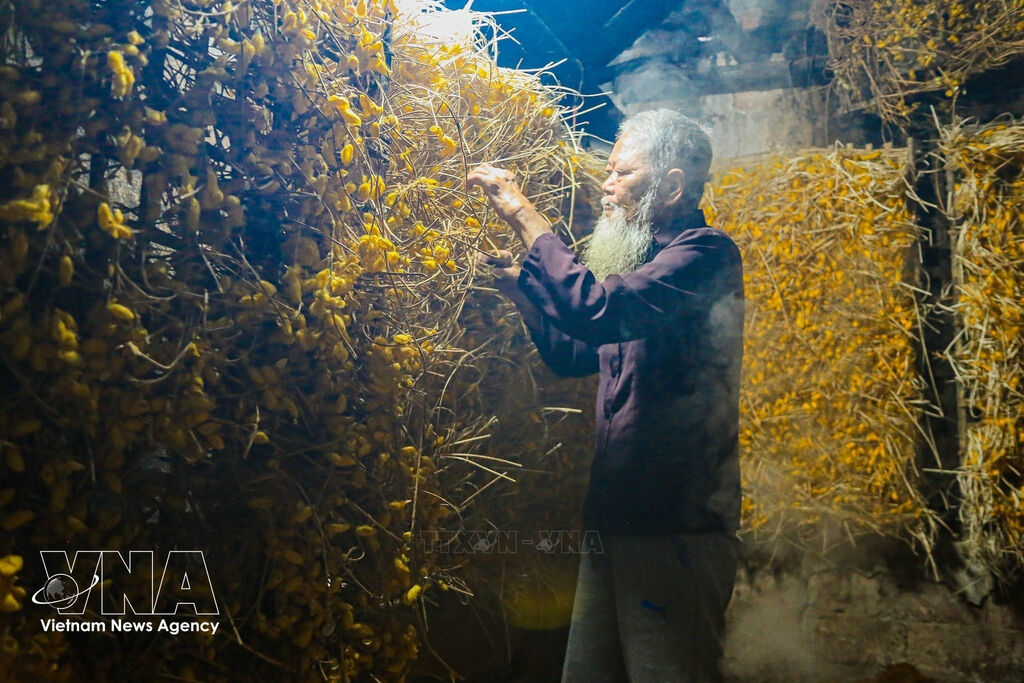
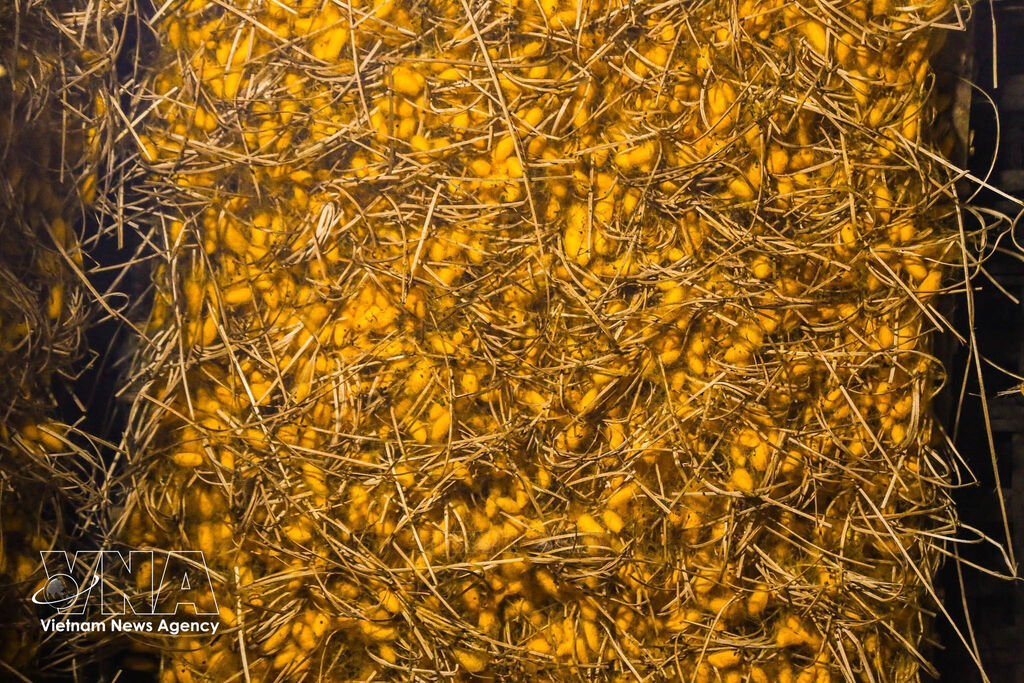
After feeding on mulberry leaves, silkworms spin silk threads to form bright golden cocoons. (Photo: Published by VNA)
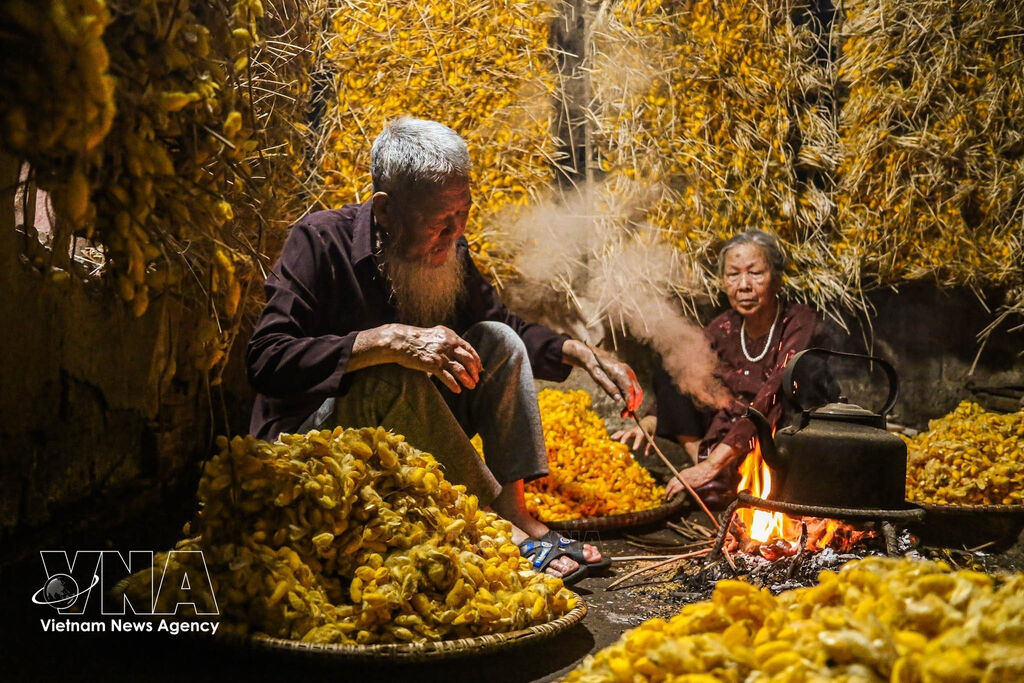
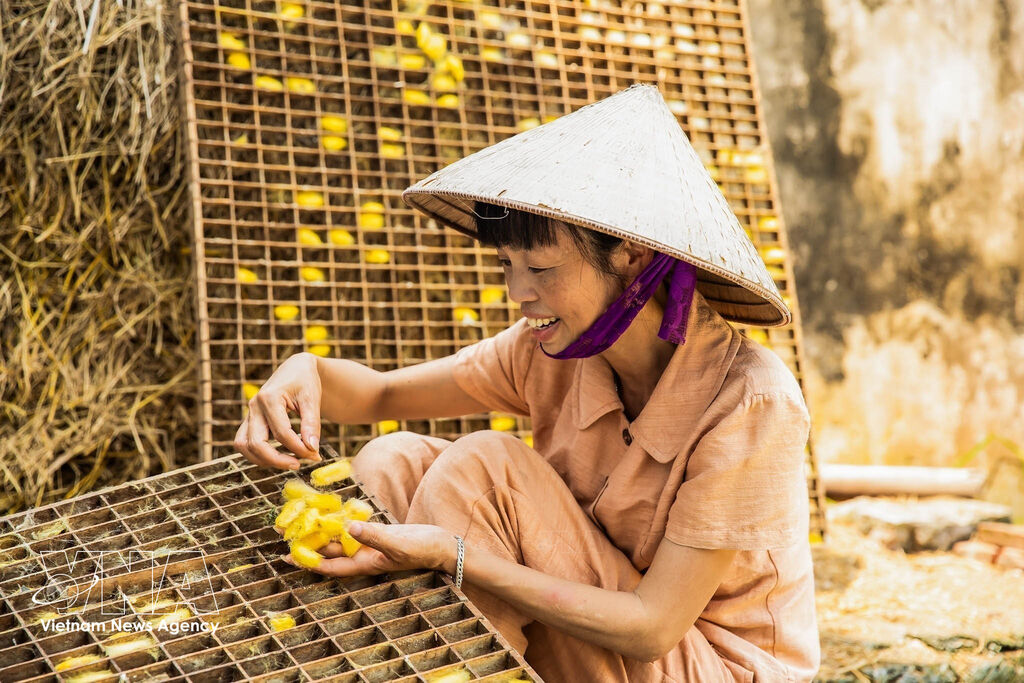
When ready for harvest, the cocoons are covered in shiny golden shells made from silk filaments that can stretch hundreds of metres, protecting the pupae inside. (Photo: Published by VNA)
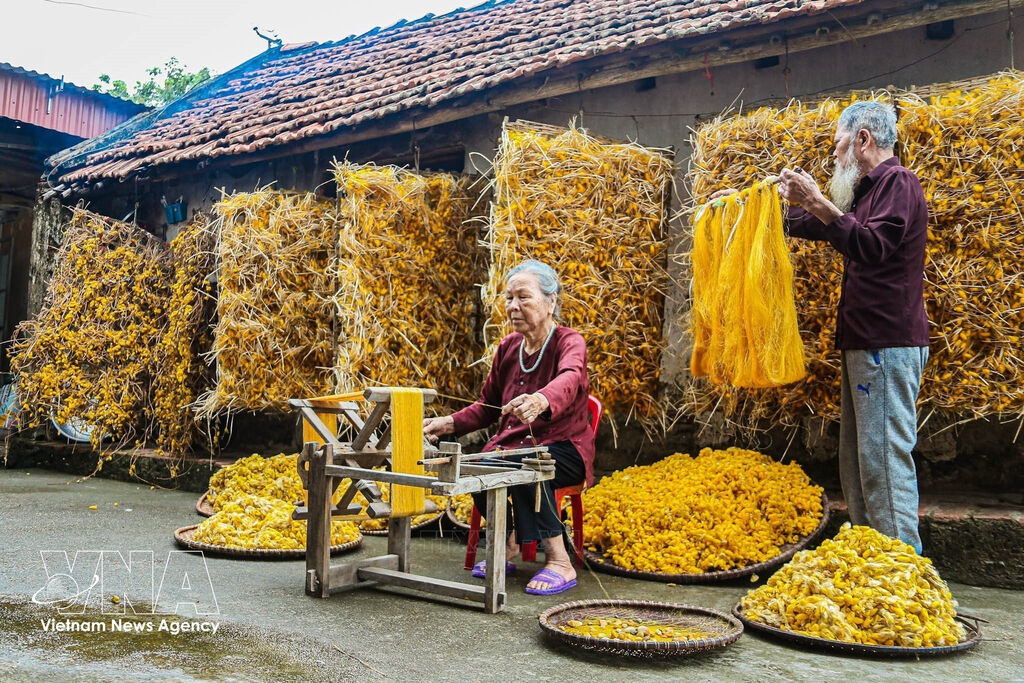
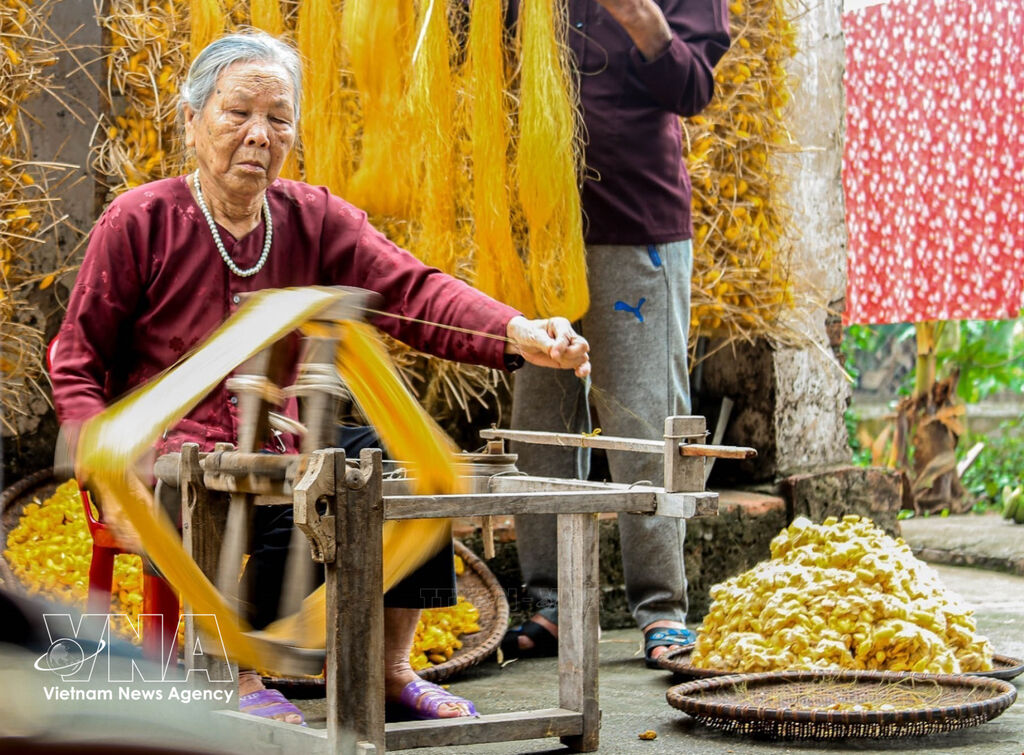
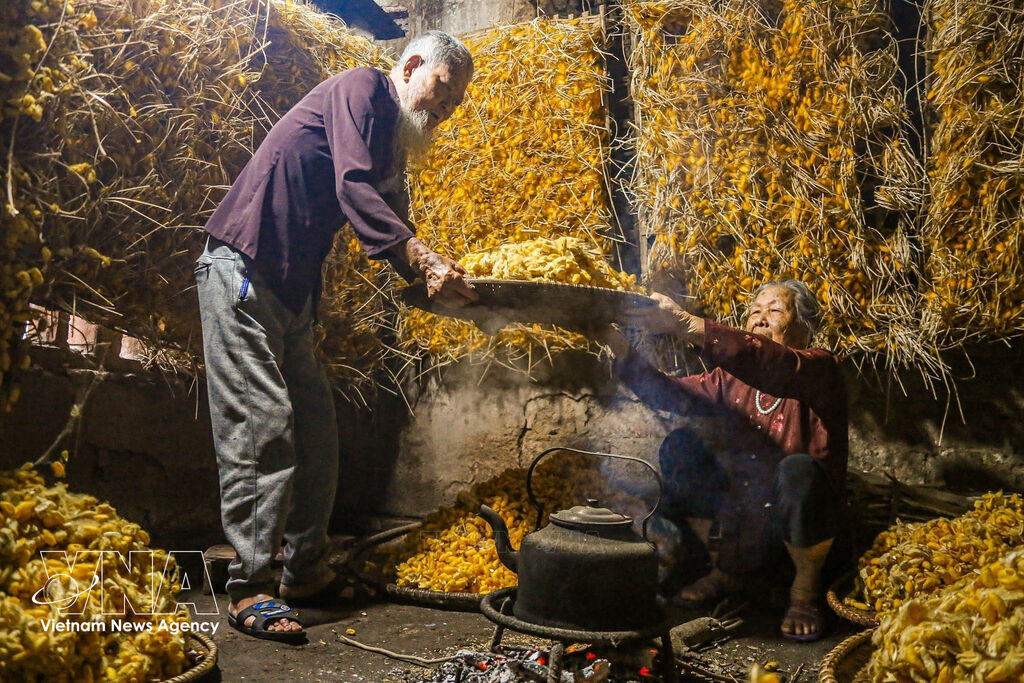
In their family courtyard, an elderly couple work together to harvest cocoons and reel silk threads. (Photo: Published by VNA)
Each worker can produce only around 70-100 grammes of silk per day, as the process requires great precision and patience. (Photo: Published by VNA)
The tussah silk weaving craft in Nam Cao has contributed to local economic development. (Photo: Published by VNA)
Trays of golden cocoons are prepared for transport from Vu Tien commune to the tussah silk weaving village of Le Loi, where they begin their transformation into silk yarn. (Photo: Published by VNA)
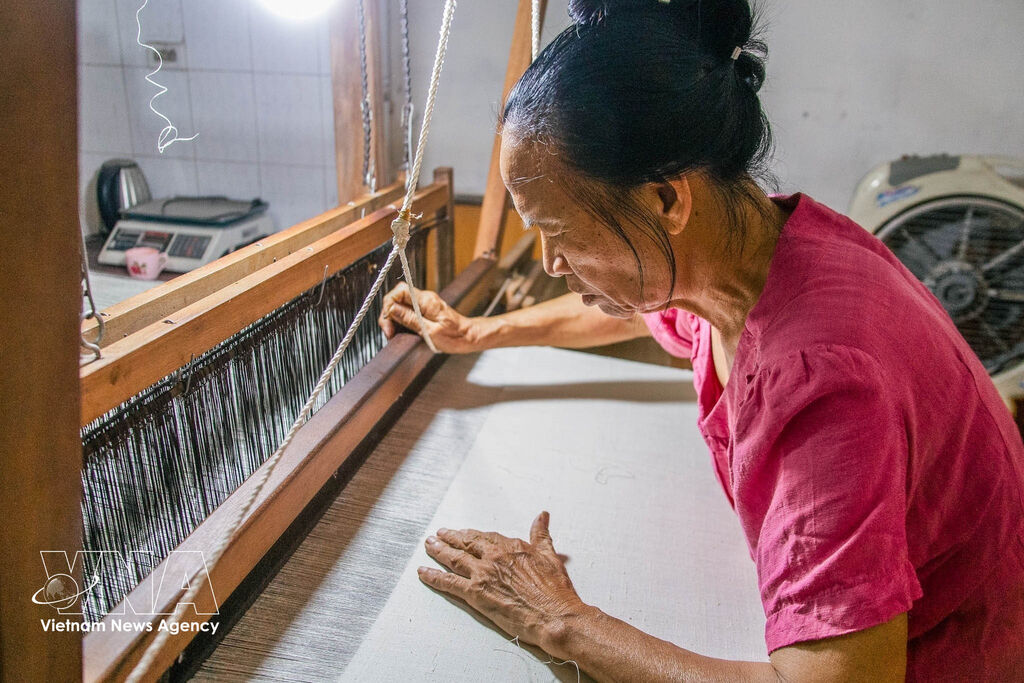
A woman in the craft village diligently weaves fabric at her loom. (Photo: Published by VNA)
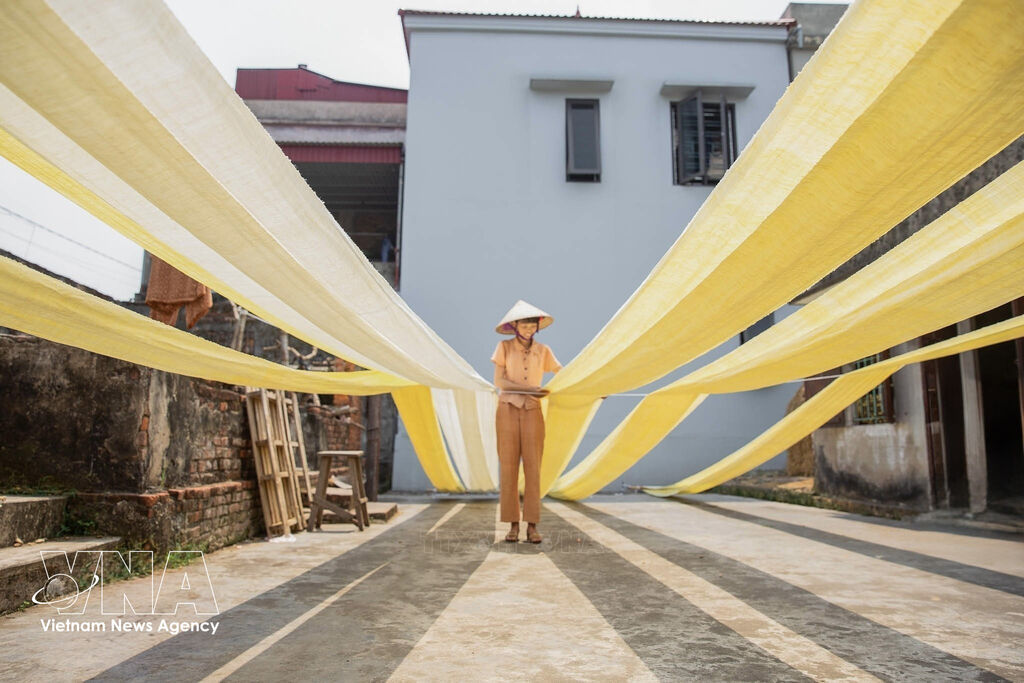
The fabric is dried under natural sunlight, an important step that helps make the silk fibres tighter and more durable. (Photo: Published by VNA)
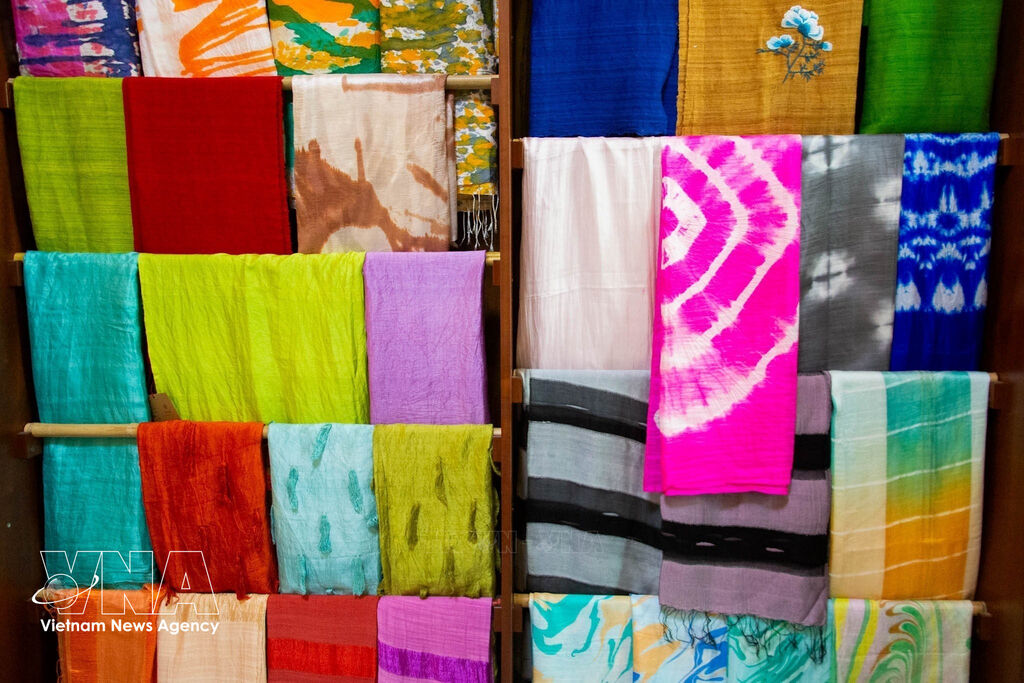
Finished tussah silk products are not only handmade goods, but also reflect the efforts of a traditional craft village striving to preserve its cultural identity in Hung Yen province. (Photo: Published by VNA)
Hung Yen artisans keep tussah silk tradition alive
In the northern province of Hung Yen, the journey of tussah silk begins in the lush mulberry fields of Vu Tien commune and ends at wooden looms in Le Loi commune. Amid modern life, this traditional craft continues to be quietly preserved by local artisans.