 |
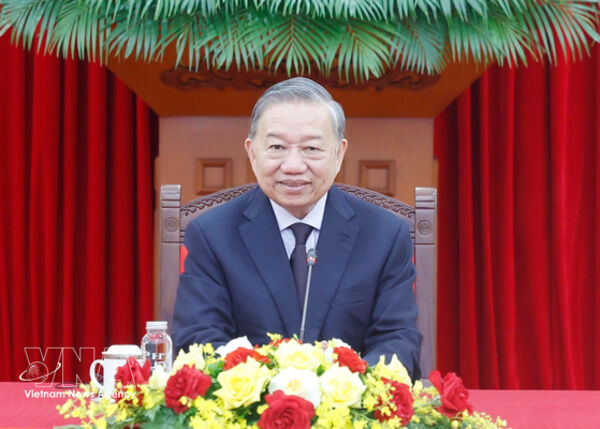
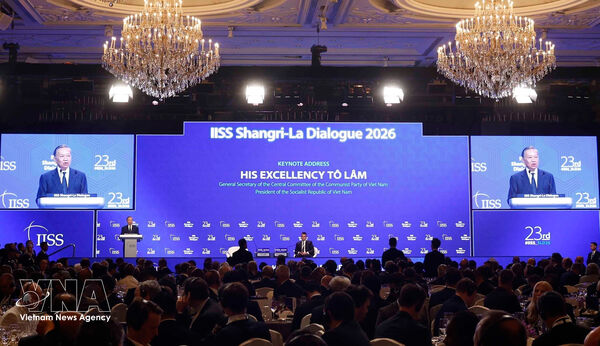
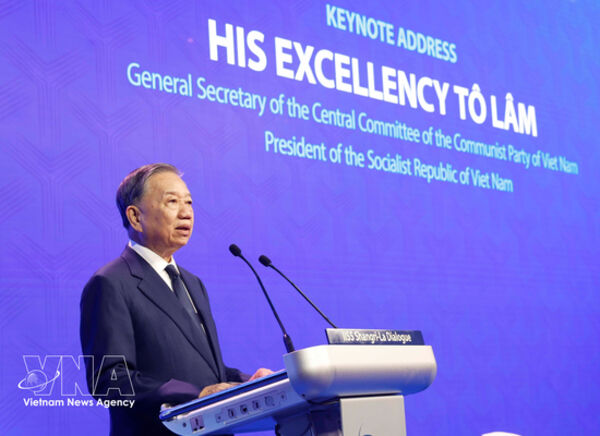
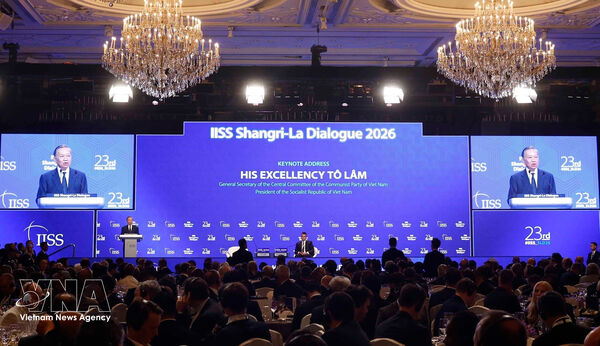
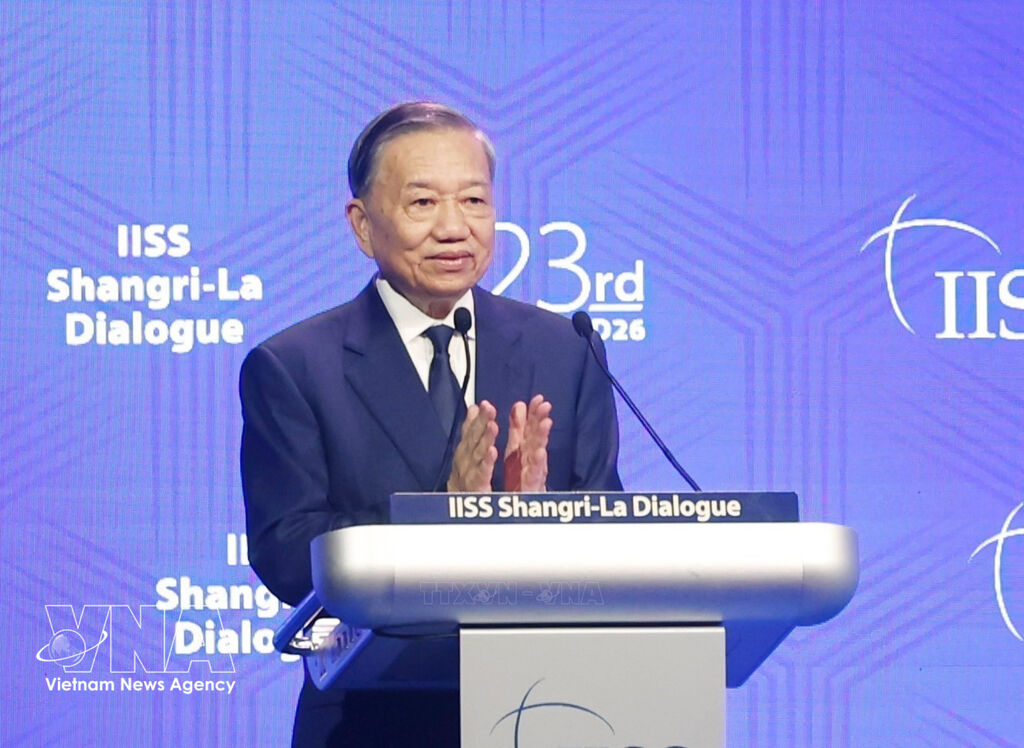
| General Secretary of the Communist Party of Vietnam (CPV) Central Committee and State President To Lam delivers a keynote policy address at the opening session of the 23rd Shangri-La Dialogue. (Photo: VNA) |
Hanoi (VNA) – The keynote policy address delivered by General Secretary of the Communist Party of Vietnam (CPV) Central Committee and State President To Lam at the opening session of the 23rd Shangri-La Dialogue in Singapore on May 29 has drawn wide attention from international media outlets and observers.
His speech has been described as offering timely reflections and practical proposals for sustaining peace and strategic trust amid growing geopolitical competition.
Indonesia’s Kontan newspaper highlighted the Vietnamese leader’s warning about three interconnected global crises: the crisis of the international order, the crisis of development models and the crisis of strategic trust among nations. The paper noted that placing the crisis of trust alongside security and development challenges reflected Vietnam’s comprehensive approach to current global turbulence.
Singapore-based broadcaster CNA focused on the Vietnamese leader’s message that the three crises facing the world today are not inevitable realities that we are bound to accept. In his keynote speech, the leader called for strengthening international law, promoting inclusive and sustainable growth models, and enhancing dialogue, transparency and cooperation among nations to prevent growing instability.
China’s Xinhua News Agency paid particular attention to remarks concerning the central role of the Association of Southeast Asian Nations (ASEAN). Xinhua quoted General Secretary and President Lam as emphasising that the Asia-Pacific region shares common interests in peace, connectivity and development, while ASEAN continues to serve as a structure for dialogue and balance. The newspaper also stressed his view that ASEAN centrality must be maintained through unity, strategic autonomy and the bloc’s ability to shape a common regional agenda.
Meanwhile, the South China Morning Post, based in Hong Kong (China), described the speech as presenting a notable framework for rebuilding strategic trust in a rapidly changing security environment. The newspaper highlighted the Vietnamese leader’s warning that rapid advances in artificial intelligence, big data, quantum technology, cyberspace and autonomous systems could heighten risks of misunderstanding and instability without appropriate governance mechanisms.
Turkey’s Anadolu Agency underscored the speech’s consistent call for self-restraint, cooperation and dialogue over confrontation.
Analysts also viewed the keynote role at one of Asia’s leading security forums as reflecting Vietnam’s increasingly prominent position and voice in regional and global affairs.
Many observers said the speech clearly reflected Vietnam’s consistent position on promoting multilateralism, upholding international law, reinforcing ASEAN centrality and building trust among nations in order to effectively address the increasingly complex challenges facing the world today.
Held in Singapore from May 29 to 31, the 23rd Shangri-La Dialogue has brought together defence ministers, military leaders, scholars and security experts from around the world to discuss pressing strategic and security challenges./.