 |
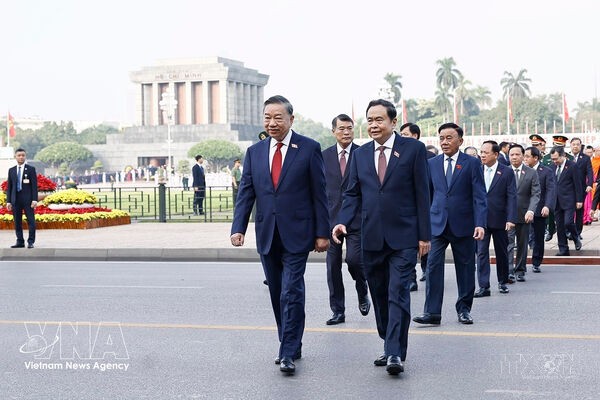
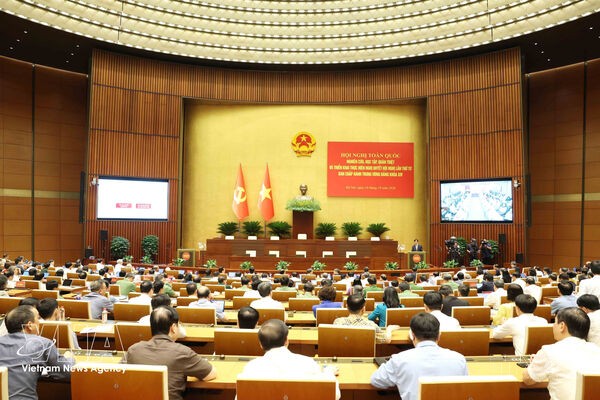
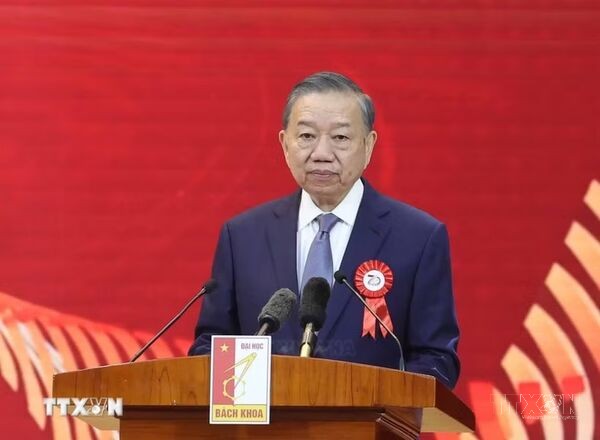
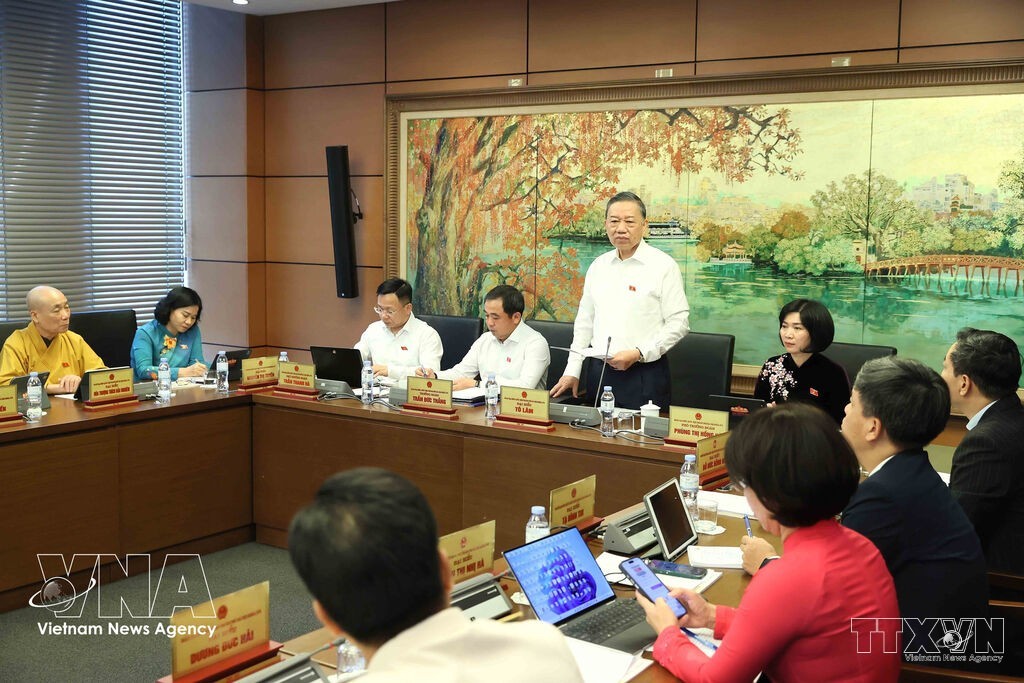
| General Secretary and President To Lam speaks at the group discussion with the National Assembly deputies’ delegation of Hanoi on October 17, 2026. (Photo: VNA) |
Hanoi (VNA) – The true measure of a law's success is that goods circulate more smoothly, businesses reduce operating costs, citizens across all regions receive better services with better guaranteed rights, and service prices become increasingly affordable, said General Secretary of the Communist Party of Vietnam Central Committee and President To Lam.
The top leader emphasised the core principle in lawmaking while speaking at a group discussion with the National Assembly deputies’ delegation of Hanoi on October 17, which was part of the 16th National Assembly’s second session.
The focus was on the draft amended Law on Postal Services and the draft law amending and supplementing a number of articles of the Law on Measurement.
General Secretary and President Lam stressed that the two draft laws cover areas that have witnessed rapid growth over the recent past, leaving many existing legal provisions insufficient to keep pace with socio-economic development demand.
While amending these laws is imperative, it requires thorough and comprehensive consideration to effectively meet the development requirements of the new era, he said.
Regarding the draft law amending and supplementing some articles of the Law on Measurement, he affirmed that despite being a highly specialised technical field, measurement directly affects citizens' daily lives and the nation's development capacity. Measurement inaccuracies not only cause economic damage and undermine corporate reputation, but also impact crucial legal rulings in criminal and civil matters, as well as human lives.
The Party and State leader requested that the legislative process focus on building measurement capabilities to support economic autonomy and technological mastery.
Regarding budgetary resource allocation for metrological standard systems and digital infrastructure, clear priorities, sharing capacity, and investment efficiency must be established to avoid wastefulness. Concurrently, state management in measurement must decisively shift from pre-approval inspection to risk-based post-approval inspection with clear accountability, promoting digital transformation and data reuse to curb expenses for businesses, he noted.
Addressing the draft amended Law on Postal Services, General Secretary and President Lam noted that postal operations have evolved far beyond traditional services to become essential infrastructure for the digital economy, deeply integrated with e-commerce, digital delivery, and logistics.
Therefore, the law perfection must expand development space, ensure fair competition, and clearly delineate the boundaries between postal services, transport, and e-commerce, he went on, adding it should also simplify administrative procedures, shifting from licensing to registration coupled with substantive supervision.
He further underscored the need to efficiently utilise state resources in providing public postal services and to place users' interests at the centre.
The business that enters into the contract is ultimately responsible for any incidents involving postal shipments. Besides, appropriate management mechanisms must be established for delivery personnel, personal data protection, and transparent, convenient compensation processes, he said.
The top leader affirmed that the overall trajectory of the entire economy must be to reduce costs and improve service quality, leaving no room for arbitrary cost increases./.