 |
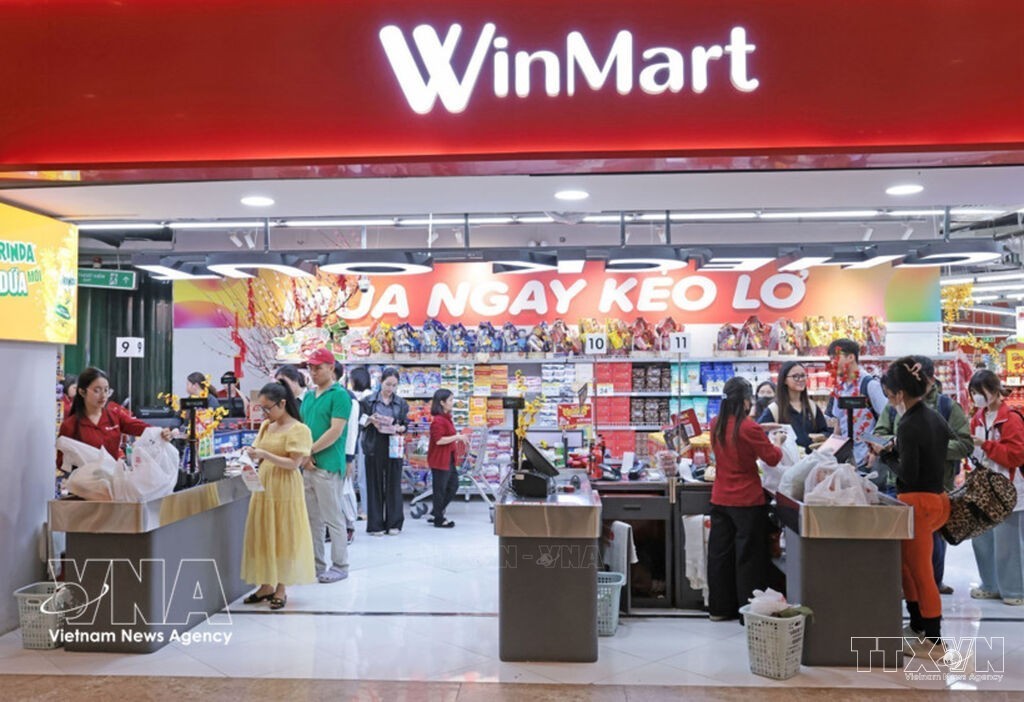
| Shoppers at Winmart (Photo: VNA) |
Hanoi (VNA) - Since its launch in 2008, the Vietnam National Brand Programme has grown from 30 companies with 50 products to 227 with 499 products in 2026.
Companies recognised in the 2026 round generated combined revenue of more than 2.5 quadrillion VND (96.1 billion USD) in 2025, including export revenue above 262 trillion VND, and contributed over 133 trillion VND to the State budget. They provided jobs for more than 760,000 workers and invested nearly 43.6 trillion VND in research and development, up more than 6% from a year earlier.
Vietnam’s national brand value reached 462.28 billion USD in 2026, up 45.14% from 2020 and ranking 32nd among 193 countries, according to Brand Finance. The challenge, however, goes beyond climbing the rankings or scaling up. It is turning those gains into lasting competitiveness and getting Vietnamese firms deeper into global value chains.
To make the programme a more tangible growth driver, support policies need to match companies’ needs to upgrade their capabilities and enter new markets.
Vu Ba Phu, Director of the Vietnam Trade Promotion Agency under the Ministry of Industry and Trade, said the 10th selection round is underway in 2026 as the country follows new Politburo resolutions aimed at meeting its economic goals for 2030 and its vision for 2045. The programme has revised its regulations and selection criteria to fit that agenda.
Innovation now carries more weight among the programme’s three core values of quality, innovation-creativity and pioneering capacity. Its score has been raised to 300 of 1,000 points from 180, underscoring the role of technology and innovation in sharpening competitiveness.
Phu said the programme has raised Vietnamese enterprises’ awareness of brand-building over successive cycles, and the rising value of the national brand has improved competitiveness, drew investment and expanded exports.
He added that linking the programme with initiatives to develop science, technology and innovation will help firms step up research, apply new technologies and commercialise products, improving quality, brand value and competitiveness at home and abroad.
Deputy Minister of Industry and Trade Luong Hoang Thai said the programme will focus on developing the National Brand Development Strategy through 2035, with a vision to 2045, strengthening companies’ brand-building and management capabilities, and helping Vietnamese brands expand overseas.
By spurring innovation, digital transformation and green transition, and by strengthening links to global value chains, the programme aims to raise product value, bolster the standing of Vietnamese firms and shift their edge from manufacturing capacity to value creation, thus burnishing the country’s competitiveness and reputation abroad./.