 |
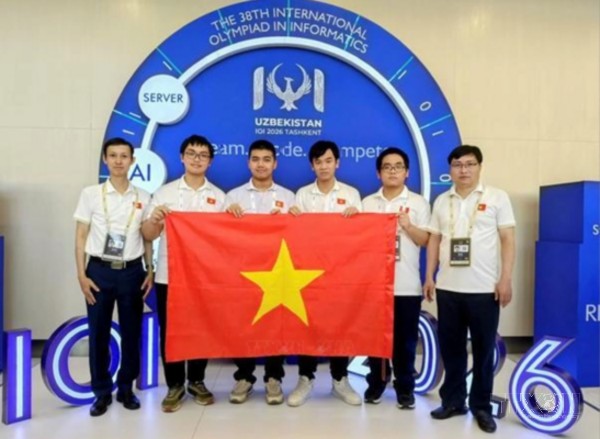
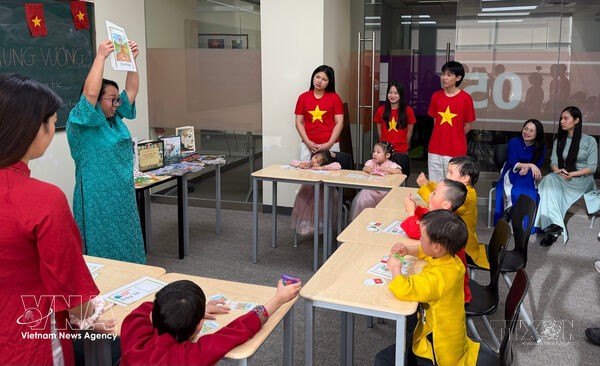
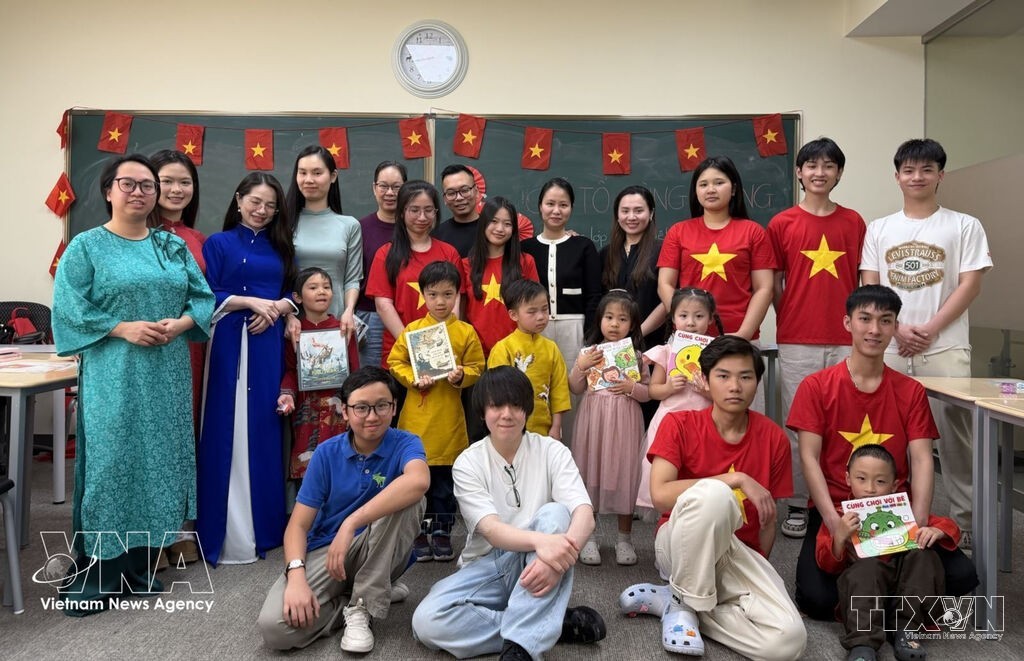
| Phan Thi Quynh Trang (far left, second row) poses for a commemorative photo with the Vietnamese youth group at an event organised by the Canada-Vietnam Culture and Education Council to provide Vietnamese language lessons for second-generation Vietnamese-Canadian children. (Photo: VNA) |
Ottawa (VNA) – The approach set out in the Politburo's Resolution No. 23-NQ/TW on overseas Vietnamese affairs is of particular significance to the Vietnamese community in Canada, home to a large number of experts, intellectuals, entrepreneurs and young people educated in an international environment, an educational expert has said.
Speaking to a Vietnam News Agency correspondent in Canada, Phan Thi Quynh Trang, President of the Canada-Vietnam Culture and Education Council (CVCEC), said that with an open, proactive and transparent mechanism, the community could make more effective contributions in areas such as digital transformation, education, modern governance, sustainable urban development and international market connectivity.
Beyond being a source of intellectual resources, Vietnamese people in Canada can also serve as a bridge, introducing their Canadian friends to a modern, dynamic Vietnam rich in cultural identity.
She said Resolution No. 23 marks a new development in mindset, as its identification of overseas Vietnamese not only as an inseparable part of the Vietnamese national community but also as one of the country’s important strategic resources has more clearly affirmed their role in the cause of national construction and development.
From her experience in Canada, the CVCEC representative said that mobilising resources from overseas Vietnamese still faced a number of difficulties. Many Vietnamese experts, young intellectuals and scientists working at major Canadian universities wish to participate in projects in Vietnam, but cooperation has largely remained limited to short-term exchange programmes, without long-term coordination mechanisms or specific assignments.
Information gaps also affect the ability of overseas Vietnamese to participate. Domestic policies, guidelines and cooperation needs are sometimes not communicated widely or regularly to associations and organisations across Canada. Meanwhile, younger generations born or raised in a digital environment need convenient channels for direct information and dialogue through which they can learn about policies, put forward initiatives and participate in activities oriented towards their homeland.
Drawing on her experience in implementing education and youth connectivity projects, Trang said it is necessary to develop a digital dialogue platform connecting domestic agencies with overseas Vietnamese experts, intellectuals, entrepreneurs, artists and young people according to their respective fields.
Through such a platform, agencies could provide information or share specific needs, while overseas Vietnamese could propose initiatives and register to participate in programmes suited to their expertise and professions.
She also proposed establishing a shared digital data repository containing Vietnamese-language teaching materials, historical documents, films, photographs, music and cultural products that are legally available for use. An authoritative data source would help associations and non-profit organisations develop more systematic programmes, while reducing the situation in which each organisation has to search for and compile materials independently.
The CVCEC is currently implementing a platform combining technology and artificial intelligence (AI) in teaching the Vietnamese language, history and culture. If supplemented with digitised materials and authoritative historical resources as proposed, the project could improve the quality of its content while gradually expanding to more provinces across Canada.
Trang also stressed the neccessity to bring Vietnamese culture into shared spaces within Canadian society through exhibitions, artistic programmes, heritage showcases and inter-community exchange activities.
From the perspective of a person working in education, culture and youth development, she noted the spirit of Resolution No. 23 needs to be translated into concrete action by creating an environment in which young people could take the initiative and contribute actively./.