 |
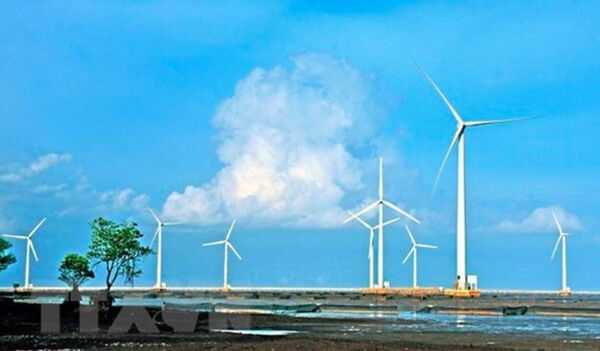
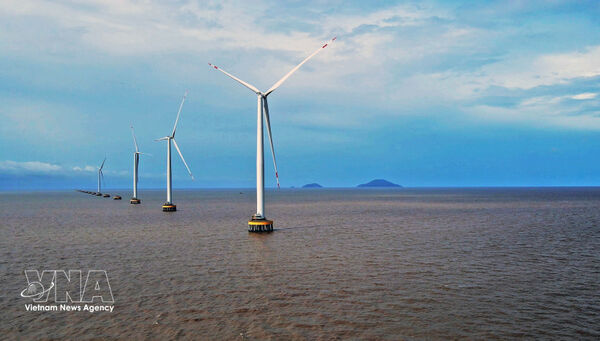
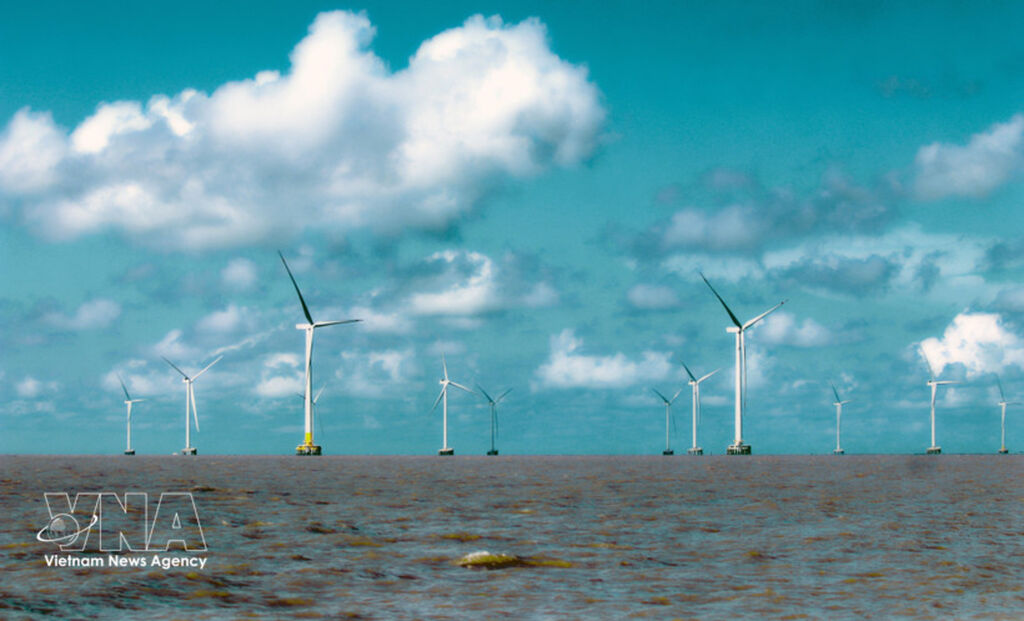
| Off the coast of Ca Mau province, average wind speeds of 6.3–7 metres per second at heights of 80–100 metres provide favourable conditions for offshore wind development, with stronger winds further offshore. (Photo: VNA) |
Hanoi (VNA) – Eight years after the adoption of Resolution No. 36-NQ/TW, offshore wind is emerging as a key driver of Vietnam's green marine economy and modern maritime industries, though unlocking its full potential will require decisive reforms to address regulatory, infrastructure and investment bottlenecks.
A catalyst for industrial development
Resolution No. 36-NQ/TW on Vietnam’s Sustainable Marine Economic Development Strategy until 2030, with a vision to 2045, calls for a green, modern and innovation-driven marine economy built on science and technology. Within this framework, offshore wind has been identified as a strategic sector capable of creating new growth momentum.
With a coastline stretching more than 3,260 km and an estimated technical offshore wind potential of around 600 GW, Vietnam is well positioned to develop the industry. Beyond expanding clean power generation, offshore wind can stimulate an extensive industrial ecosystem encompassing marine surveys, engineering, equipment manufacturing, steel fabrication, offshore construction, port services, logistics, as well as operations and maintenance. These are high-value, technology-intensive industries with strong spillover effects across the broader economy.
International experience shows that the greatest long-term economic gains from offshore wind often come not from electricity generation itself, but from the supply chain and supporting industries. As a result, offshore wind is increasingly viewed as an industrial development strategy rather than simply a renewable energy source.
Vietnam is well placed to capitalise on this opportunity thanks to its existing capabilities in shipbuilding, mechanical engineering, steel structures, offshore construction and oil and gas services. According to Purvin Patel, President of Asia Pacific at Vestas, Vietnam also benefits from a strategic geographic location and a highly skilled engineering workforce. He noted that international investors are looking not only at market size but also at policy stability and a long-term project pipeline. A sufficiently large and predictable market would encourage companies to establish manufacturing facilities, transfer technology and develop local supply chains.
This approach is fully aligned with the objectives of Resolution No. 36, which seeks to build internationally competitive maritime industries. Offshore wind, therefore, is more than a new source of clean energy; it offers an opportunity to transform Vietnam's natural marine advantages into long-term industrial competitiveness.
Institutions paving the way for a new industry
While abundant resources provide the foundation, an effective regulatory framework will determine the pace of offshore wind development. Given the sector's large-scale investments, lengthy project timelines and close links to marine spatial planning, power transmission infrastructure, seaports, environmental management and international financing, offshore wind requires a coherent and stable policy framework.
Speaking at the 2026 APAC Wind Energy Summit, Deputy Minister of Industry and Trade Nguyen Hoang Long said the ministry is working with relevant agencies to refine the legal framework, promote localisation of equipment manufacturing, strengthen domestic supply chains, upgrade port infrastructure and develop a highly skilled workforce. Revisions to the National Power Development Plan 8 and the issuance of implementing regulations for the Electricity Law are providing an important legal foundation. However, investors continue to seek greater policy consistency in areas such as investor selection, allocation of marine areas, power purchase mechanisms and grid investment.
Dr. Nguyen Quoc Thap, Chairman of the Vietnam Petroleum Association, said the biggest challenge remains the slow translation of policy into concrete regulations. Although Resolution No.36 provides a clear strategic vision for the marine economy, the legal framework governing emerging sectors such as offshore wind has yet to keep pace with market needs. As a result, project preparation is often prolonged, increasing costs and reducing the market's attractiveness.
He stressed that offshore wind should be approached as the development of an entirely new industrial sector rather than a collection of individual projects. Planning, infrastructure investment and supply chain development need to be coordinated from the outset. Only with a transparent and stable policy framework, he said, will businesses be willing to make long-term investments in equipment manufacturing, offshore engineering and other high-value technical services.
Once institutional, infrastructure and implementation barriers are removed, offshore wind will not only expand Vietnam's clean energy capacity but also accelerate the development of modern maritime industries, increase local content and enable Vietnamese enterprises to integrate more deeply into global value chains./.