|
| The historic Pavie stone road runs from Sin Suoi Ho commune of Lai Chau province to Den Sang commune of Lao Cai province. (Photo: VNA) |
Hanoi (VNA) – After more than a century, a road that once served as a vital trade artery has “awakened”, emerging as a captivating trekking route for nature lovers and adventure seekers.
Hidden along the slopes of the majestic Nhiu Co San mountain range, the ancient Pavie stone road, also known as the Pavie road in Lai Chau province, stands as a silent historical witness of Vietnam’s Northwestern region.
Built in 1920 during the French colonial period, the stone-paved road was surveyed and constructed under the direction of Governor Auguste Jean-Marie Pavie to facilitate the transport of food and agricultural products and to strengthen control over remote border areas. The road was named after Pavie himself.
At the time of its completion, the route was considered a key transport link connecting Lai Chau and Lao Cai provinces. Fully paved with stone and about three metres wide, it was suitable for pedestrians and pack horses. Along the route, the French established a system of outposts for patrol purposes and even built an airstrip near Nhiu Co San village to support transport in the rugged terrain.
However, the construction came at a high human cost. Many local labourers lost their lives due to hunger, cold and exhaustion amid harsh climate conditions and dense forests. Despite this, the stone road has endured through wars and time, with around 17 kilometres remaining largely intact today.
For generations, local people used the road for daily travel. It was not until around 2017, when images were widely shared by the media and adventure communities, that the Pavie stone road gained broader attention and gradually became a destination for experiential tourism.
Trekking along the ancient road typically begins early in the morning, with visitors advised to hire local guides and porters to ensure safety. The first five kilometres are relatively easy, with flatter terrain and frequent use by residents and livestock. Further uphill, the path becomes more challenging, with moss-covered stone slabs growing increasingly slippery but visually striking.
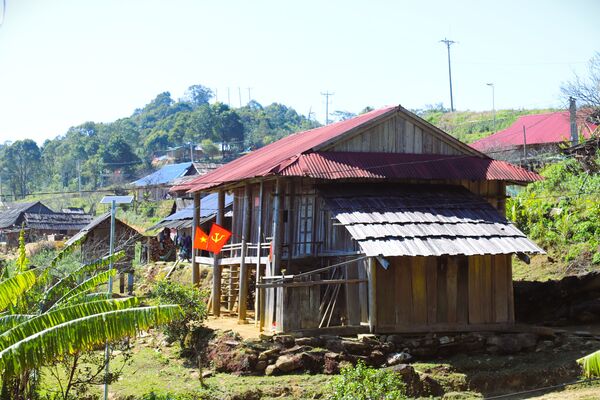
In return, trekkers are rewarded with breathtaking scenery, including primaeval forests, lush cardamom fields and glimpses of local people harvesting forestry products. The area boasts rich biodiversity, changing with elevation, from towering old-growth trees to expansive spice plantations, creating a tranquil and immersive natural landscape.
Near the boundary between Lai Chau and Lao Cai, trekkers encounter a clear mountain stream, often chosen as a resting spot. Many groups stop for lunch at Gio Pass, located at an altitude of around 2,000 metres above sea level. The pass is known not only for its scenery but also for spiritual folk tales passed down through generations.
According to local belief, many labourers perished there during the road’s construction. Travellers traditionally build small grass-and-earth mounds as symbolic graves to pray for safe passage, reflecting a unique spiritual practice in the deep forest.
Today, the Pavie stone road continues to serve as a vital shortcut between highland communities while opening new opportunities for trekking tourism in Lai Chau and Lao Cai provinces. Its revival not only offers memorable journeys for visitors but also helps create livelihoods and improve living standards for residents, marking a meaningful rebirth amid the mountains of the Northwest./.