 |
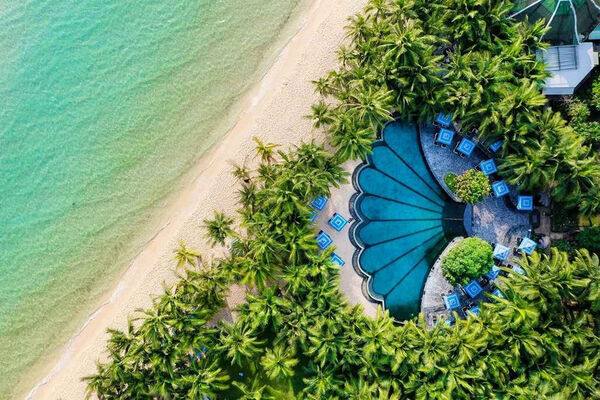
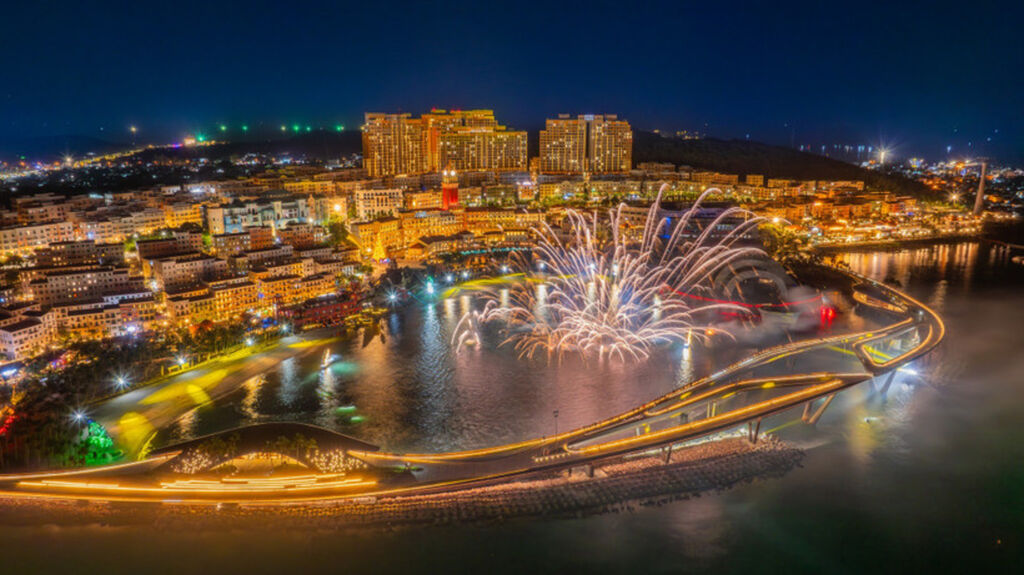
| The blending of culture, architecture and art on Phu Quoc is shaping a cosmopolitan city. (Photo: Sun Group) |
Hanoi (VNA) - Phu Quoc is gradually taking shape as a cosmopolitan city, where cultural, architectural, and creative influences from around the world converge and are harmoniously adapted to the tropical nature of the Pearl Island.
The presence of diverse international architectural styles across Phu Quoc, rather than a single traditional architectural system, is not accidental but rooted in the island’s unique development context. Unlike cities with centuries of urban heritage such as Hoi An or Hue, Phu Quoc is a tourism destination that has grown rapidly over just the past few decades, without a clearly layered architectural legacy to inherit.
As the island has been positioned as an international tourism and resort hub, it has gradually become a meeting point for architectural inspirations from many different cultures, adjusted to suit the tropical climate, island landscapes, and local way of life. At the same time, the destination brings together a number of landmark projects created by leading architects and design firms from around the world, helping shape the identity of a coastal city with a global spirit.
Sunset Town or Santo Port (Hon Thom Island) therefore are not simply recreations of international architectural styles, but rather a creative process of “localisation,” forming a multi-layered urban landscape where visitors can experience many cultural spaces within a single destination while still clearly feeling the natural beauty and spirit of the Pearl Island.
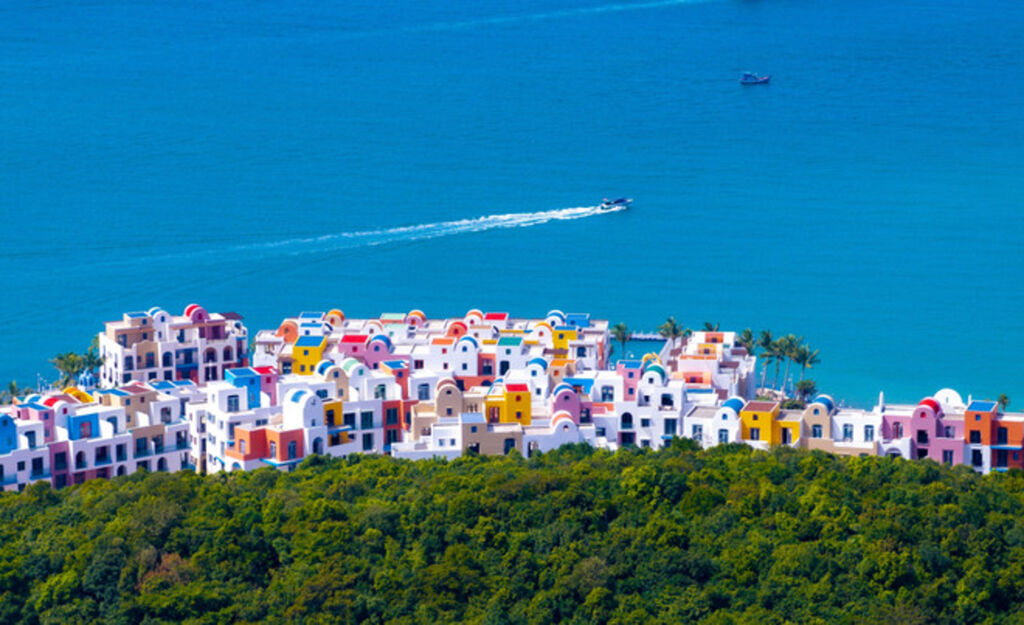 |
| The diverse architectural identity of Santo Port on Hon Thom Island, Phu Quoc. (Photo: Sun Group) |
A romantic Mediterranean atmosphere appears through rows of houses painted in sunset hues cascading down the hillside toward the sea, evoking memories of Italy’s Amalfi Coast; the image of an ancient Roman amphitheater is recreated at the departure station of the Hon Thom Cable Car; while a clock tower inspired by the iconic symbol of London has been gently adapted to blend with the island’s coastal scenery.
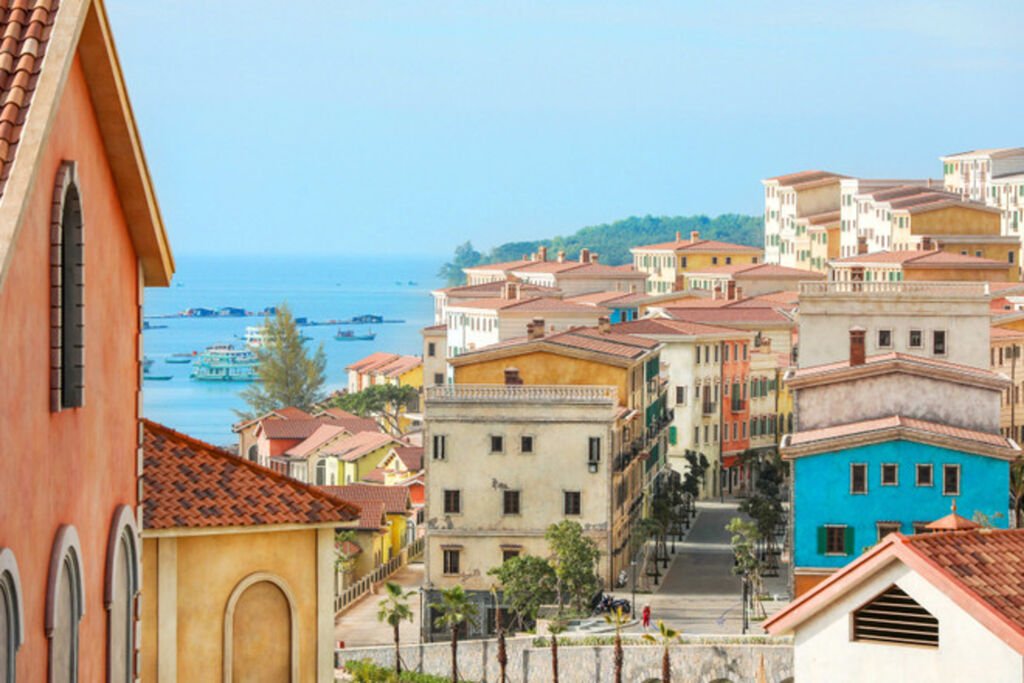 |
| Romantic sunset tones define the character of Sunset Town. (Photo: Sun Group) |
Sunset Town is a clear example of how Phu Quoc embraces and “localises” the spirit of international architecture. The concept of the district was inspired by Mediterranean seaside towns, where brightly colored houses sit on hillsides facing the sea, bathed in sunlight and wind—regions that share many similarities with Phu Quoc in terms of climate, terrain, and landscape scale. However, Sunset Town was designed as if the neighborhood had formed and evolved on the Pearl Island over many different periods. This is reflected in its weathered façades (theming), roof structures made steeper to suit the tropical rainfall, lush greenery woven throughout the spaces, and traditional Vietnamese artistic elements integrated into the design.
True to its name, the town is also one of the best places to witness one of the island’s most beautiful moments: sunset over the sea. Thanks to its west-facing position on Phu Quoc Island, the district opens out toward a vast ocean horizon where, each afternoon, the sun gradually sinks into the sea, painting the sky and water in radiant shades. From balconies adorned with tropical bougainvillea to seaside stone steps, visitors can fully immerse themselves in the moment of sunset – the very light that inspired the creation of Sunset Town itself.
Around the world, many cities have become “stages” where leading architects express bold ideas and create iconic structures. Dubai stands out with globally recognised landmarks, while Singapore is known for the seamless integration of contemporary architecture with urban planning and landscape design. In its own development journey, Phu Quoc is also choosing a similar path, where architectural ideas of international scale are created, adapted to the island’s coastal nature, and contribute to shaping the identity of a tourism city with a global spirit.
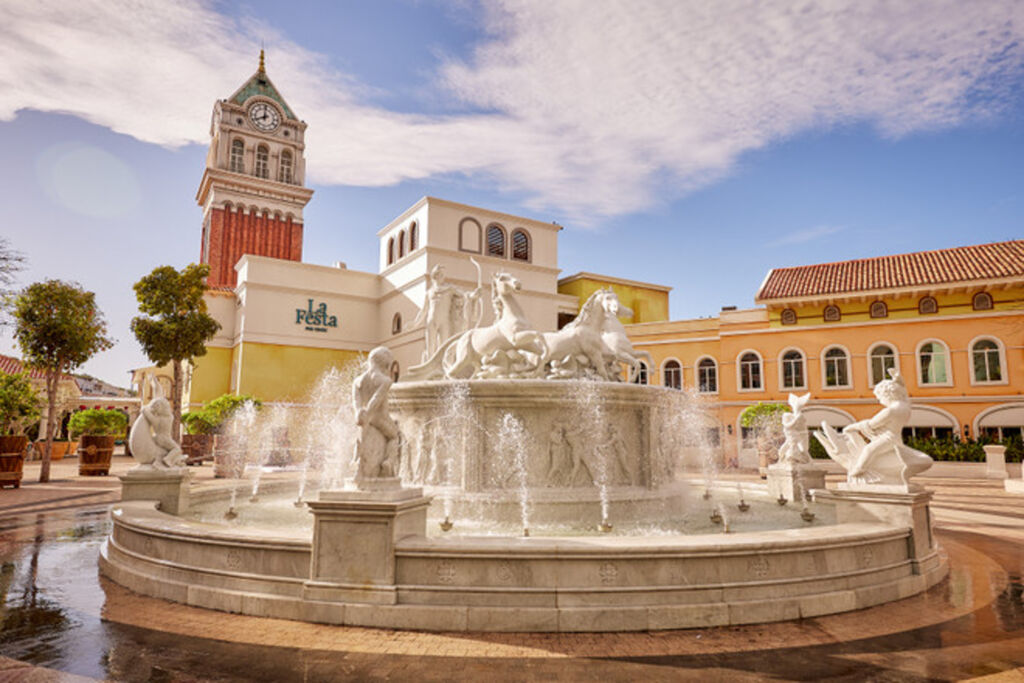 |
| The intricate King of the Sun fountain at Sunset Town. (Photo: Sun Group) |
It is not an exaggeration to describe Sunset Town as a “living museum” of architecture, where every street corner and structure is carefully crafted like a work of art. Located at the center of the town is the intricate King of the Sun fountain, created by Frilli Gallery – a renowned sculpture workshop from Florence, Italy, famous for its classical European marble masterpieces.
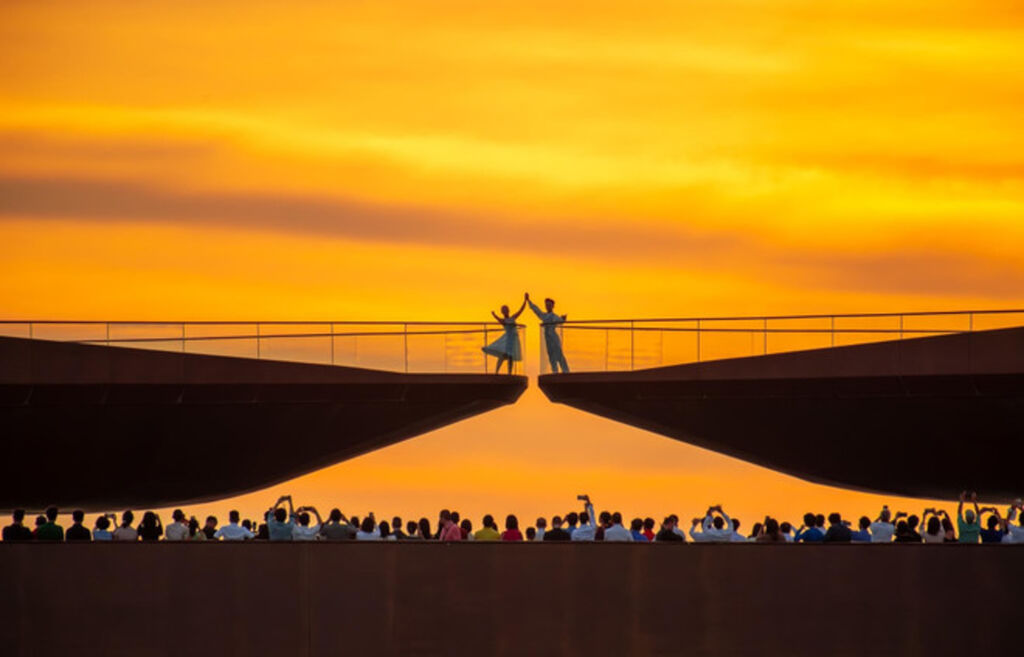 |
| Kiss Bridge – a symbolic bridge of love and connection attracting large numbers of visitors. (Photo: Sun Group) |
Facing the bay is Kiss Bridge – a structure that international media have called “the bridge of kisses” since its debut, designed by renowned Italian architect Marco Casamonti. Originally conceived simply as a bridge connecting two breakwaters, the project evolved into a unique architectural symbol with two branches stretching toward the sea without touching, evoking the suspended moment before a kiss.
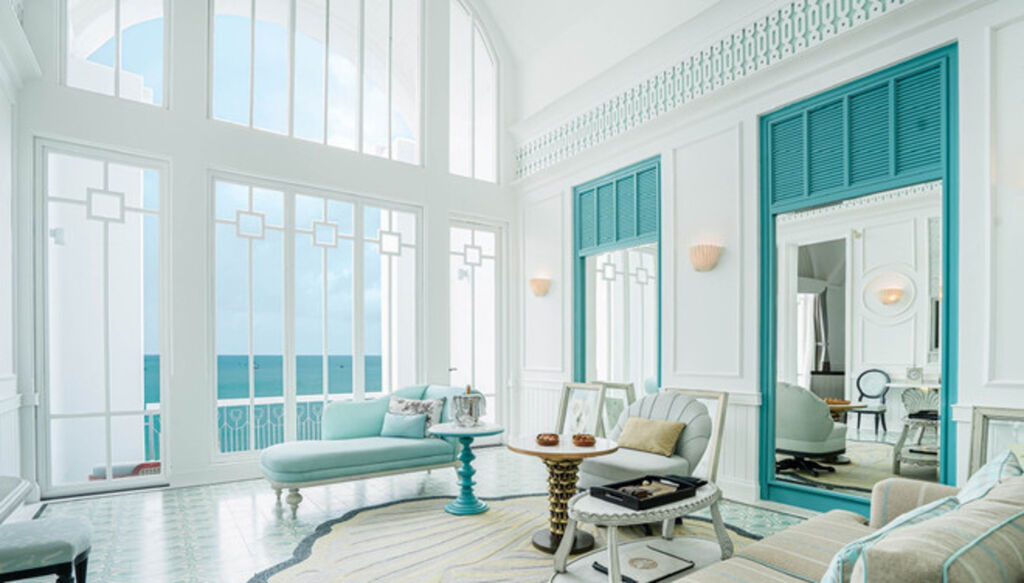 |
| Artistic design spaces inside JW Marriott Phu Quoc Emerald Bay Resort. (Photo: Sun Group) |
Alongside these landmarks, many works bearing the creative signature of world-renowned architects have also helped shape the island’s new identity. JW Marriott Phu Quoc Emerald Bay Resort and the artistic space of Sun Signature Gallery were designed by American “architecture wizard” Bill Bensley, presenting distinctive architectural narratives tied to the island’s fictional history.
In the near future, this ecosystem of landmarks will continue to expand with internationally scaled infrastructure projects, including the upgraded Phu Quoc International Airport designed by CPG Consultants (Singapore) and the Convention and Exhibition Center planned by Skidmore, Owings & Merrill (SOM). These projects are expected to position Phu Quoc as a regional hub for events, commerce, and tourism.
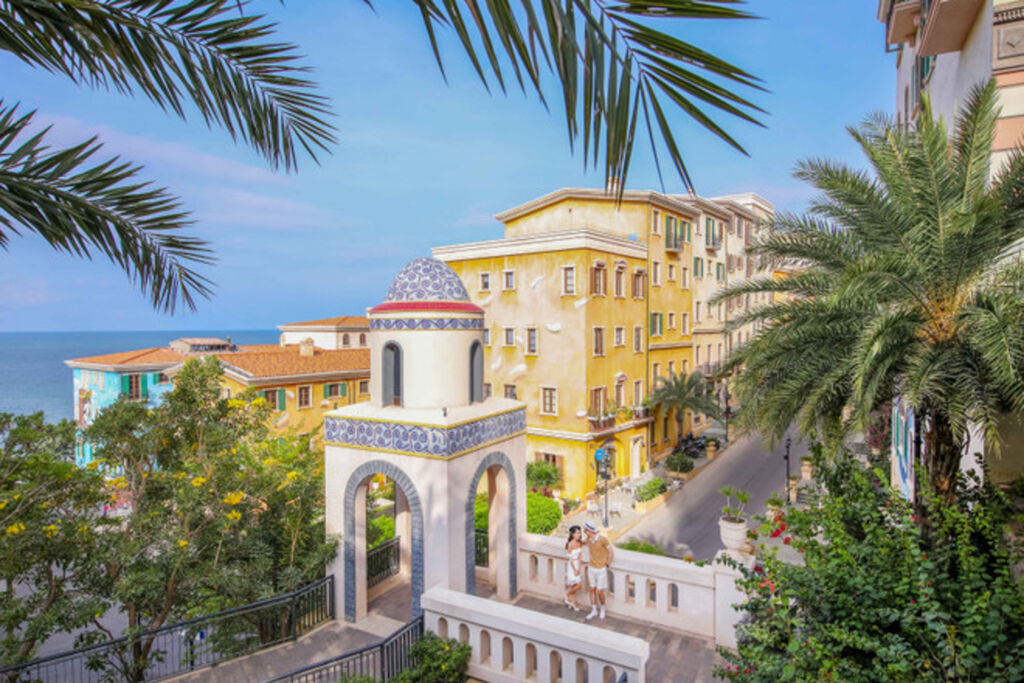 |
| Colourful architectural works form an artistic architectural museum at Sunset Town. (Photo: Sun Group) |
From a little-known tourism island, Phu Quoc is gradually shaping the identity of a cosmopolitan city set amid tropical seas and skies, where global currents of culture, architecture, and creativity meet. It is precisely this intersection that is creating the Pearl Island’s unique appeal on the world tourism map, as the prestigious American magazine CN Traveler once described it as the top 3 most beautiful islands on the planet./.