The second edition of the hybrid venue, titled 'Suc song hang Viet' (Vitality of Vietnamese Goods), will take place from March 7 to 9 at 62 Trang Tien Street, Hoan Kiem.
The Deputy PM expressed his hope that Lee will continue to support efforts to further advance Vietnam–Singapore relations in a more practical and effective manner, as well as provide advice and share experience in developing financial centres and promoting connectivity between the two countries’ international financial centres.
Prime Minister Pham Minh Chinh stressed that UXO remediation is a deeply humanitarian task and the responsibility of the entire political system, with the armed forces playing a core role.
In today’s modern world, countless major technological breakthroughs begin with silicon fragments smaller than a grain of rice called semiconductor. As these chips have become strategic assets, intense geopolitical competition among major powers has triggered an unprecedented shift in global semiconductor supply chains. Against this backdrop, domestic and international analysts see Vietnam as a strong contender in global semiconductor companies’ de-risking strategy.
The most striking growth was recorded in the performance and live entertainment segment, including events, live shows and concerts, which surged by 202% year on year.
Despite a volatile global environment, Vietnam recorded solid gains in 2025. With flexible and proactive policies under the leadership of the Communist Party of Vietnam and the Government, all 15 key socio-economic targets were met or exceeded, while GDP expanded by about 8.02%, surpassing expectations.
PM Chinh noted that in recent years, education in ethnic minority, mountainous and border areas has received special attention and priority investment from the Party, the State and Party General Secretary To Lam.
The Politburo’s Resolution No. 72-NQ/TW on groundbreaking solutions to strengthen the protection, care and improvement of public health sets the target of raising average life expectancy to 75.5 years by 2030, with at least 68 years lived in good health.
In 2025, Vietnam’s GDP grew by 8%, beating UOB’s forecast of 7.7% but still falling short of the Government’s target of 8.3–8.5%, which would have needed an extraordinary boost in the final quarter.
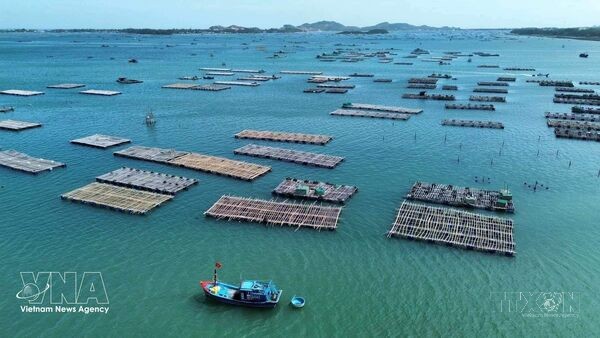
Quang Ninh is intensifying vessel management and round-the-clock enforcement, backed by near-universal licensing and compliance gains, as it aligns local action with national efforts to lift the European Commission’s IUU “yellow card”. The province is pairing tougher inspections and VMS monitoring with accelerated digitalisation of fisheries data to curb violations, strengthen traceability and advance sustainable marine development.
Vietnam’s Logistics Services Development Strategy for the 2025–2035 period, with a vision to 2050, for the first time outlines a long-term and comprehensive roadmap clearly defining logistics as the “backbone” of the national economy.
The rapid digital transformation has encouraged farmers in Lao Cai to adopt information technology, social media, and e-commerce in production and business activities, generating a stable source of income.
Dong Thap province’s fishing fleet operates mainly in the Ba Dong, Vung Tau and South Con Son fishing grounds, with about 60% of vessels having large capacity sufficient to venture into deep-sea areas. To date, 1,291 vehicles have been licensed, equipped with vessel monitoring systems (VMS), and had their data fully updated on the national fisheries database (Vnfishbase).
Vietnam fulfilled its socio-economic development tasks for 2025 and the 2021-2025 period amid rising complex global changes. The country's 2025 economic growth expanded by 8.02%, ranking among the top performers in the region and the world.Vietnam’s economic growth expanded by 8.02%, ranking among the top performers in the region and the world.
Hanoi's health sector will continue to expand the comprehensive use of digital technology in professional practices to improve management efficiency and service quality, aiming to develop a modern, transparent, and people-centred healthcare system.
Health insurance participants from near-poor households and those aged 75 and above who are receiving social pension allowances will be entitled to 100% coverage of medical examination and treatment costs within the scope of health insurance benefits.
Hanoi aims that by 2030, electricity sales will reach 52,178 million kWh, with per capita electricity sales of 5,721 kWh per year. The city also targets 50% of government office buildings to use rooftop solar power for self-generation and on-site consumption.
Health insurance cardholders from near-poor households have their payment rate raised from 95% to 100% of covered medical expenses effective on January 1.