 |
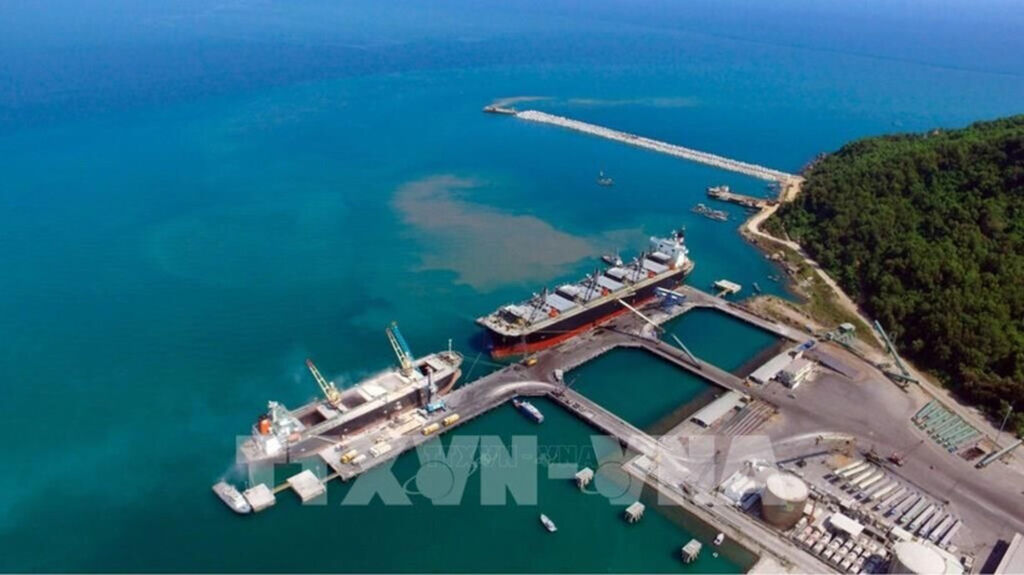
| A view of Chan May deep-water port (Illustrative image. Photo: VNA) |
Hanoi (VNA) – The Politburo’s Resolution No. 79-NQ/TW on the development of the State economic sector encourages State-owned enterprises (SOEs) to invest and forge linkages with other businesses along value chains, including those from the foreign direct investment (FDI) sector, a move seen as a solution to promote rapid and sustainable growth in Vietnam.
While reaffirming the State-owned economic sector as a particularly important component of the socialist-oriented market economy, Resolution 79 stresses that after 80 years of development, and especially nearly 40 years of Doi moi (Renewal), the State economic sector has always played a leading role.
It has effectively fulfilled its function of orienting, leading and regulating economic activities, contributing to promoting economic growth, stabilising the macro economy, maintaining major economic balances, ensuring national defence and security, fostering social progress and justice, improving living standards and raising Vietnam’s international standing.
At the same time, the resolution acknowledges persistent shortcomings. Policies and laws governing the state-owned economy have been slow to adapt to economic realities, while SOEs - the core force of this sector - have yet to operate commensurately with their position and resources. Their international competitiveness remains limited, and they have not played a pioneering role in innovation or in leading key and essential industries. Public service units remain cumbersome, with slow reforms in operational mechanisms, financial autonomy and service pricing, while some long-standing problems have caused waste and losses. To further promote the role of the state economy and realise the goal of making Vietnam a developing country with modern industry and upper-middle income by 2030, and a developed, high-income country by 2045, Resolution 79 outlines a range of solutions. It highlights the need to encourage SOEs to invest and link with other enterprises in core business areas, as well as technology, innovation and digital transformation, to form pioneering enterprise groups capable of mastering core and strategic technologies, optimising social resources and fostering innovation.
According to the Ministry of Finance, by 2025 Vietnam had attracted more than 520 billion USD in FDI from around 150 countries and territories, with FDI enterprises making significant contributions to socio-economic development.
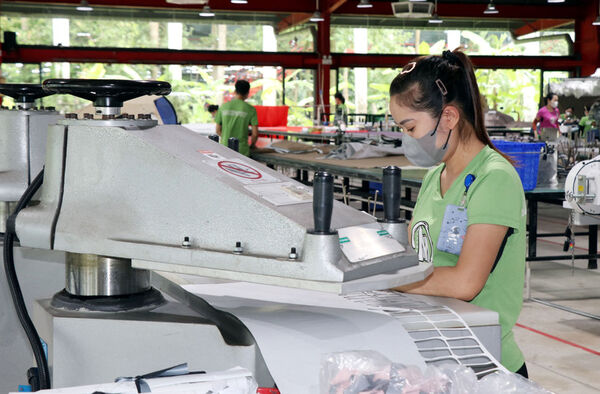
However, Nguyen Anh Tuan, Chairman of the Vietnam's Association of Foreign Invested Enterprises (VAFIE), noted that linkages between the FDI sector and domestic enterprises remain weak. Localisation rates are still low, at only 30–35% in consumer electronics, 15% in telecommunications and 10–20% in the automobile industry, according to a recent survey conducted by the Institute for Economic Strategy and Policy.
Resolution 79-NQ/TW builds on Resolution 50-NQ/TW, which called for stronger linkages between foreign-invested and domestic enterprises, especially small and medium-sized ones, to enhance internal capacity and competitiveness.
Experts say SOEs should not replace the private sector, but act as ecosystem builders. Through large corporations and groups in key fields such as energy, infrastructure, logistics, telecommunications and technology, the state economy can serve as a hub to connect, standardise and lead value chains, enabling domestic firms to move deeper into production networks and higher value added segments.
In the context of global supply chain shifts, digital transformation and green growth commitments, Vietnam is repositioning its FDI strategy towards quality and value. Priorities include high-tech and innovative investment, particularly in semiconductors, artificial intelligence, biotechnology and R&D centres, as well as green transition, renewable energy and sustainable development. Strengthening cooperation between foreign-invested and domestic enterprises will be essential to raising localisation rates, accelerating technology transfer and enhancing production capacity./.