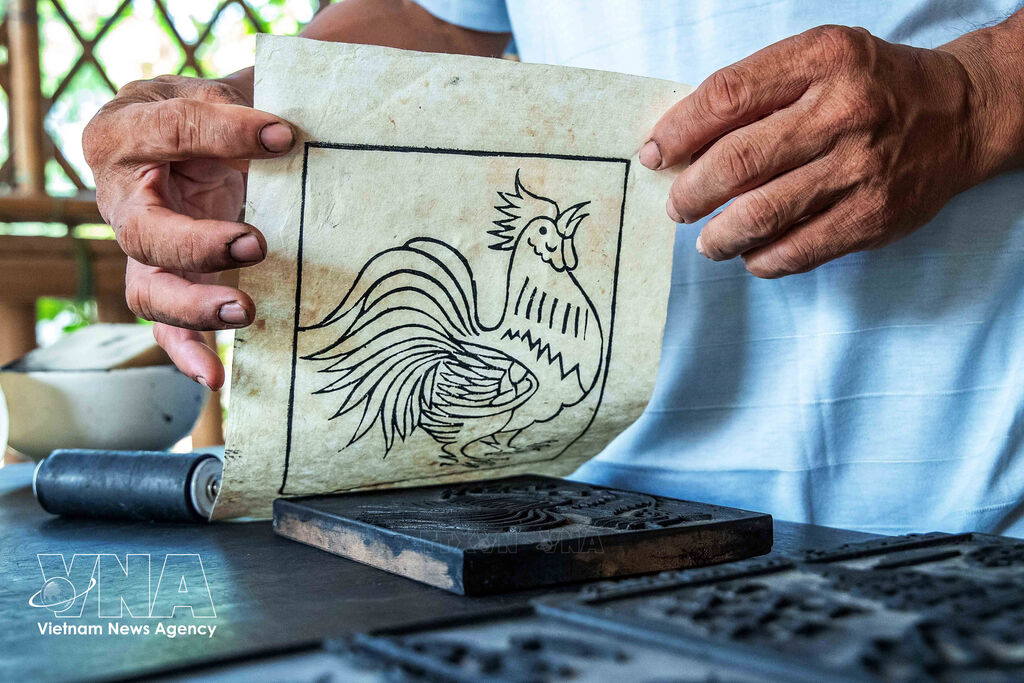
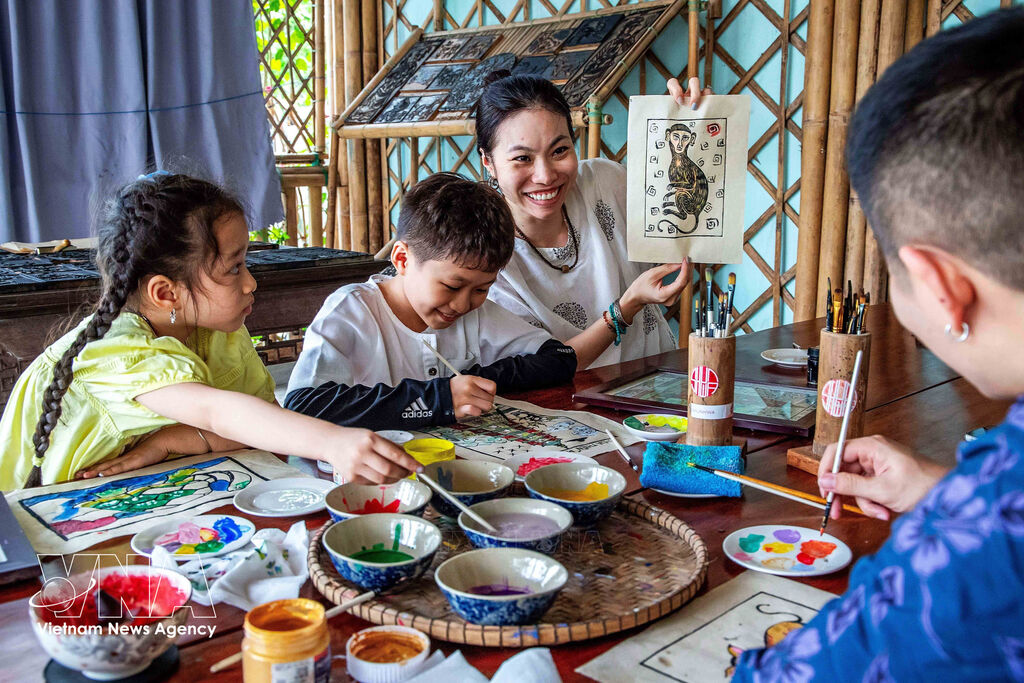
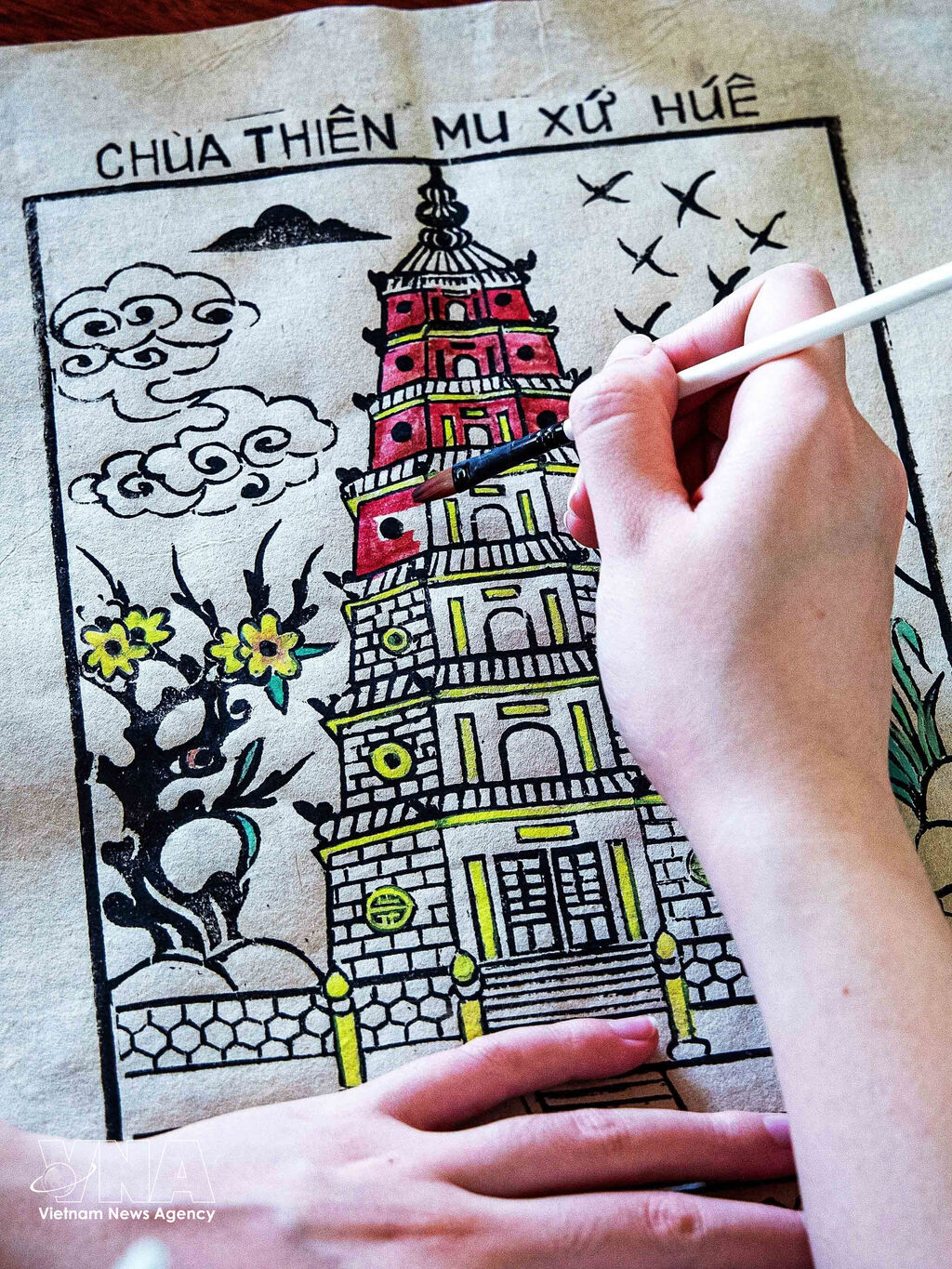
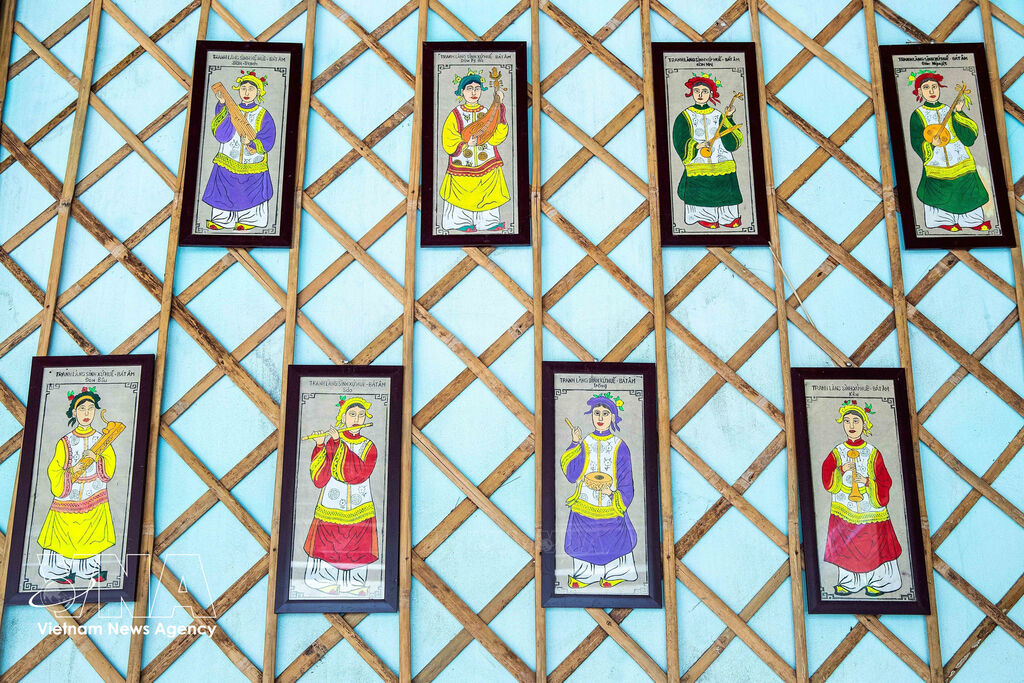
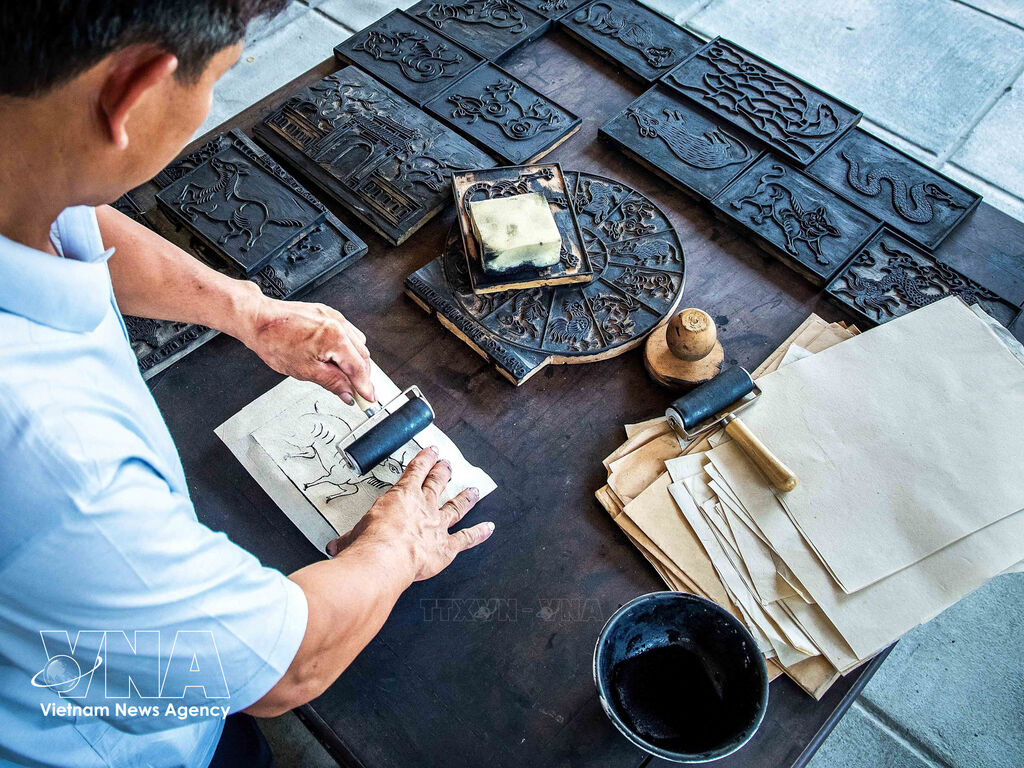
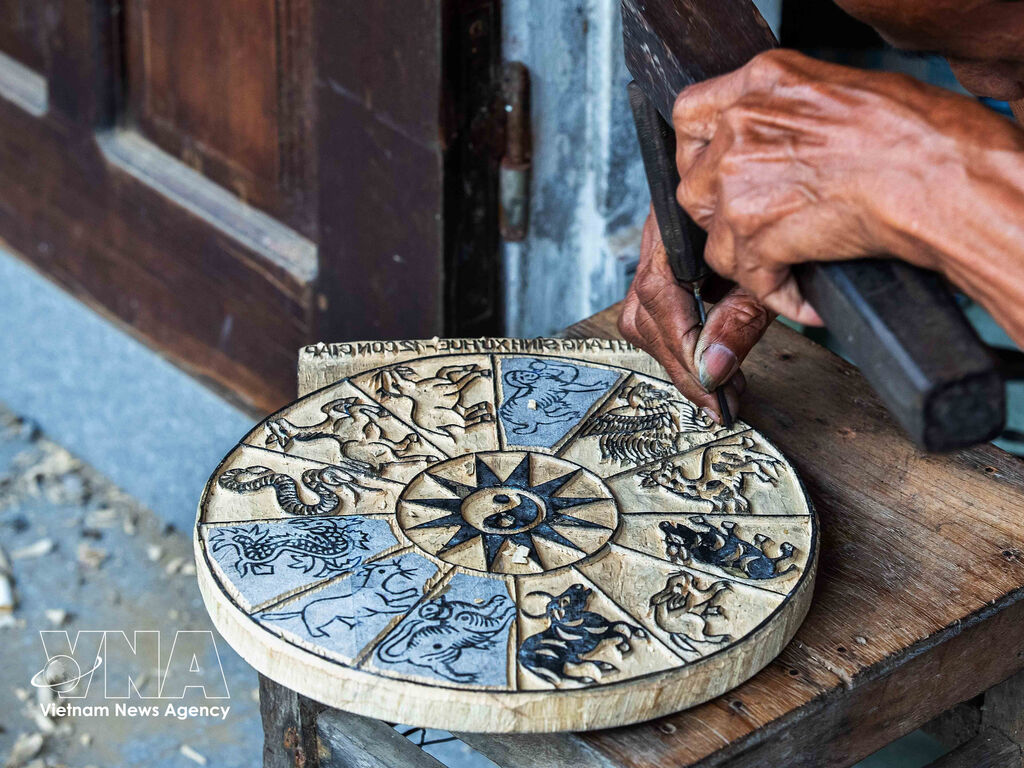
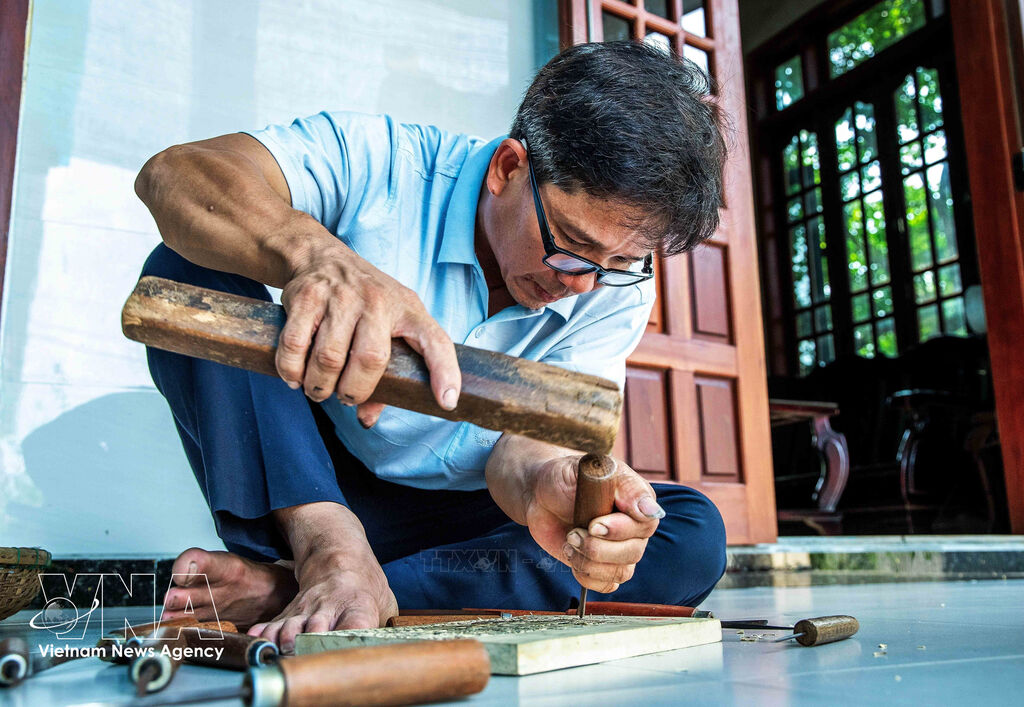
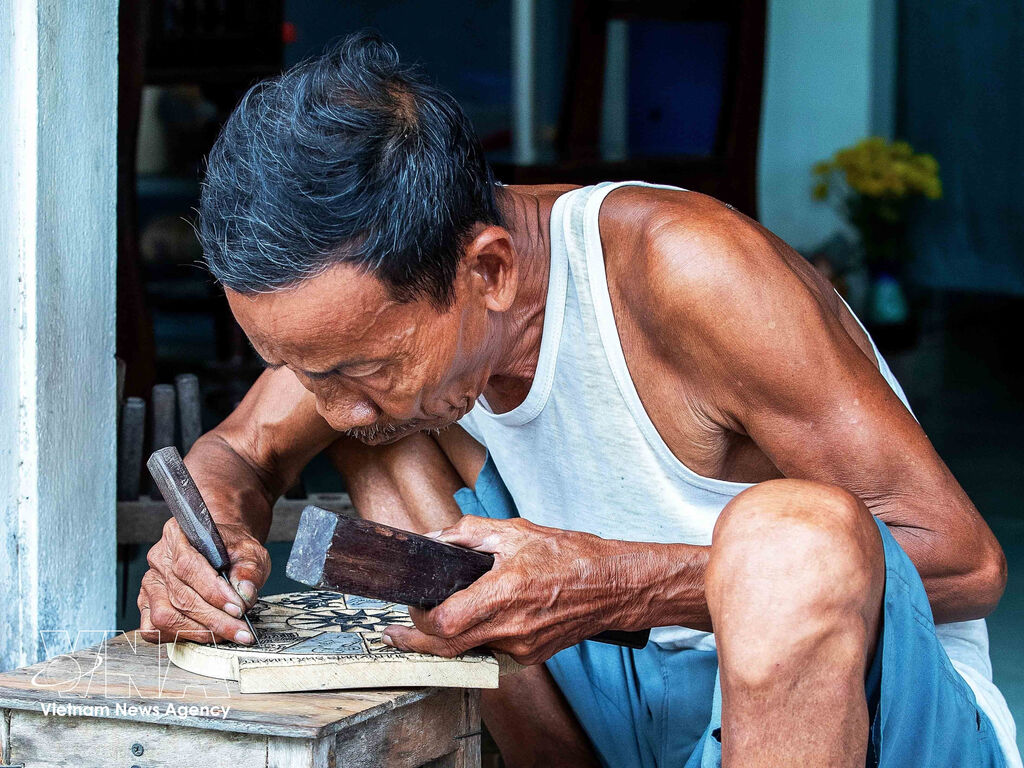
Unlike other multi-colour prints, Sinh village paintings use woodblocks only to create outlines, with colours added by hand afterwards, making each piece unique. (Photo: VNA)Visitors are delighted after completing a Sinh village painting themselves. (Photo: VNA)Unlike other multi-colour prints, Sinh village paintings use woodblocks only to create outlines, with colours added by hand afterwards, making each piece unique. (Photo: VNA)The “Bat Am” series is among the most artistically significant works of the tradition. Depicting young women in “ma tien” costumes performing traditional instruments, the paintings reflect the graceful and refined beauty of Hue. (Photo: VNA)From the carved woodblocks, artisans use black ink made from burnt straw ash and leaves to print evenly onto the paper. (Photo: VNA)Woodblock carving requires not only strength and patience but also strong memory and visual thinking. Artisans must carve in reverse, with all lines and patterns mirrored from the final printed image. (Photo: VNA)According to artisan Pham Cong Khai, 51, besides Ky Huu Phuoc, he is now the only person in the village who continues the craft, fully mastering and practising the techniques of woodblock carving and printing. (Photo: VNA)Artisan Ky Huu Phuoc, 77, is a ninth-generation heir to a family of Sinh village painters. (Photo: VNA)
Safeguarding Hue’s renowned Sinh village folk paintings
With a history of more than 400 years in the spiritual life of people in the former imperial capital of Hue, Sinh village paintings (now in Duong No ward, Hue city) once stood on the brink of extinction. Although the craft has been revived, it now survives in the hands of only a few artisans, raising concerns over the preservation of a folk art deeply rooted in spiritual beliefs.