Saint Petersburg’s metro expertise valuable for Vietnam
As Hanoi implements its master plan with a 100-year vision, in which metro lines are identified as the backbone of the capital city’s transport network, Secretary of the municipal Party Committee Tran Duc Thang met with representatives from several Saint Petersburg companies specialising in urban rail development.
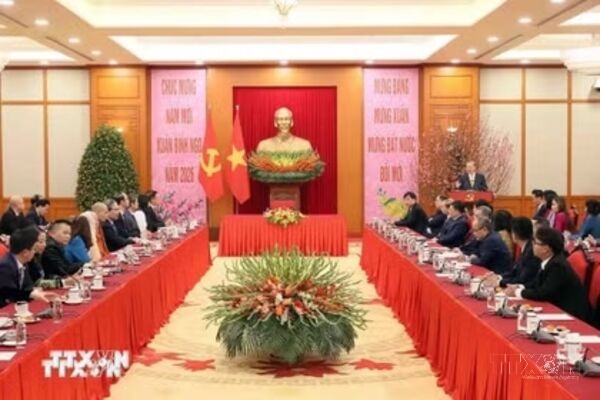
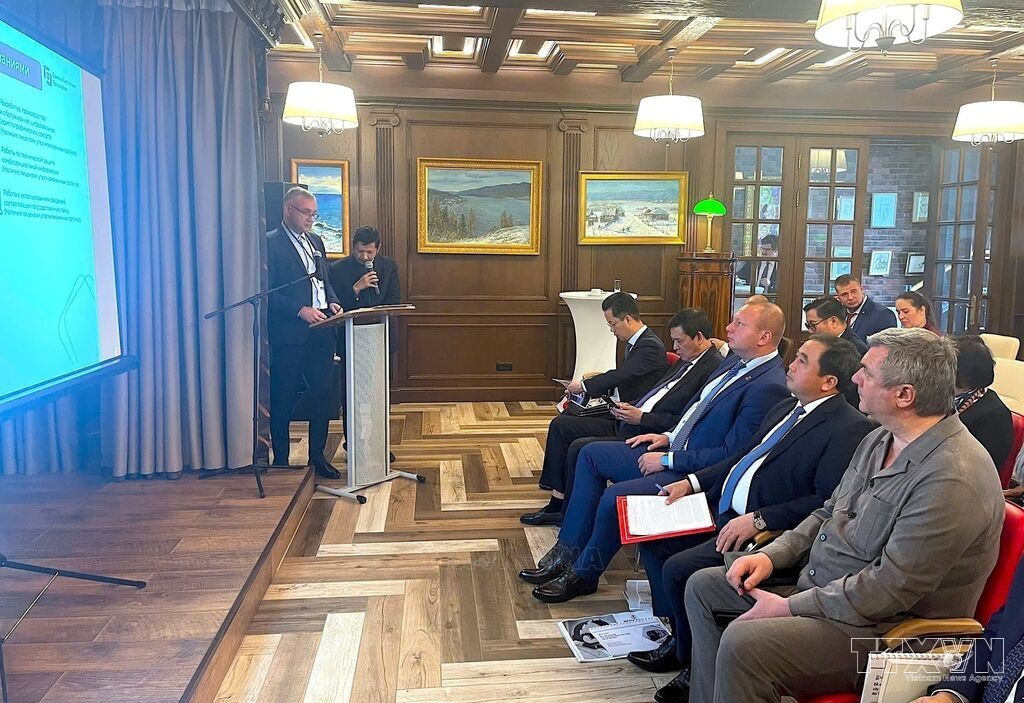
An overview of a meeting between Politburo member and Secretary of the Hanoi Party Committee Tran Duc Thang and representatives of Saint Petersburg businesses. (Photo published by VNA)

Moscow (VNA) – A Hanoi delegation led by Politburo member and Secretary of the municipal Party Committee Tran Duc Thang held a series of meetings with leading businesses in Russia’s Saint Petersburg after surveying the city’s metro system to study geological similarities with localities in Vietnam.

As Hanoi implements its master plan with a 100-year vision, in which metro lines are identified as the backbone of the capital city’s transport network, Thang met with representatives from several Saint Petersburg companies specialising in urban rail development. Located in the delta of the Neva River, Saint Petersburg faces challenging geological conditions for underground construction, similar to Hanoi along the Red River. The Russian city’s experience in developing its metro system is therefore considered particularly valuable to Hanoi and Ho Chi Minh City.

At the meetings, Vietnamese delegates were briefed on the companies’ expertise in various stages of metro development and operation, including technical surveys, design documentation, underground engineering systems, assembly and modern information systems for metro operations.

Put into service in 1955, the Saint Petersburg Metro currently comprises six lines with 75 stations stretching more than 130 km. Its distinctive feature is the depth of its stations, with many located from 60 metres to nearly 90 metres underground. Admiralteyskaya Station, at a depth of about 86 metres, ranks third among the deepest metro stations in the world.

After listening to the presentations, Thang highlighted Saint Petersburg’s strengths in urban railways, particularly its advanced tunnel-boring technologies, high levels of precision and safety, and frequent train services. The city also boasts a long-established and modern tram network and is actively testing and applying artificial intelligence (AI), including AI-based automated train operation and automated depot management.

He called on relevant agencies from both sides to explore areas where Hanoi and Ho Chi Minh City have development priorities and Saint Petersburg has expertise, including smart traffic management, electronic ticketing, transport safety equipment, expanded tram networks connecting new urban areas and universities, as well as telecommunications solutions, AI control software and auxiliary equipment for rail carriages.

The Russian companies expressed their readiness to cooperate with Vietnamese localities and share experience and technologies in these fields.

During the visit, Thang and Saint Petersburg Governor Alexander Beglov laid flowers at the President Ho Chi Minh Monument. The Vietnamese delegation also met with leaders of the Association of Vietnamese People in Saint Petersburg, acknowledging the community’s contributions to promoting cooperation between the Russian city and Vietnamese localities./.

Related News

Hanoi to provide free textbooks from 2026–2027 school year

The municipal Department of Education and Training will work with the Department of Finance to guide wards, communes and educational institutions in implementing the student support policies adopted by central authorities and the municipal People’s Council.

See Also

Exhibition of Vietnamese Do paper paintings captivates Far Eastern audience

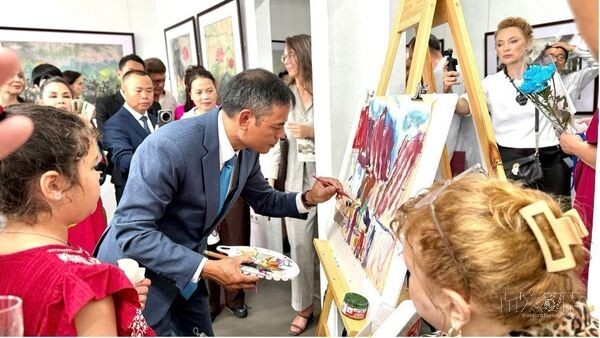
An exhibition of paintings on traditional Vietnamese Do paper by artist Ngo Duc Hoang in Vladivostok features the works, created between 2021 and 2026, exploring a wide range of themes related to Vietnam, from urban life to the mountainous northwestern region, and from natural landscapes to images of the lotus, Vietnam’s national flower.

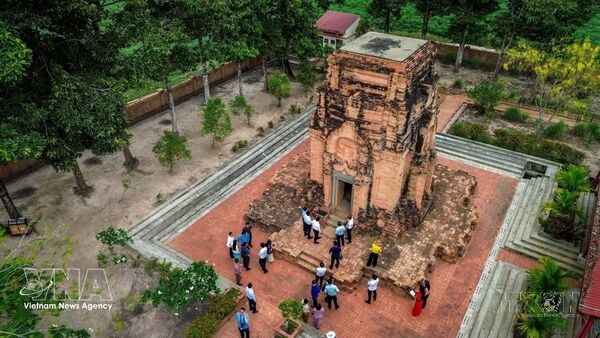
Chot Mat Tower - A testament to Oc Eo civilisation in Tay Ninh

Amid the landscape of Tay Ninh province, Chot Mat Tower stands quietly, preserving traces of the ancient Oc Eo civilisation - which flourished in southern Vietnam from the first to the seventh centuries. From its ancient bricks to its distinctive tower form, the relic tells the story of a long-lost cultural layer while offering potential for linking historical heritage with tourism development.

Resolution No. 23 harnesses overseas Vietnamese strength for national standing

To further renew and improve the effectiveness of overseas Vietnamese affairs, consolidate the great national unity, enhance international cooperation, and create fresh momentum for Vietnam’s rapid and sustainable development in the new era, General Secretary of the Communist Party of Vietnam Central Committee and State President To Lam signed a Politburo resolution on overseas Vietnamese affairs (Resolution No. 23-NQ/TW dated August 2, 2026).

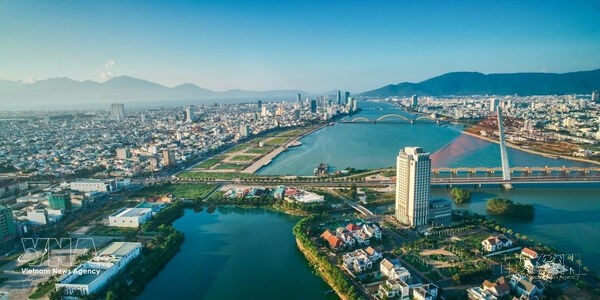
Da Nang seeks to become a strategic investment destination

The central city has significant opportunities as Vietnam enters a new stage of development. In particular, the city's expanded administrative space following the recent merger has created greater capacity in terms of land, population and resources, opening conditions for restructuring its development model on a larger scale. To realise this potential, the city is stepping up endeavours to attract investment and effectively mobilise social resources for new development models.

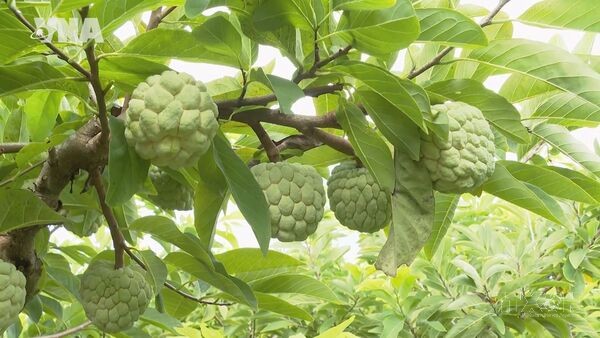
Phu Long custard apple strengthens its brand position

Renowned not only for its distinctive, delicious flavour, Phu Long custard apples in the northern province of Ninh Binh are steadily strengthening their position in the market by focusing on quality, building a strong brand and expanding distribution. The product’s growth is helping increase the value of local agricultural produce and boost farmers’ incomes.

International cooperation advances Vietnamese science

In the early years of nation-building, President Ho Chi Minh repeatedly called for Vietnam to learn from the world’s scientific and technological advances, while expanding cooperation with international partners to serve the cause of national construction and defence.

Vietnam, US strengthen cooperation in identifying fallen soldiers' remains

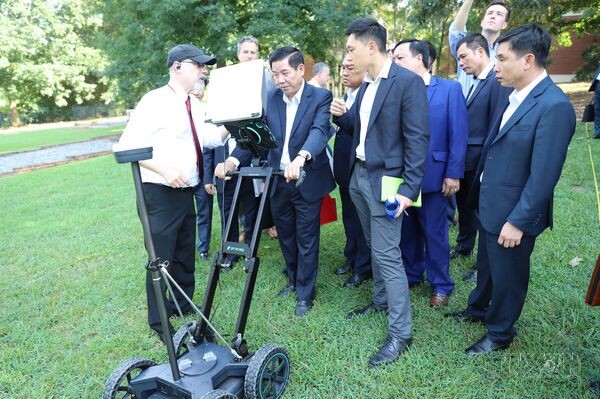
A delegation led by Deputy Minister of National Defence Sen. Lieut. Gen. Nguyen Van Gau, deputy head of the National Steering Committee on the Search for, Collection and Identification of Martyrs’ Remains (Steering Committee 515), held working sessions on August 12 (local time) at the University of Georgia and a US military forensic facility.

Hanoi to provide free textbooks from 2026–2027 school year

The municipal Department of Education and Training will work with the Department of Finance to guide wards, communes and educational institutions in implementing the student support policies adopted by central authorities and the municipal People’s Council.