 |
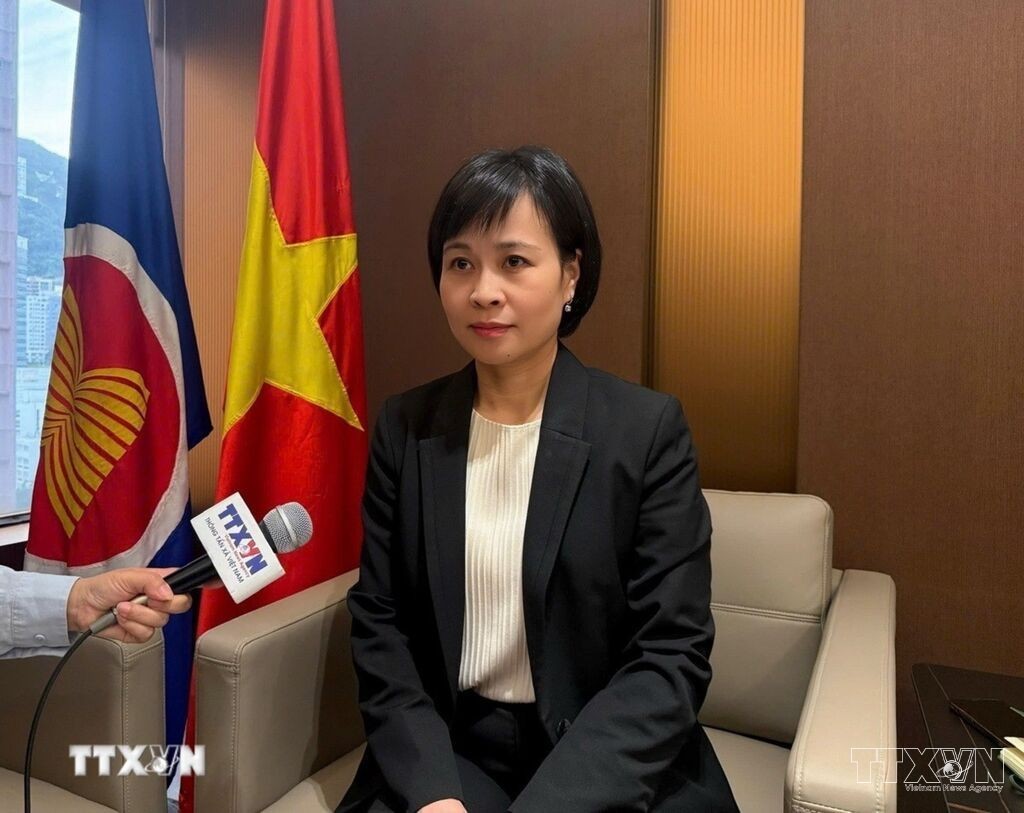
| Vietnamese Consul General in Hong Kong and Macau (China) Le Duc Hanh (Photo: VNA) |
Hong Kong (VNA) - As a key hub connecting the region and the world, the Hong Kong Special Administrative Region (China) possesses strengths that can complement Vietnam's development priorities in science, technology and innovation.
Vietnam’s implementation of its Politburo Resolution No. 57-NQ/TW on breakthroughs in science and technology development, innovation and national digital transformation has created a firm political framework for development-oriented external relations. Science and technology diplomacy was discussed for the first time at a dedicated session of the 33rd Diplomatic Conference in Hanoi on August, affirming science and technology and innovation as a strategic pillar of national development.
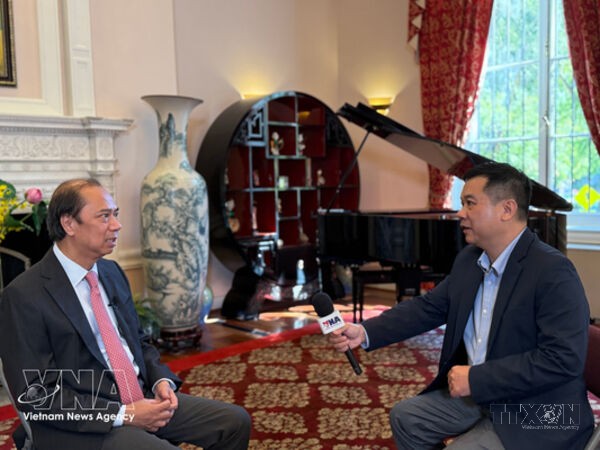
Speaking to a Vietnam News Agency correspondent in Hong Kong, Vietnamese Consul General in Hong Kong and Macau (China) Le Duc Hanh said that Hong Kong's high-quality universities and research institutions, international financial centre, startup ecosystem and access to the Guangdong-Hong Kong-Macao Greater Bay Area (GBA) offer significant opportunities for collaboration with Vietnam.
Hong Kong's first Five-Year Plan for Economic and Social Development for 2026-2030 targets the development of an international innovation and technology hub. It is focusing on artificial intelligence (AI) and robotics, life sciences and healthcare, microelectronics, new energy, advanced manufacturing and new materials – areas that are also among Vietnam's priorities.
This creates significant room for the two sides to undertake joint research, train human resources, transfer and test technologies, and commercialise technological innovations, stated Hanh.
She noted that Hong Kong's policies to attract talent and develop basic science have drawn leading scientists, including Vietnamese intellectuals. Its geographical proximity and convenient connectivity could facilitate exchanges between Vietnamese scientists working in Hong Kong and the domestic scientific community.
AI is another promising area, with Hong Kong implementing its “AI+” initiative in finance, healthcare, transport, construction and services. Meanwhile, its “Finance + Technological Innovation” model could help connect Vietnamese technology enterprises and startups with international capital and markets.
Hong Kong also serves as a gateway to the GBA innovation ecosystem, including the Hetao Shenzhen-Hong Kong Science and Technology Innovation Cooperation Zone, Hong Kong Science Park, Cyberport and San Tin Technopole.
In addition, Hong Kong’s experience in developing smart logistics and ports, including green ports, Port Community Systems, autonomous vehicles, port automation, blockchain-based cargo tracking and multimodal “rail-sea-land-river” transport, offers valuable lessons for Vietnam as it modernises its port and logistics infrastructure, she said.
To tap these opportunities, the diplomat shared that the Consulate General has undertaken concrete science and technology diplomacy activities. Notably, in 2025, more than 100 Vietnamese students received scholarships at Hong Kong universities ranked among the world's top 50, worth about 15 million HKD (1.9 million USD) annually, with an increasing proportion studying science and technology-related fields./.