 |
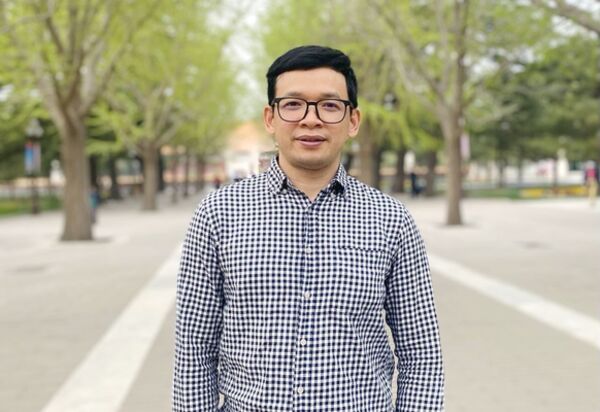
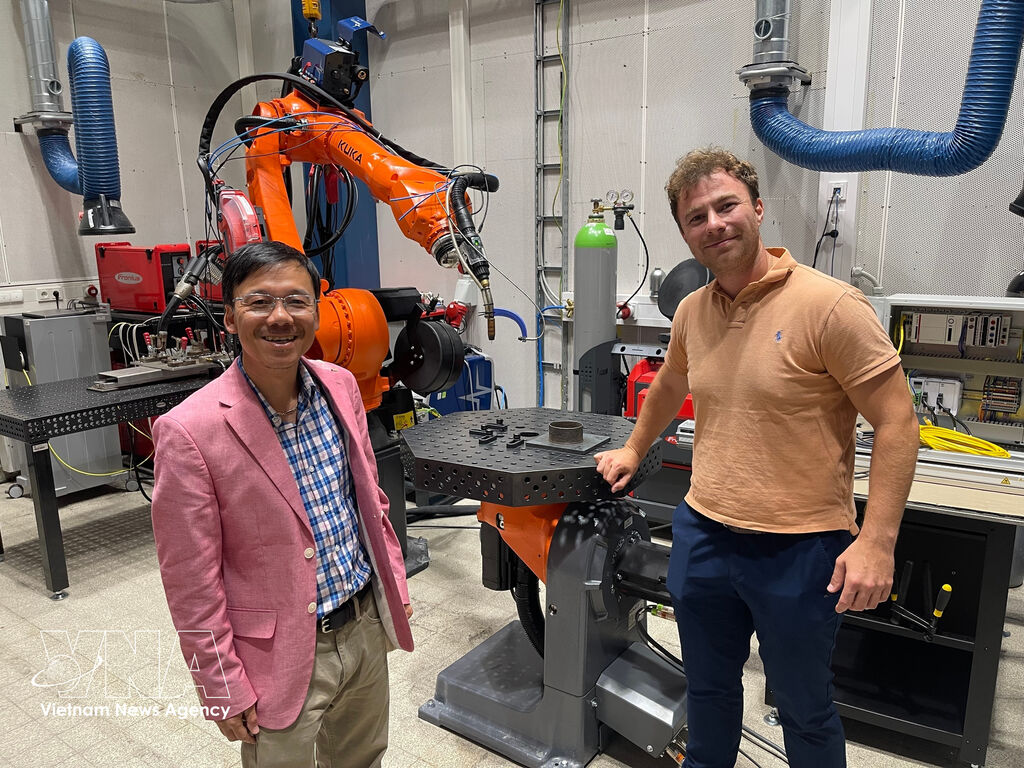
| Associate Professor Vu Viet Hung (left) visits a 3D-printed space built by robots (Photo: VNA) |
Ottawa (VNA) – Vietnamese scientists in Canada have proposed ways to mobilise overseas expertise by matching specialists’ capabilities with Vietnam’s technological needs and workforce training requirements, towards effectively implementing the Political Bureau's Resolution No. 23-NQ/TW.
The resolution calls for breakthrough policies to attract, connect and harness the expertise of overseas Vietnamese, particularly experts, intellectuals and scientists. Turning these policies into concrete research opportunities is key to enabling them to contribute to national development.
Talking to Vietnam News Agency correspondents in Ottawa, Assoc. Prof. Vu Viet Hung, President of the Canadian Vietnamese Scientists and Experts Association (CVSEA), said the effectiveness of OV intellectuals’ contributions depends on programme design, resource allocation and stakeholder coordination. He noted that experts need regular opportunities to participate, clearly defined roles and sustained cooperation with partners in the homeland throughout project development and implementation.
The lack of a dedicated national programme to mobilise OV experts for science, technology and innovation projects is a major obstacle, he said, adding that existing connections established by universities, research institutes, businesses and individuals need a common framework, clear guidelines and funding support.
According to Hung, information gaps also hamper cooperation, with overseas experts often unaware of research activities in the homeland, potential partners or specific needs, while domestic research teams lack information about their overseas counterparts’ expertise and interests.
Hung also stressed the need to address professional friction and competition to foster cooperation and help both sides pursue shared research goals.
He proposed allowing Vietnamese scientists and experts working abroad to serve as co-leads on research projects funded by national funds, including the National Foundation for Science and Technology Development (NAFOSTED).
Under this model, overseas experts would help shape research directions, select collaborators and connect international partners, while their domestic counterparts would manage finances and disbursements.
Hung also called for adequate funding and time for major scientific challenges, with mechanisms flexible enough to support international cooperation, research equipment and workforce training.
To mobilise private-sector resources, he suggested tax incentives for businesses that engage overseas Vietnamese experts in projects, along with stronger support for cooperation and technology transfer. He noted that these measures could encourage businesses to seek expertise aligned with their technological and product development needs.
Hung also emphasised the need for a national science and technology database covering research institutions, personnel, equipment and areas of expertise, with a platform for overseas Vietnamese scientists to showcase their capabilities. Funding agencies should also publish accessible information on funding programmes, research topics and participation requirements to help scientists prepare proposals.
Drawing on his experience connecting Vietnamese intellectuals in Canada, Hung proposed linking technology research with the training of young talent in four fields with cooperation potential between the two countries: digital technology, artificial intelligence, aerospace, and nuclear energy./.