 |
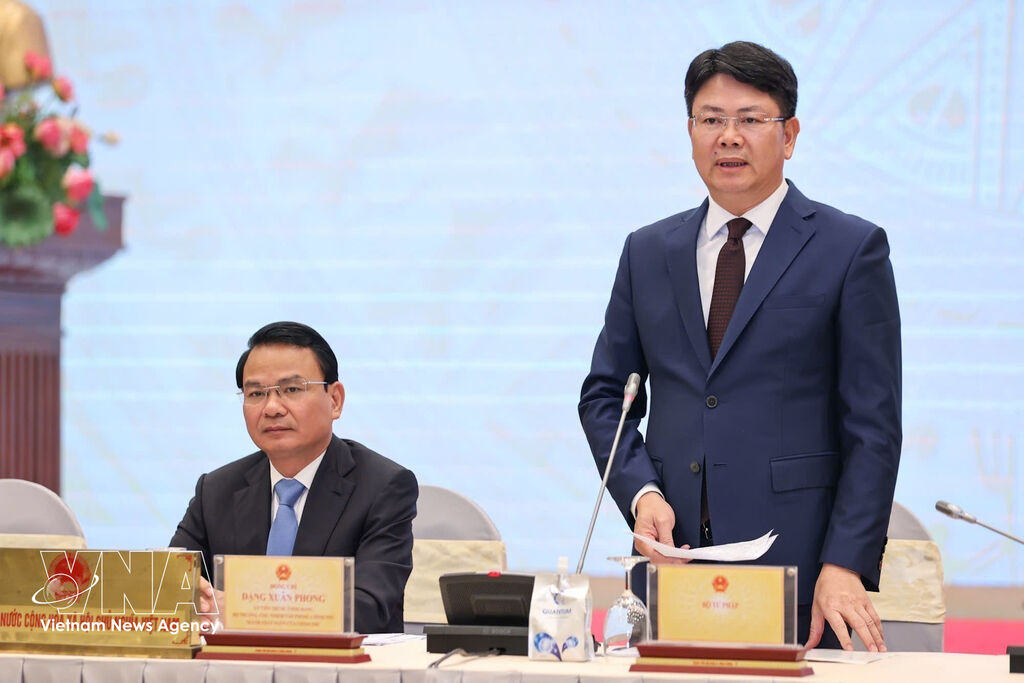
| Deputy Minister of Justice Nguyen Thanh Tinh speaks at the Government’s regular press briefing for April held on the evening of May 4, 2026. (Photo: VNA) |
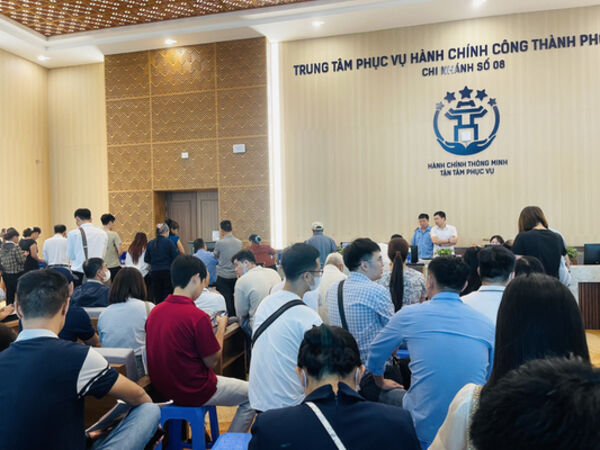
Hanoi (VNA) – Deputy Minister of Justice Nguyen Thanh Tinh outlined progress in cutting and simplifying administrative procedures and business conditions in line with the Party Central Committee’s Conclusion No. 18-KL/TW, at the Government’s regular press briefing for April held on the evening of May 4.
He said that on April 14, standing Government members issued a directive requiring ministries and ministerial-level agencies to review procedures to ensure that central-level authorities handle no more than 30% of the total administrative procedures within their respective sectors. The directive also set targets to reduce processing time and compliance costs by 50% in 2026 compared to 2024, to cut at least 30% of conditional business lines, and to eliminate all unnecessary business conditions.
By April 26, relevant agencies had proposed plans broadly meeting the Government’s targets.
According to the deputy minister, the total number of central-level administrative procedures has been reduced to 1,570, accounting for 27.31%, surpassing the target set by the Government.
Regarding conditional business lines listed in Appendix IV of the 2025 Investment Law, there are currently 198 such sectors, of which ministries and agencies have proposed cutting 60, or 30.3%.
In addition, authorities have proposed eliminating 1,723 unnecessary business conditions; abolishing 680 procedures; and simplifying 521 others. Further proposals include cutting an additional 18,097 processing days, bringing the total reduction to 51,419 out of 97,020 days. Compliance cost savings are estimated at approximately 23 trillion VND (873.21 million USD) per year.
The deputy minister stressed the need for state agencies to enhance their information technology capacity and accelerate digital transformation to improve governance efficiency. The Ministry of Justice is set to develop an information system for monitoring and controlling administrative procedures as part of this effort.
He also highlighted several priorities going forward, including addressing 158 legal bottlenecks identified by the central steering committee for institutional and legal reform; studying and proposing special mechanisms and policies to remove these constraints; and continuing decentralisation and simplification of administrative procedures in line with Conclusion No. 18-KL/TW./.