 |
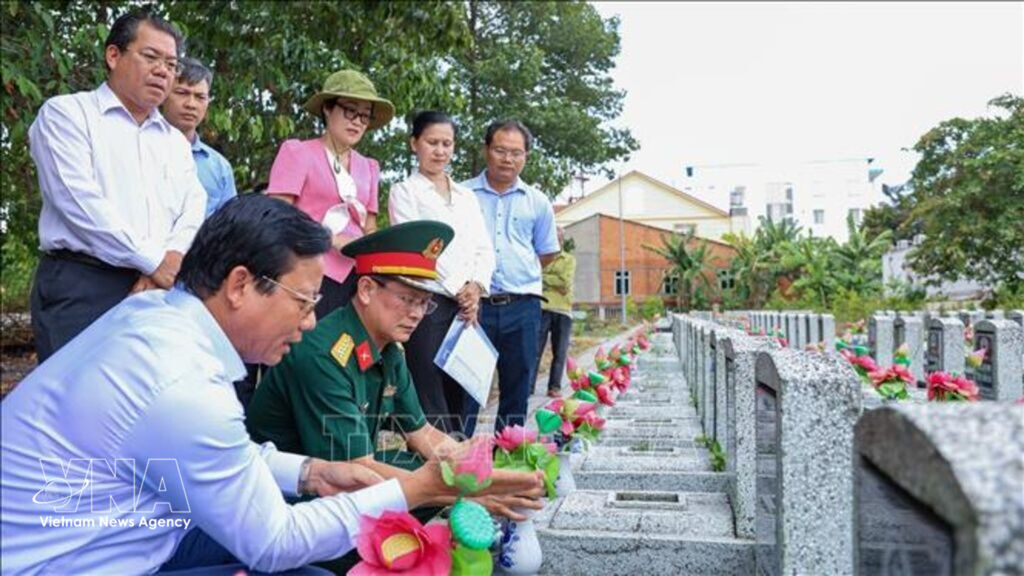
| Pham Tan Hoa (left), Vice Chairman of the Tay Ninh provincial People’s Committee, and members of a working delegation inspect and review information on unidentified martyrs’ graves at An Tinh Martyrs’ Cemetery in An Tinh ward, Tay Ninh province. (Photo: VNA) |
Tay Ninh (VNA) – Authorities in southern Tay Ninh province are accelerating efforts to renovate martyrs’ cemeteries and identify unidentified fallen soldiers through a large-scale DNA sampling and testing programme.
A provincial delegation on May 19 conducted inspections at several martyrs’ cemeteries and memorial sites, including An Tinh, Trang Bang and Duong Minh Chau cemeteries, to assess conditions ahead of planned restoration and DNA collection activities.
The survey covered key infrastructure such as memorial houses, monuments, burial areas, lighting and water systems, landscaping and supporting facilities.
According to the provincial People’s Committee, the initiative is aimed at preparing plans for comprehensive renovation in celebration of the 79th anniversary of War Invalids and Martyrs Day (July 27, 1947–2026), while also supporting efforts to standardise martyrs’ grave data and facilitate DNA identification for unidentified remains.
Following the inspections, relevant agencies will review the current status of each site and propose restoration measures alongside solutions to improve grave database management and DNA testing procedures.
Pham Tan Hoa, Vice Chairman of the Tay Ninh People’s Committee and head of the province's Steering Committee 515, called on local agencies and authorities to urgently finalise upgrading plans for cemeteries to ensure solemnity, durability and consistency.
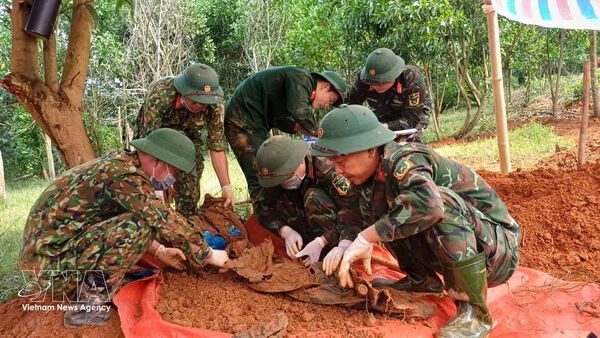
In parallel with cemetery restoration, Tay Ninh is intensifying the search, recovery and identification of martyrs’ remains still lacking information.
Under the province’s roadmap, authorities aim to locate and repatriate around 600 sets of remains by July 2027 while completing DNA sampling for unidentified graves and newly recovered remains to support identification work.
Tay Ninh also plans to collect DNA samples from about 18,290 unidentified martyrs’ graves by July 27, 2027. Between 2027 and 2030, DNA collection will continue for around 450 additional graves where information remains incomplete.
According to Steering Committee 515, DNA testing and data matching carry profound humanitarian significance, helping families identify relatives who died during wartime and contributing to policies supporting war martyrs and their families.
Hoa said Tay Ninh will continue strengthening efforts to search for, recover, commemorate and rebury martyrs’ remains, and expand DNA sampling from both unidentified remains and martyrs’ relatives to improve identification accuracy.
Local agencies have also been tasked with improving data collection, updating information on martyrs and cemeteries both inside and outside Vietnam, and enhancing coordination in DNA sampling, testing and database management./.