 |
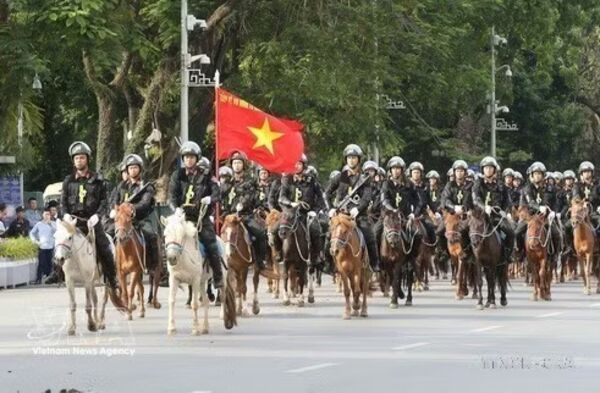
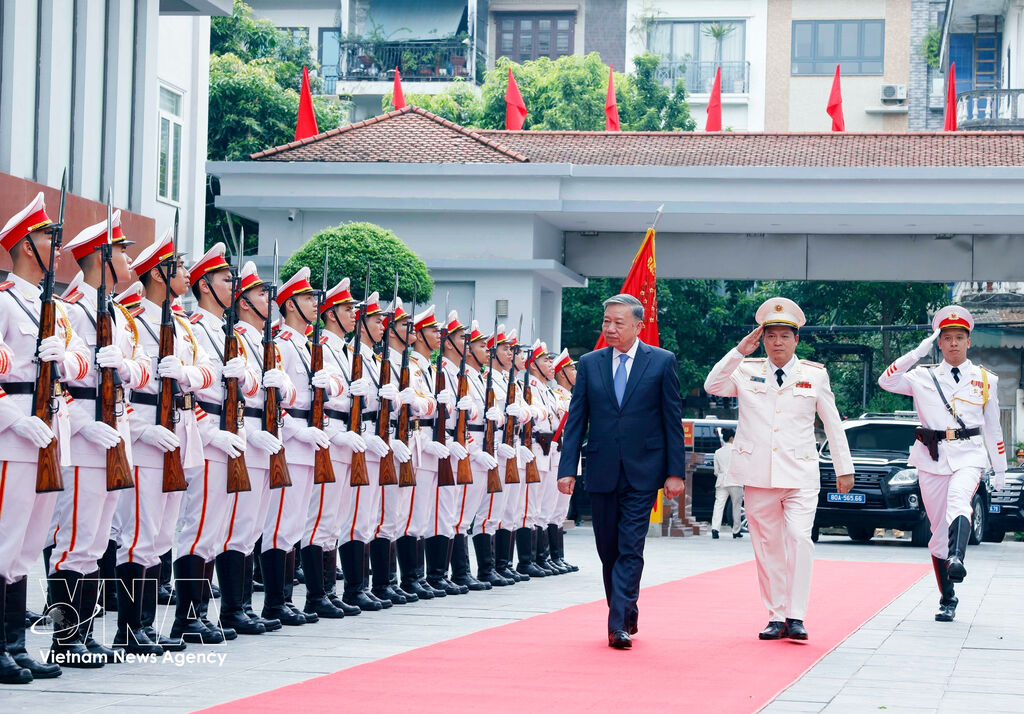
| Party General Secretary and State President To Lam reviews the People's Public Security Force's guard of honour. (Photo: VNA) |
Hanoi (VNA) – Party General Secretary and State President To Lam on July 13 called for building a professional, elite, modern and humane prison management police force, stressing that the biggest success of the prison system lies not only in ensuring secure detention but also in helping offenders successfully reintegrate into society.
The Party and State leader made the remarks during a visit to and working session with the Police Department of Prison, Correctional Institution and Juvenile Reformatory Management under the Ministry of Public Security, on the occasion of the 64th traditional day of the People's Police Force (July 20, 1962–2026).
General Secretary and President Lam acknowledged the dedication and sacrifices of officers working in prison, correctional institution and juvenile reformatory management, affirming that the Party, State and people always recognise their quiet but significant contributions to ensuring social stability and public safety.
At the same time, he pointed to existing shortcomings that must be addressed to improve the effectiveness of prison management and criminal sentence enforcement in the coming years.
He stressed that criminal sentence enforcement, inmate management, rehabilitation and community reintegration must be viewed through a broader and more comprehensive perspective. He called for a fundamental shift in thinking, saying prison management should move beyond merely controlling inmates within detention facilities to managing the entire rehabilitation process, from admission to release.
He underscored the need to ensure absolute security and safety at detention facilities and strictly comply with legal regulations on human rights and citizens' rights. Security, he noted, should encompass not only physical infrastructure such as walls, locks and watchtowers, but also political and ideological security, data protection, operational procedures, personnel management, environmental safety and healthcare.
He called for prison management based on strict discipline, transparent procedures, modern technologies and clearly defined individual responsibilities, while stressing that detention management must fully comply with both Vietnamese law and international treaties to which Vietnam is a party, and proactively counter distorted allegations about the country's humanitarian and lenient criminal policies.
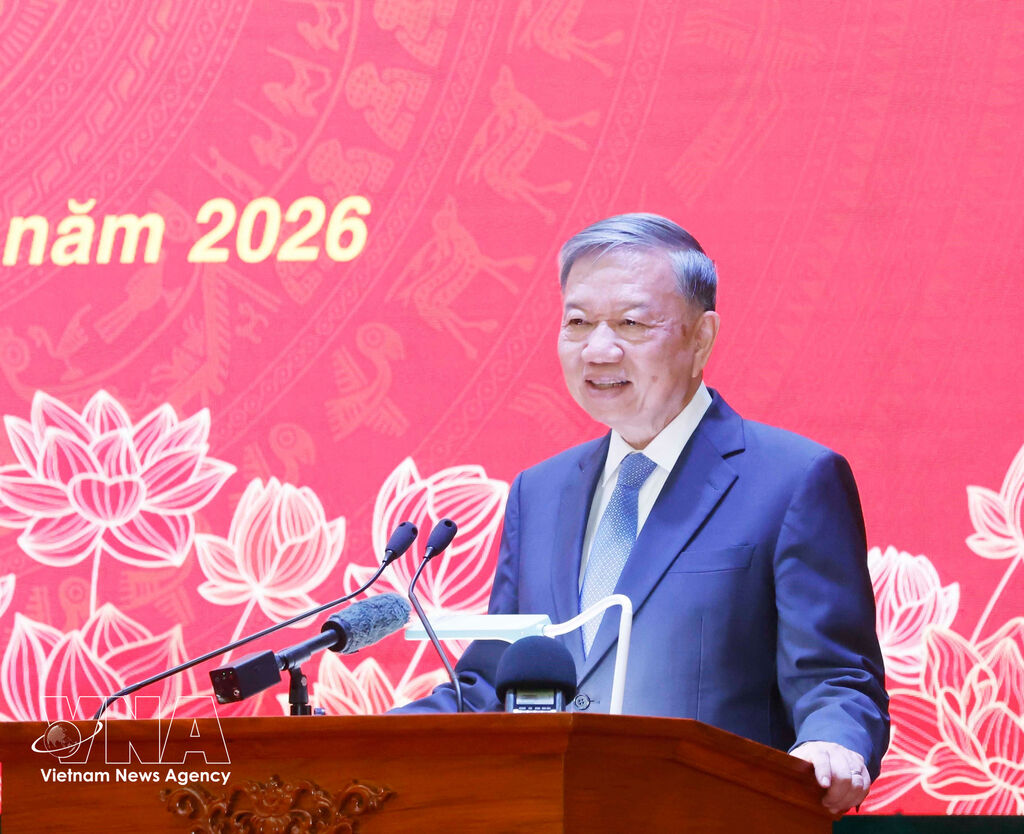 |
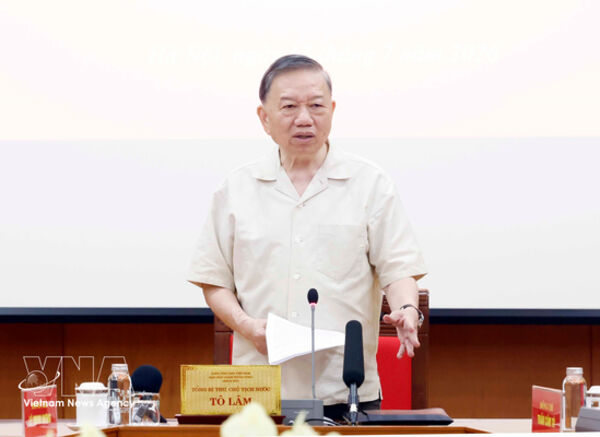
| Party General Secretary and State President To Lam speaks at the working session with the Police Department of Prison, Correctional Institution and Juvenile Reformatory Management. (Photo: VNA) |
The Party and State leader urged the Central Public Security Party Committee and the Ministry of Public Security to comprehensively review prison planning and detention capacity, develop a roadmap to upgrade overcrowded and deteriorating facilities, and ensure inmates' living conditions, healthcare, education, vocational training and labour opportunities are provided in accordance with the law.
Emphasising that community reintegration is an inseparable part of criminal sentence enforcement, the top leader called for closer coordination between prison authorities, families, local administrations, businesses, vocational education institutions and social organisations. He said rehabilitation programmes should place greater emphasis on legal education, ethics, psychological counselling, life skills and vocational training aligned with labour market demands.
He assigned the Ministry of Public Security to work with ministries, sectors, local authorities, the Vietnam Fatherland Front, socio-political organisations and the business community to establish effective mechanisms supporting vocational training, employment, housing, credit access and legal assistance for former inmates. Helping offenders rebuild their lives, he stressed, is not solely the responsibility of the public security sector but of the entire political system and society.
Highlighting the importance of science, technology and digital transformation, General Secretary and President Lam called for developing a modern, smart, safe and humane prison management model, saying that digital transformation in this field should serve three objectives: strengthening management, improving rehabilitation outcomes and better protecting human rights.
Attention should be paid to improving political and ideological education, professional ethics and specialised training for officers, covering not only legal knowledge and operational skills but also psychology, education, sociology, social work, digital skills and knowledge on human rights, he stated, urging stricter supervision to prevent corruption, misconduct, collusion, the smuggling of prohibited items into detention facilities and violations of inmates' lawful rights and interests.
The Party and State leader also requested ministries, sectors and local authorities to share responsibility with the public security force in supporting former inmates, stressing that no one completing a prison sentence should return to the community without support, opportunities or hope for a fresh start./.