 |
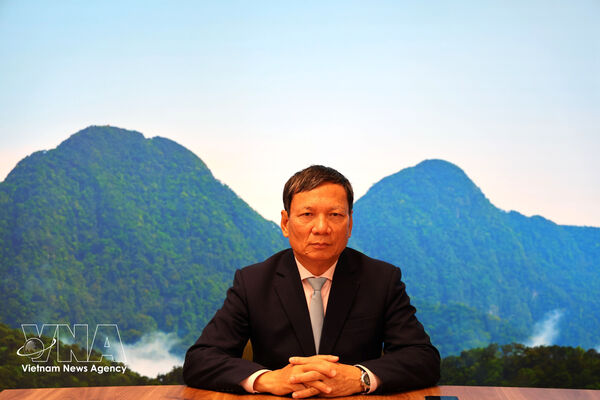
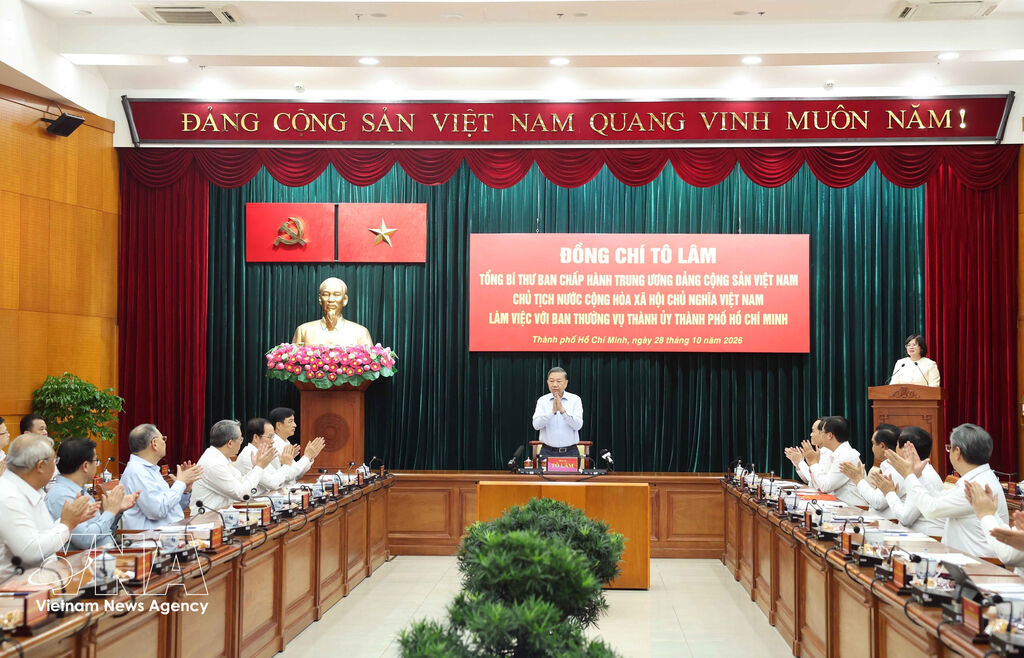
| General Secretary of the Communist Party of Vietnam Central Committee and President To Lam has a meeting with the Ho Chi Minh City Party Committee’s Standing Board on October 28, 2026. (Photo: VNA) |
Ho Chi Minh City (VNA) – General Secretary of the Communist Party of Vietnam Central Committee and President To Lam on October 28 called on Ho Chi Minh City to renew its approach to autonomy, strengthen implementation capacity and ensure that tasks are completed with tangible results.
He made the statement at a meeting with the municipal Party Committee’s Standing Board to review the implementation of the 14th National Party Congress’s Resolution and the Politburo’s strategic resolutions, socio-economic development plans, the 2026 double-digit growth target, and measures to address outstanding problems.
At the meeting, Le Quoc Phong, member of the Party Central Committee and Standing Deputy Secretary of the municipal Party Committee, reported that the city’s GRDP grew 9.06% in the first nine months of 2026 and 9.86% in the third quarter.
The city is targeting double-digit growth, budget revenue exceeding 1 quadrillion VND (38.6 billion USD) and full disbursement of public investment funds in 2026. Its current scenario envisages fourth-quarter growth of 12.3% and full-year growth of 10.2%.
General Secretary and President Lam commended the efforts by the municipal Party organisation, authorities, armed forces, business community and residents,
noting that rapid global changes and unexpected developments are directly affecting the city through fluctuations in orders, operating costs, interest rates, exchange rates and investment flows.
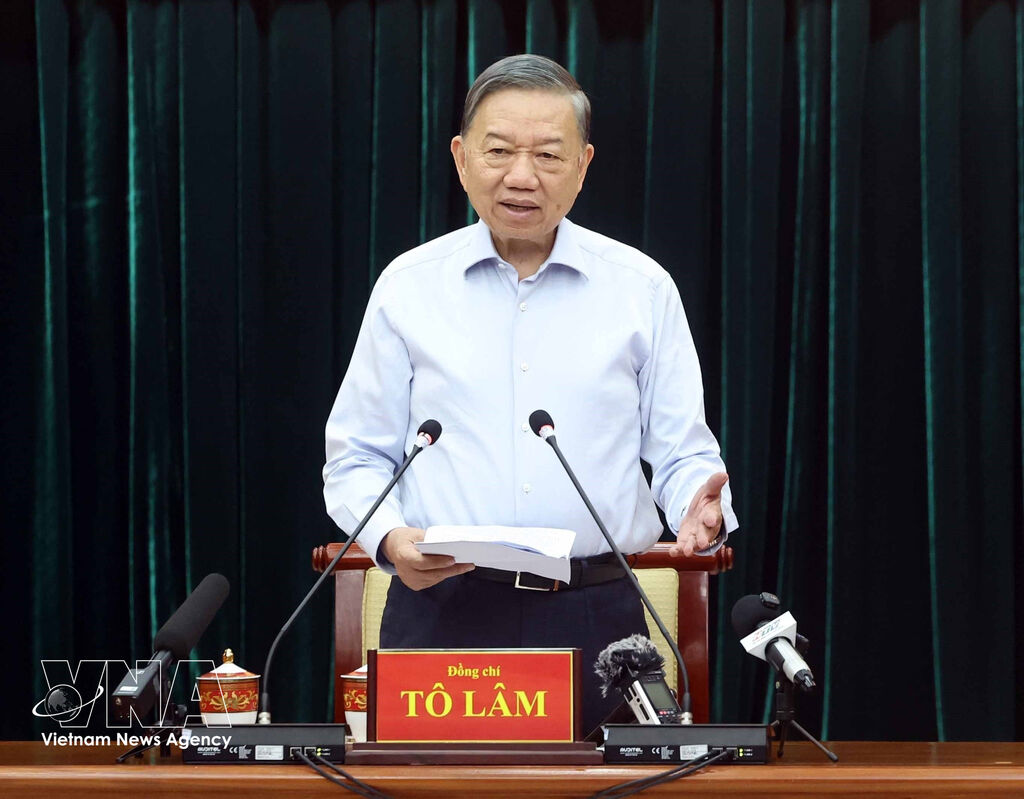 |
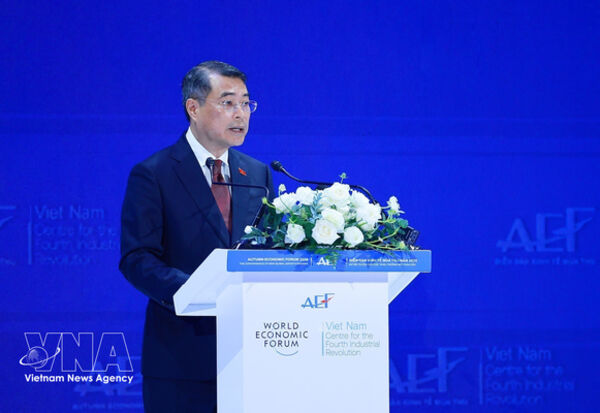
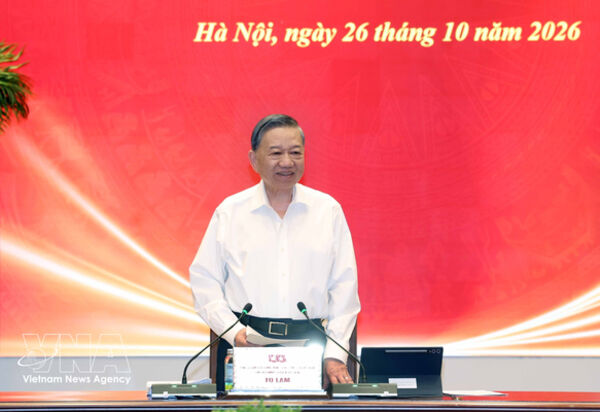
| General Secretary of the Communist Party of Vietnam Central Committee and President To Lam speaks at the meeting. (Photo: VNA) |
Meanwhile, artificial intelligence, automation and new environmental standards are comprehensively reshaping competitive advantages. The city must improve its forecasting capacity and prepare response plans for scenarios of 2027 while pursuing long-term goals in productivity, technology, human resources and living conditions, he stated.
The top leader urged the city to review all delayed tasks, assign clear responsibilities and deadlines, identify bottlenecks, resolve matters within its authority and make specific proposals on issues beyond its remit.
It should strengthen the two-tier local administration, prioritise resources for heavily burdened wards and communes, use digital data to reduce administrative burdens, and assess officials based on tangible performance results and public satisfaction. Those unable to meet requirements should be replaced, he added.
To meet its 2026 targets and prepare for growth in 2027, Ho Chi Minh City should focus resources on projects and markets capable of delivering results in the final months of this year. Public investment progress, supply of construction materials and payments must be closely monitored, with capital reallocated from sluggish projects.
Preparations for priority projects in 2027, including procedures, site clearance and funding, must be completed at the soonest, he demanded.
General Secretary and President Lam also called for substantive dialogue with businesses to promptly remove obstacles, provide practical support for small- and medium-sized enterprises (SMEs) and business households, and take decisive action on stalled projects involving incapable investors.
For foreign direct investment, the city should focus on implementation progress, workforce training, technology transfer and domestic supplier development, he went on, adding that the International Financial Centre must first help mobilise capital for Vietnam, particularly for infrastructure, production, innovation and SMEs.
He stressed the need to reorganise development space following the city’s merger, prioritise interconnected infrastructure and plan functional areas for services, finance, industry and logistics. Metro lines should be expanded with multimodal connections and transit-oriented development, while flood prevention should combine technical infrastructure with the protection of water-retention areas. Inter-regional coordination in transport, the environment and supply chains should also be strengthened.
The southern metropolis should apply science and technology to improve productivity and business capacity, and link universities, research institutes, enterprises and experts to address challenges in production, logistics, healthcare, finance and urban governance. It should help smaller businesses adopt and master technology, align workforce training with market demand, and attract experts based on their capabilities and contributions.
The Party and State leader underscored that people’s daily issues, including employment, housing, education, healthcare and a safe living environment, must remain a priority.
Affordable housing, especially rental accommodation for workers and low-income residents, should be linked to jobs, transport and essential services. Healthcare at the grassroots level must improve while more schools and teachers should be provided wherever student populations are growing. Special attention should be paid to workers at risk of losing their jobs, particularly older and less-skilled workers, as well as young people without employment, education or vocational training.
He also asked for continued action on traffic congestion, flooding, pollution and food safety, alongside early preparations for the 2027 Lunar New Year to ensure adequate supplies, stable prices and safe, orderly celebrations for workers, policy-beneficiary families, poor households and people facing hardship.
On Party building, General Secretary and President Lam requested the municipal Party Committee’s Standing Board uphold solidarity, democracy and clear accountability, and resolutely prevent and combat corruption, wastefulness and misconduct, particularly in land management, investment, bidding, procurement and public asset management.
Officials who act properly in the public interest should be protected, while profiteering, harassment and avoidance of responsibility must be dealt with accordingly, he remarked.
He asked Ho Chi Minh City to pilot assessing the implementation of the resolutions issued by the Party Central Committee and its Politburo in 2025 and 2026, adding it needs to translate the meeting’s conclusions into specific tasks, clarify year-end priorities and preparations for 2027, and closely monitor progress to deliver practical results./.