 |
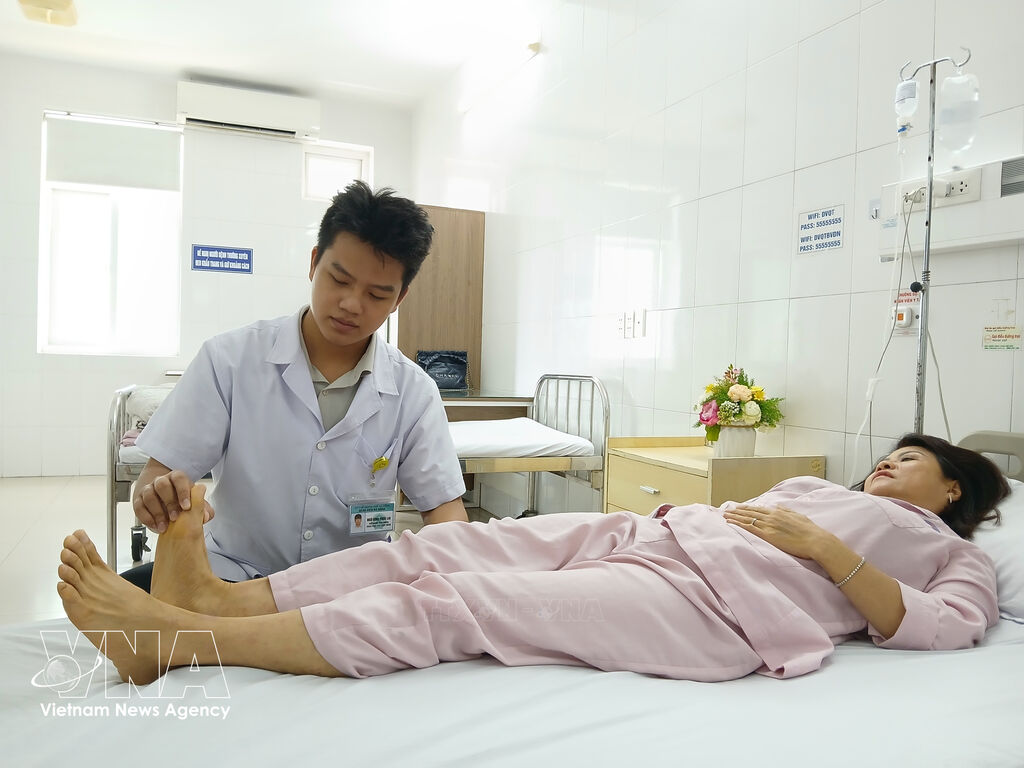
| A medical worker provides healthcare and physical therapy to a patient at Da Nang Hospital. (Photo: VNA) |
Hanoi (VNA) – Vietnam boasts abundant medicinal resources and a traditional medicine system built on knowledge and experience accumulated over generations, offering important advantages for developing traditional medicine and the medicinal materials industry while also providing a foundation for wellness products and services catering to tourists.
However, unlocking this potential requires the conservation of genetic resources, standardisation of growing areas, improvements in medicinal material quality and stronger scientific research, with product development closely linked to the preservation of traditional cultural values.
Building a foundation to harness the strengths of traditional medicine
Vietnam is home to more than 5,117 species of medicinal plants and fungi species, 408 animal species, 52 species of marine algae and 75 types of minerals used for medicinal purposes. These valuable resources play an important role in developing traditional medicine, the pharmaceutical industry and the bioeconomy.
Assoc. Prof. and Dr Nguyen Tuan Hung, Director of the Vietnam Institute of Traditional Medicine, said the country's abundant medicinal resources provide a cornerstone for leveraging the strengths of traditional medicine and expanding opportunities to develop high-value medicinal products.
Despite its resource advantages, Vietnam's medicinal materials sector still faces numerous constraints. Many experts believe that the sector needs to shift from spontaneous, fragmented exploitation towards standardised production, the application of advanced technologies and value-chain-based cooperation.
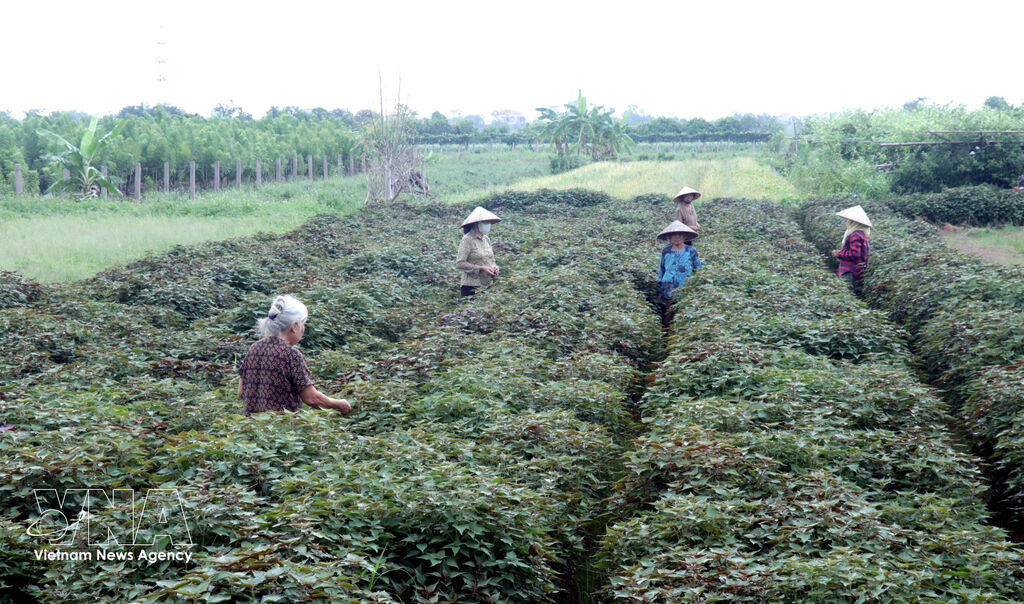 |
| Farmers in An Mai village, Hung Ha commune of Hung Yen province, harvest perilla leaves. (Photo: VNA) |
Overexploitation and inadequate controls are depleting many valuable medicinal plant genetic resources. Meanwhile, the number of concentrated medicinal plant growing areas meeting GACP-WHO standards remains limited, while cooperation among the State, scientists, businesses and farmers has yet to deliver the expected results. Domestic supplies currently meet only around 25–30% of demand.
This situation highlights the need to improve mechanisms and policies, establish national standards for medicinal materials and traditional medicinal ingredients, plan concentrated growing areas, and strengthen controls over the quality and origin of raw materials.
Science is regarded as the “key” to increasing the value of medicinal materials, experts said, stressing the need for planning growing areas linked with each locality's advantages and connecting production with the market.
Policy orientations open up new development opportunities
The development of traditional medicine is part of the broader policy of protecting, caring for and improving public health. The Politburo’s Resolution No. 72-NQ/TW calls for promoting the role of traditional medicine and combining it with modern medicine in training, disease prevention, medical examination and treatment.
On July 9, 2026, the Prime Minister issued Decision No. 1250/QD-TTg promulgating a plan to implement Notice No. 68-TB/VPTW, issued on May 26, 2026 by the Party Central Committee's Office, on developing Vietnam's traditional medicine.
Subsequently, on October 13, 2026, the Prime Minister issued Decision No. 1976/QD-TTg approving the national strategy for the development of Vietnam's traditional medicine to 2030, with a vision to 2045.
Standing Deputy Minister of Health Vu Manh Ha stressed that these orientations target the development of traditional medicine in a scientific, modern and internationally integrated manner, combining it with modern medicine, accelerating science – technology application and digital transformation, and developing the medicinal materials industry.
According to Prof. and Dr Trinh Thi Dieu Thuong, Director of the Traditional Medicine Administration under the Ministry of Health, a key principle of the national strategy for the development of Vietnam's traditional medicine to 2030, with a vision to 2045, is to “shift from using traditional medicine to treat diseases towards providing comprehensive health care”.
The strategy aims to develop traditional medicine in a comprehensive, modern, scientific and internationally integrated manner, making it an important component of the national healthcare system and ensuring its harmonious combination with modern medicine in healthcare throughout people's lives.
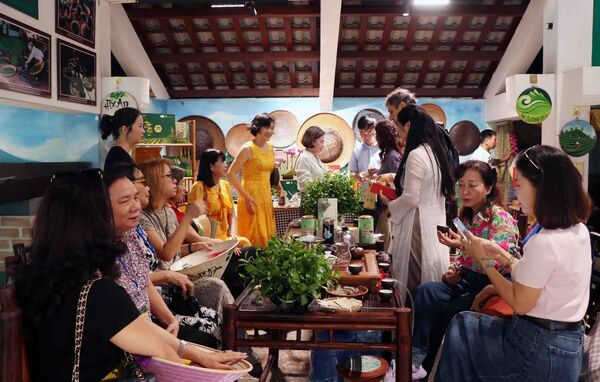
Notably, the strategy sets a target of building national brands for 30 medicinal material products, traditional medicines and herbal medicines, while developing five product and service lines offering traditional medicine-based healthcare for tourists, linked to the conservation and promotion of traditional cultural values.
This is particularly relevant to the development of wellness products and services based on local resources and traditional medical knowledge, Thuong said.
The development of traditional medicine-based healthcare products and services for tourists must therefore meet requirements for quality, safety and scientific evidence while preserving traditional knowledge.
Alongside the development of standardised medicinal plant growing areas, research and deep processing, building brands for products derived from Vietnamese medicinal materials is expected to help increase the value of local resources./.