 |
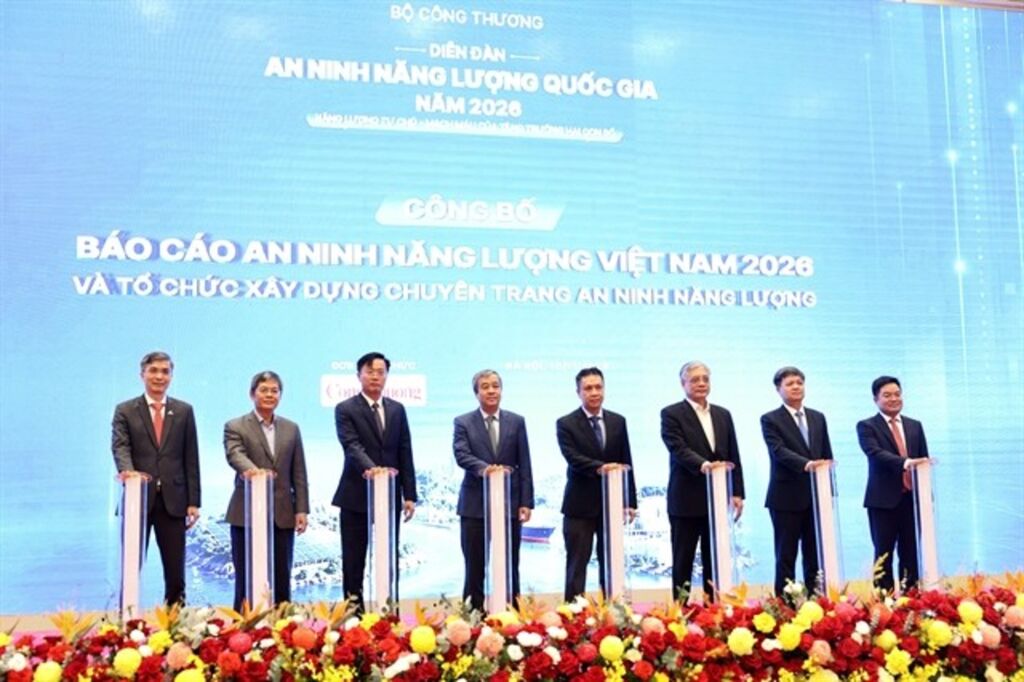
| The launch of the 2026 Vietnam Energy Security Report in Hanoi on November 10 (Photo: VNS) |
Hanoi (VNS/VNA) – Vietnam was among just 13 countries worldwide that maintained stable energy security in 2026, despite unprecedented disruptions to global energy supplies, according to the 2026 Vietnam Energy Security Report released on November 10.
Of the 77 countries surveyed, 102, or 57.6%, faced energy difficulties as of November 9, while only 13 maintained stable energy security, the report said.
Unveiled at the first National Energy Security Forum 2026, organised by the Ministry of Industry and Trade in Hanoi, the report described 2026 as one of the most challenging years for the global energy system in decades.
The six-month blockade of the Strait of Hormuz pushed Brent crude prices to a peak of 118.35 USD per barrel, while record heat and El Niño drove electricity demand to unprecedented levels. Hydropower output in Vietnam is forecast to be 18.5 billion kWh lower than in 2025.
Despite these challenges, Vietnam maintained uninterrupted power supplies, with no need for nationwide or rotational power cuts, the report said.
Electricity generation and imports are estimated at 356.2 billion kWh this year, up 10.3% year on year and about 6.2 billion kWh above the baseline scenario.
National peak electricity demand reached a record 57,537 MW on June 24, including 30,248 MW in the north.
The oil and gas sector also maintained stable supplies despite the disruption to a key international shipping route.
The country's two refineries produced about 12.1 million tonnes of petroleum products in the first nine months. Dung Quat refinery operated at about 123% of its adjusted designed capacity, while Nghi Son ran at approximately 112%.
Crude oil and condensate production by the Vietnam National Industry-Energy Group (Petrovietnam) reached 115% of its nine-month target, while gas delivered to shore reached 120% of the plan.
Vietnam also diversified its crude oil sources and avoided fuel shortages without drawing on national reserves.
The report also pointed out that the Government spent more than 64 trillion VND (2.43 billion USD) on measures including reductions in fuel taxes and fees and advances from the fuel price stabilisation fund to keep energy prices under control.
On October 26, domestic retail petrol prices stood at about 63% of the global average, the lowest among 16 economies compared.
From November 1, the average retail electricity price was cut by 2% to 2,159.90 VND per kWh, excluding value-added tax.
However, the report warned that maintaining energy security would remain under pressure in 2027 and become even more challenging in 2028, as electricity demand is expected to grow by around 10% annually from an already high base, while new baseload power sources may not come online in time.
The El Niño phenomenon could also persist until around June 2027, adding pressure to electricity supplies.
The report identified several structural vulnerabilities, including net energy imports accounting for approximately 44% of primary energy supply, limited petroleum reserves and mounting pressure on the northern power system.
The report called for a shift in energy security policy from simply ensuring sufficient supply towards a broader approach based on safety, stability, self-reliance and sustainability.
The focus should be on reducing dependence on imports; developing energy infrastructure, addressing non-traditional security risks, improving the institutional framework, advancing science, technology and human resources, and strengthening international cooperation.
The report also recommended developing primary energy resources, introducing special mechanisms to accelerate urgent power generation and transmission projects, expanding national energy reserves and reviewing the power generation mix.
The ministry also announced plans for an online energy security information portal covering policy, electricity, petroleum, new energy, energy efficiency, energy data and international developments./.