 |
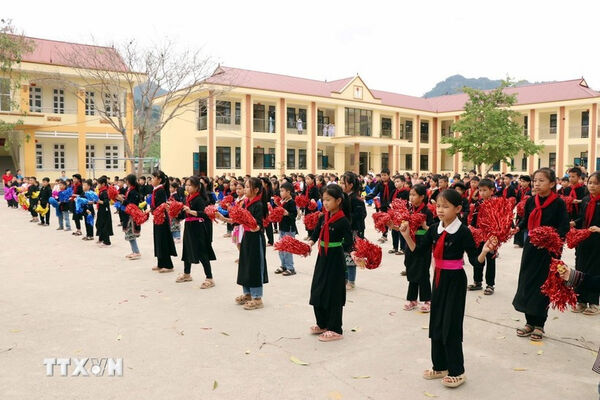
| Illustrative photo |
Hanoi (VNA) – Deputy Prime Minister Bui Thanh Son has signed Decision No. 2715/QD-TTg dated December 13, approving a plan to implement the recommendations of the United Nations Human Rights Committee on Vietnam’s fourth periodic report on the implementation of the International Covenant on Civil and Political Rights (ICCPR).
The plan aims to clearly identify tasks and implementation roadmaps to effectively carry out the Committee’s recommendations and the provisions of the ICCPR, in close connection with efforts to improve institutions and legislation, and enhance the enforcement of laws related to civil and political rights in line with Vietnam's Constitution and socio-economic conditions.
At the same time, it seeks to strengthen coordination, monitoring and reporting on the implementation of the recommendations, ensuring substantive results in preparation for the mid-term report and the next national report on ICCPR implementation.
Enhancing enforcement of legal regulations on civil, political rights
Under the plan, ministries, sectors and localities are tasked with continuing to review legal provisions and proposing ways to better materialise the ICCPR. Particular emphasis will be placed on assessing the compatibility of draft laws, National Assembly resolutions, ordinances and resolutions of the National Assembly Standing Committee with ICCPR provisions.
Relevant agencies are also required to study and propose refinements to the legal framework to further safeguard civil and political rights in specific areas, including the fight against non-discrimination.
The plan highlights the need for the effective implementation of programmes and action plans promoting gender equality, responding to gender-based violence, and carrying out the National Action Plan on Women, Peace and Security. It also stresses the need to eliminate stereotypes and discrimination against women and other vulnerable groups, including persons with disabilities, children, ethnic minorities and people who are lesbian, gay, bisexual, transgender and intersex.
In addition, related national strategies and plans contributing to the protection of civil and political rights will continue to be rolled out, such as the National Climate Change Strategy to 2050, the National Strategy on Preventing and Combating Corruption and Negativity to 2030, the National Target Programme on socio-economic development in ethnic minority and mountainous areas for 2021–2030, the National Target Programme on Drug Prevention and Control to 2030, and the national strategy on research, development and application of artificial intelligence to 2030.
The plan aims to make it easier and more secure to receive and resolve complaints and reports, boost settlement rates in cases involving civil and political rights violations, and strengthen protections of citizens’ right to file complaints. It also highlights the need for greater effectiveness in upholding civil and political rights during criminal proceedings and the enforcement of criminal judgments.
Support activities will be strengthened, including improved assistance for victims and compensation for damage caused by violations. Inspection, supervision, monitoring and data collection - disaggregated by criteria such as gender, ethnicity and religion - will be enhanced to assess the enforcement of civil and political rights.
Raising public awareness of civil and political rights
The plan underscores the importance of communication and education in this field. It calls for effective implementation of the Communication Project on Human Rights in Vietnam, approved under Decision No. 1079/QD-TTg dated September 14, 2022, with a focus on the ICCPR, Vietnam’s implementation achievements and efforts, and outcomes of dialogue sessions through appropriate content and formats.
Training, dissemination and capacity-building activities related to the ICCPR, the Human Rights Committee’s General Comments, Vietnam’s fourth national report and the Committee’s recommendations will continue for relevant target groups. Public outreach will also be expanded to all citizens, including detainees, inmates and individuals subject to administrative measures such as compulsory education or rehabilitation, to enhance their awareness of civil and political rights.
Efforts will be improved to raise awareness among leaders, managers, civil servants, and public employees at all levels, through conferences, workshops, and training sessions. Human rights topics will continue to be part of the national education system, following the government-approved programmes already in place.
Based on assigned tasks and functions, ministries, agencies and local authorities are required to develop their own implementation plans for the Decision, which should be sent to the Ministry of Justice by March 1, 2026, for coordination and monitoring./.