 |
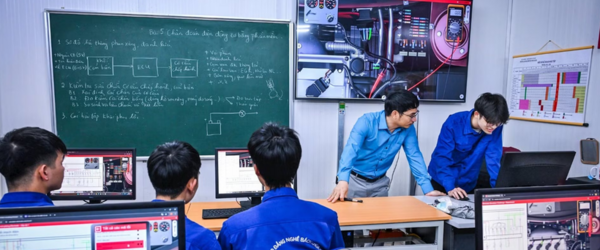
| Vietnamese scientists and experts will receive a monthly allowance equal to 300% of their base salary. Illustrative image (Photo: VNA) |
Hanoi (VNA) – The Vietnamese Government has issued a decree detailing several mechanisms and policies to channel resources into deeper global integration under the National Assembly’s Resolution 250/2025/QH15.
The June 30 decree covers civil servants, public employees, officers of the armed forces, personnel engaged in foreign affairs and global integration, alongside scientists, experts, and educational establishments specialising in the field.
Eligibility requirements for global integration specialists
Ministers, heads of ministry-level agencies and chairpersons of provincial People's Committees will designate priority sectors based on national and local strategic orientations.
A scientist on global integration must have at least Level-4 proficiency in a foreign language under Vietnam’s six-level framework and a minimum of 10 years of experience in foreign affairs and global integration, or 10 years of teaching and research in the field. A doctorate degree from a reputable international establishment, authorship or co-authorship of a globally recognised scientific work with proven practical impact are also required.
An expert must also hold Level-4 language skills and meet at least one additional bar: 10 years of experience or a management role at a reputable international or regional organisation, at home or abroad; leading or co-leading of a state-level research project on foreign affairs or global integration rated “excellent”, serving as deputy minister or higher with deep policy-making and negotiation experience, being nominated by the Vietnamese Government to an international professional body; or being recognised by the head of a ministry, ministerial-level agency or provincial People's Committee.
When needed, they can establish councils to assess candidates and propose recognition as global integration experts. They will make the final appointment decisions and notify the Ministry of Foreign Affairs (MoFA).
Perks for talent at home and abroad
Vietnamese scientists and experts of working age seeking permanent roles in bodies directly and regularly handling foreign affairs and international integration can be recruited as civil servants or public employees under current rules.
They will receive a monthly allowance equal to 300% of their base salary, on top of other statutory benefits.
Those past retirement age or who opt out of the civil service system can be hired on employment or service contracts if agencies have a need.
Ministries, ministry-level agencies, and provincial People's Committees will conduct annual performance reviews for scientists and experts alongside regular civil service assessments, using the results to decide whether to continue the monthly support.
Foreign scientists and experts will get priority access to training, research and international cooperation programmes under contracts with pay set by mutual agreement and benefits compliant with Vietnamese law.
When necessary and with their home agency’s consent, scientists and experts from ministries and provinces can be mobilised by the MoFA to support Party and State’s diplomatic and integration activities coordinated by the ministry, or join training and teaching.
Diplomatic Academy to become national centre of excellence
The decree charts a course for the MoFA’s Diplomatic Academy of Vietnam to become the country’s top specialised higher education establishment for foreign affairs and global integration.
It will serve as the central hub for training, professional development, strategic research and scholar diplomacy.
Beyond its current remit, the academy will advise the foreign minister on approving and rolling out training courses for civil servants, foreign affairs staff and candidates for international posts. It will coordinate curriculum design, faculty training, undergraduate and postgraduate courses, resource sharing and professional support for training establishments nationwide.
The academy will undertake strategic and theoretical research, forecast global trends and supply scientific analysis to shape and enforce Vietnam’s foreign policy and integration strategies. It will also serve as the national focal point for scholar diplomacy and deepen international cooperation in education, research and academic exchanges in the field.
The MoFA will give the academy priority in resource allocation to support’s key Party and State’s political missions, strategic research and digital transformation, and ease its access to foreign affairs and global integration information.
The monthly support for personnel directly and regularly working in foreign affairs and global integration, scientists, experts and speakers of rare foreign languages will take effect retroactively from January 1, 2026, the date Resolution 250/2025/QH15 came into force.