 |
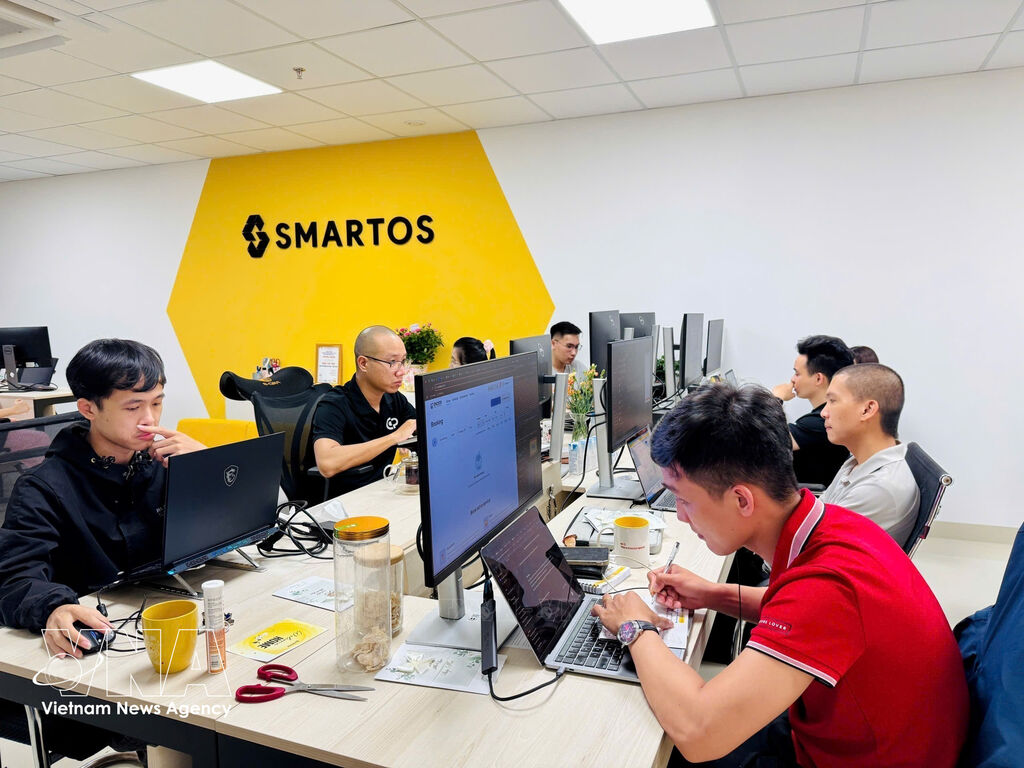
| Private technology enterprises are increasingly viewed as a driving force at the heart of the innovation ecosystem. (Photo: VNA) |
Hanoi (VNA) - Vietnam’s rise into the world’s top 50 startup ecosystems for the first time marks a major milestone in its innovation journey, but persistent challenges in startup quality, technology commercialisation, capital access and international competitiveness continue to constrain its global ambitions.
According to StartupBlink’s Global Startup Ecosystem Index 2026, Vietnam climbed to 50th place worldwide, achieving its highest ranking to date among more than 100 countries and 1,000 cities assessed. Ho Chi Minh City also entered the global top 100 startup cities for the first time and emerged as one of Southeast Asia’s most dynamic innovation hubs, while Hanoi, Da Nang and Hai Phong further strengthened their positions as growing centres of entrepreneurship and technology.
Vietnam’s startup ecosystem now comprises roughly 4,000 startups, 208 investment funds, 84 incubators and more than 20 startup support centres. With an estimated valuation of 75 billion USD, the ecosystem has established most of the key foundations needed for long-term growth.
Momentum is expected to accelerate as the Government rolls out new policies to advance science, technology, innovation and digital transformation. Among the most significant measures is Resolution No. 86/NQ-CP on the National Innovation Startup Strategy, adopted in April 2026, which aims to transform Vietnam into an innovation-driven startup nation by supporting startups, spin-offs from universities and research institutes, and innovation centres in Hanoi, Da Nang and Ho Chi Minh City.
The strategy also prioritises emerging sectors such as artificial intelligence, semiconductors, robotics, quantum technology, green hydrogen and core digital infrastructure, creating fresh opportunities for domestic technology enterprises.
 |
| Visitors explore technology showcases at the Tech Exhibition held during Da Nang Startup and Innovation Festival (SURF) 2025. (Photo: VNA) |
Despite the progress, experts caution that Vietnam still faces a long road to consistently producing technology companies capable of competing on the global stage. One of the key obstacles is the limited scope of existing support mechanisms, which often focus on startup formation and early-stage fundraising while providing insufficient support throughout the broader business lifecycle.
Trinh Minh Giang, Chairman of the Venture Management Consulting Group, noted that startup failure rates remain high, while procedures related to business restructuring, closure, bankruptcy and entrepreneurial re-entry remain complex, exposing founders to considerable legal and financial risks.
He argued that startup policies should be expanded beyond early-stage support to include areas such as corporate governance, business scaling and failure management, helping entrepreneurs navigate both growth and setbacks more effectively.
While Vietnamese startups have demonstrated strengths in idea generation and initial fundraising, many continue to struggle with scaling operations, product development and international market expansion.
Economist Nguyen Thanh Doan said that, in addition to funding challenges, regulatory constraints and weak connections between businesses, research institutions and universities remain major barriers to the ecosystem’s sustainable development.
To unlock the next phase of growth, experts say Vietnam needs stronger support mechanisms, including regulatory sandboxes, dedicated public funding programmes and a more adaptive legal framework that can keep pace with rapidly evolving technologies. Building a more supportive and interconnected innovation ecosystem will be crucial to nurturing Vietnamese technology firms capable of competing across the region and beyond./.