 |
| A representative of the Long Son JSC introduces organic cashew nut products to a visitor at BIOFACH 2026, the world's leading trade fair for organic food, held in Germany in February. (Photo: VNA) |
Hanoi (VNA) – An increasing number of Vietnamese enterprises are expanding their presence in international markets not by relying solely on low cost or preferential incentives, but through technological innovation, adherence to stringent standards and strong brand development.
However, experts say further policy improvements are needed to help businesses compete on equal terms with foreign rivals.
Confidence in competitiveness
Chairman of the Phuc Sinh Group Phan Minh Thong said Vietnamese enterprises must continuously upgrade their capabilities to enhance international competitiveness.
From an exporter of raw peppercorns, Phuc Sinh has shifted toward deep processing, brand building and direct participation in global distribution chains. Its pepper and coffee products are now available in more than 120 markets, with annual export turnover estimated at over 400 million USD.
According to Thong, global competition is no longer about simply selling products but about retaining markets. International partners increasingly prioritise traceability, sustainable production and the ability to guarantee stable and long-term supply over price advantages.
Without a change in mindset, traditional farming practices will erode competitiveness. Meanwhile, standards-based agriculture could be a sustainable “gold mine”, he noted.
Sharing this view, Chairman of the Vina T&T Group Nguyen Dinh Tung stressed that mastering the entire value chain is crucial for competing with multinational corporations.
Drawing on the company’s experience in exporting fresh fruits to the US, the European Union and Japan, Tung said supply stability, consistent quality and reliable contract performance are decisive factors. Controlling raw material zones and proactively managing quality and logistics enable enterprises to retain markets and compete fairly with global agribusinesses, he added.
Beyond agriculture, Vietnamese firms are also asserting competitiveness in high-tech sectors.
Dr Luong Viet Quoc, CEO of Real-time Robotics (RtR), said unmanned aerial vehicles researched, designed and manufactured by Vietnamese companies are now capable of competing directly with products from China, Israel and the US.
Designing appropriate policies
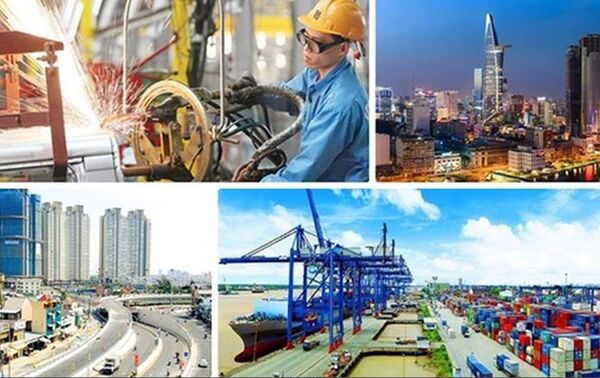
Vietnam’s export turnover increased from over 336 billion USD in 2021 to an estimated 475 billion USD in 2025. Tens of thousands of enterprises are involved in export activities, and many sectors have established a stable presence in major markets such as the US, the EU and Japan.
However, experts observed that the number of enterprises able to compete on equal footing internationally remains modest compared to the country’s economic potential.
Nguyen Ngoc Hoa, Chairman of the Ho Chi Minh City Union of Business Associations (HUBA), said resilience and adaptability to new global trade rules pose major challenges. Requirements relating to carbon taxes, ESG standards, trade remedies, rising logistics costs and increasing compliance expenses are exerting mounting pressure on businesses while most of them have limited resources to handle.
From a broader perspective, Prof. Dr Vu Minh Khuong from the Lee Kuan Yew School of Public Policy under the National University of Singapore stressed that enterprise competitiveness must be viewed holistically. While businesses are central, they cannot be separated from institutions, the business environment or linkages within the wider economic ecosystem.
As more Vietnamese companies venture into global markets, the key question now is how to enable more domestic enterprises to scale up sustainably and maintain their footing amid intensifying global competition.
Experts proposed continued administrative procedure reforms to reduce compliance costs, alongside more suitable credit policies to support innovation-driven and green-transition enterprises. Developing logistics infrastructure and strengthening supply-chain linkages among domestic firms, foreign-invested enterprises and international distribution networks are also considered essential./.