 |
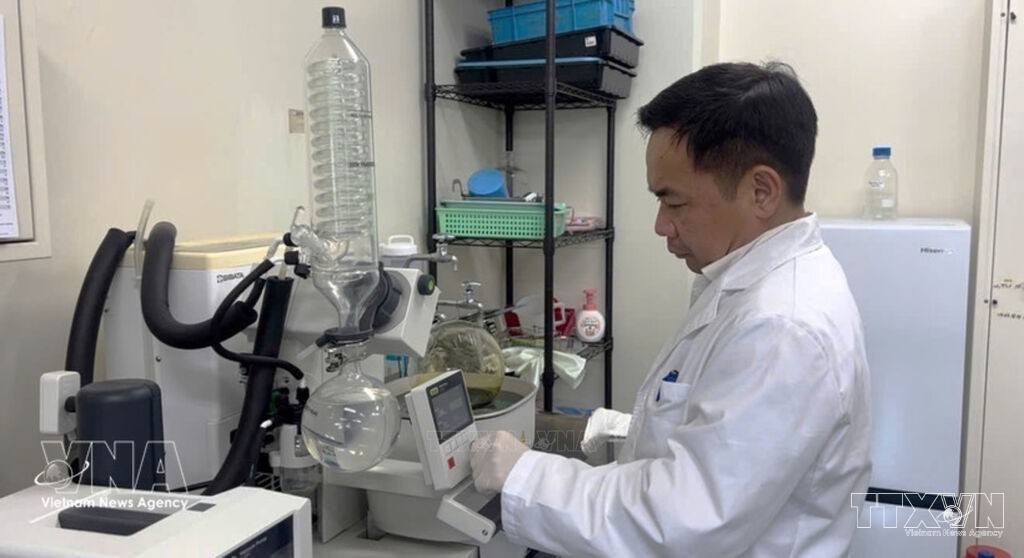
| Professor Tran Dang Xuan works in his research laboratory. (Photo: VNA) |
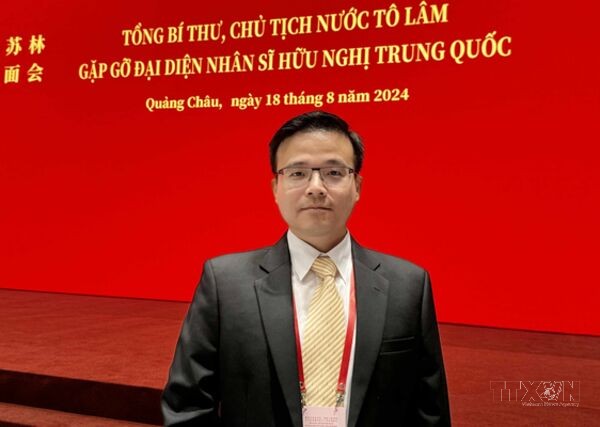
Tokyo (VNA) – Professor Tran Dang Xuan, a Vietnamese agricultural and biotechnology scientist at the IDEC Institute, Hiroshima University, Japan, is working to translate scientific research into practical benefits for Vietnam, particularly in agriculture, technology transfer and high-quality human resources development.
Recently ranked first in the field of Plant Science and Agronomy at Hiroshima University by Research.com, he said his research on photosynthetic bacteria (PSB) for rice cultivation has shown promising initial results in Vietnam and Japan, with rice yields potentially increasing by more than 20%. Under certain trial conditions, combining PSB with 50% of the normal NPK fertiliser dose maintained yields comparable to those achieved using the full dose. The approach could help farmers cut production costs, increase incomes and reduce environmental pollution.
Xuan advised Vietnam’s agriculture to shift from maximising output to smarter production that prioritises quality and generates greater economic value per unit of land. This is essential to improving farmers’ livelihoods and strengthening the competitiveness of Vietnamese agricultural products.
Human resources development is another priority. He has supervised more than 70 master’s students and 26 doctoral candidates at Hiroshima University, including many Vietnamese students. He is also promoting a satellite-campus doctoral training model between Hiroshima University and Vietnamese universities, initially partnering with Thai Nguyen University of Agriculture and Forestry in agriculture and biotechnology in October 2024.
In October 2026, an English-language semiconductor technology training programme involving Hiroshima University, the University of Idaho in the US and Vietnamese partners also began, comprising two years of study in Japan followed by two years in the US.
Professor Xuan stressed that overseas Vietnamese scientists and experts could help strengthen domestic research capacity and international cooperation. He also called for more effective implementation of Vietnam’s existing science, technology and innovation policies, particularly those concerning intellectual property, benefit-sharing and research commercialisation.
He cited Vietnam’s Law on Science, Technology and Innovation, adopted on June 27, 2025, as an important legal basis for encouraging innovation. Greater awareness and effective implementation of such policies, he said, will help attract talent, mobilise scientific resources at home and abroad, and turn research into a stronger driver of economic growth./.