In 2025, diplomacy continued to serve as a firm foundation for national development, the building of equal and mutually beneficial partnerships, and the safeguarding of national interests amid growing regional and global volatility.
In the post-COVID-19 period, the international environment has been marked by unpredictable conflict hotspots, sharp global economic fluctuations and heightened risks, alongside rapid breakthroughs in artificial intelligence, quantum and nuclear technologies.
Against such “headwinds”, Vietnam has remained resilient by mobilising the combined strength of the entire nation and political system, driven by strong determination and a robust reform mindset. Under the close, decisive leadership and direct involvement of Party and State leaders, together with strong coordination across all diplomatic channels, external relations work in 2025 achieved results of important and breakthrough significance.
A key highlight was organisational reform through the streamlining and restructuring of the diplomatic apparatus, creating a leaner, stronger and more effective system.
Diplomacy in 2025 became increasingly substantive and practice-oriented, closely aligned with the country’s strategic priorities. Each activity was guided by real-world needs, with national interests and business benefits serving as the highest measure of effectiveness. External activities were conducted in a structured, balanced and effective manner across both bilateral and multilateral channels, while high-level diplomacy by key leaders played a central role in setting strategic directions for relationships. New advances were also recorded through specialised forms of diplomacy, notably technology diplomacy, climate diplomacy and public diplomacy.
Foreign relations achieved both qualitative and quantitative breakthroughs. In 2025, key leaders conducted 75 external activities, nearly 1.5 times higher than in 2024, upgraded relations with 17 countries, and raised the number of partners at comprehensive partnership level or higher to 42. Vietnam established diplomatic relations with Tuvalu, bringing the total number of countries with which it maintains diplomatic ties to 194.
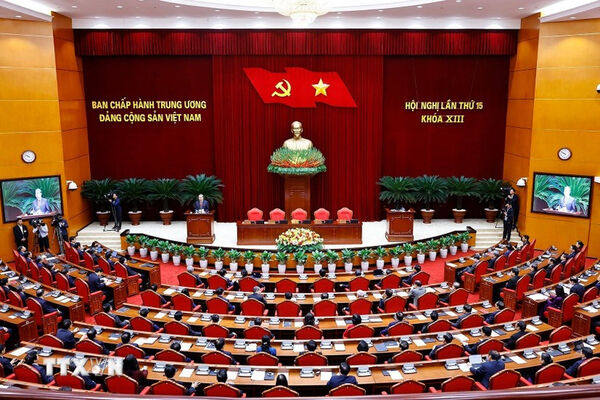
Following institutional restructuring, Party-to-Party diplomacy continued to be implemented proactively and effectively. This channel remained vital in consolidating political trust and promoting substantive cooperation frameworks, particularly with neighbouring countries such as China, Laos and Cambodia, thereby enhancing the international standing and prestige of the Party and the country.
People-to-people diplomacy became more closely integrated with Party diplomacy and State diplomacy, serving shared foreign policy objectives in a more practical manner. Activities were further deepened, strengthening political significance and building a favourable social foundation that reflects the substance of Vietnam’s relations with other countries.
External economic relations, economic diplomacy, and science and technology diplomacy played an important role in helping Vietnam respond flexibly and effectively to external shocks. As a result, export turnover surpassed a new record of more than 900 billion USD, reaffirming Vietnam’s position in global supply chains. The country remained among the world’s largest FDI recipients and welcomed more than 20 million international visitors, further reinforcing its image as an attractive destination for trade partners, investors and tourists.
Diplomacy continued to work closely with national defence and security to firmly safeguard independence, sovereignty and territorial integrity, ensuring the highest national interests. Vietnam maintained peaceful, stable and cooperative land borders, announced baselines for calculating the breadth of its territorial sea in the Gulf of Tonkin, and promoted the building of an effective and substantive Code of Conduct in the East Sea in accordance with international law, particularly the 1982 United Nations Convention on the Law of the Sea. The country consistently advocated the peaceful settlement of outstanding issues on the basis of international law.
Multilateral diplomacy was further elevated, with Vietnam actively contributing to agenda-setting and rule-shaping in multilateral forums. A prominent hallmark in 2025 was Vietnam’s proactive role in successfully hosting major high-level multilateral events.
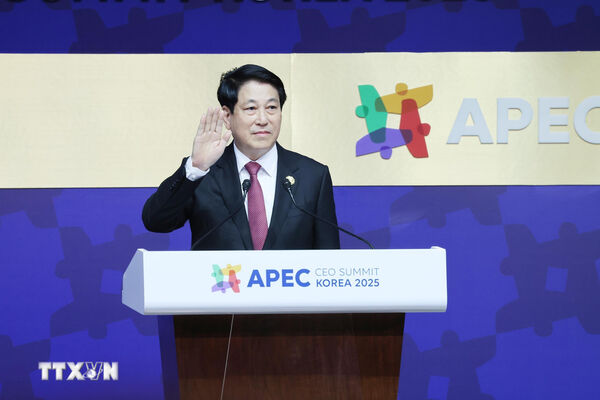
At international forums, Vietnam continued to demonstrate itself as an active and responsible contributor. This was reflected in its effective performance as a member of the UN Human Rights Council for the 2023–2025 term, its re-election for the 2026–2028 term with the world’s second-highest number of votes, and its active preparations for APEC 2027, alongside candidacies for other important multilateral mechanisms./.