 |
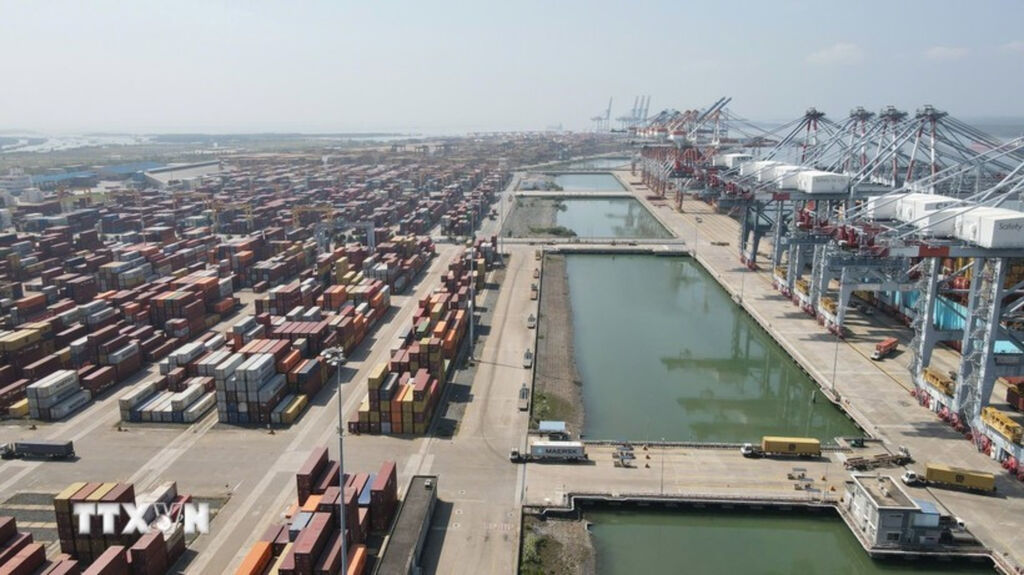
| Cai Mep-Thi Vai port in Ho Chi Minh City. (Photo: VNA) |
Hanoi (VNA) – After four decades of implementing the Doi moi (Renewal) process from 1986 to 2026, Vietnam has recorded proud and far-reaching achievements that have laid an important foundation for its aspiration to become a high-income developed country by 2045, experts have said.
Hanoi (VNA) – After four decades of implementing the Doi moi (Renewal) process from 1986 to 2026, Vietnam has recorded proud and far-reaching achievements that have laid an important foundation for its aspiration to become a high-income developed country by 2045, experts have said.
These achievements are widely viewed as the result of a consistent reform path that has strengthened the country’s economic capacity, social resilience and international standing.
Reviewing the 40-year journey, experts noted that Vietnam has travelled a long and challenging path, transforming itself from a poor, war-torn and underdeveloped country into a dynamic developing economy with remarkable progress across economic, social and diplomatic spheres.
According to a draft report summarising theoretical and practical issues of Vietnam’s socialist-oriented Doi moi process, the country recorded relatively high growth during the first decade of reforms (1986–1995), before entering a period of greater stability from 1996 to 2005. During this time, the economy's internal accumulation increased steadily, reaching 27% of GDP by 2000, while the country’s overall strength and development capacity improved markedly.
From chronic shortages of goods, domestic production gradually met essential needs, boosted exports and built reserves. Economic and social infrastructure expanded rapidly, while the economic structure shifted in a more positive direction. Production relations were adjusted to better align with the development of productive forces, accelerating the formation of a socialist-oriented market economy.
Between 2006 and 2015, Vietnam officially became a lower-middle-income country, maintaining political and social stability and ensuring social welfare. The economy sustained relatively high growth, weathering the impacts of the global financial crisis and economic downturn. Over the first 30 years of Doi moi, average economic growth reached nearly 7% per year, with several years exceeding 8% and even 9%. Export value increased more than 60-fold between 1991 and 2016, while imports rose over 80-fold.
This period also marked Vietnam’s deeper international integration, highlighted by hosting the APEC Year in 2006, joining the World Trade Organisation (WTO) in 2007, serving as a non-permanent member of the UN Security Council in 2008–2009, and holding the ASEAN Chairmanship in 2010.
In the 2016–2025 period, Vietnam’s economy continued to undergo comprehensive and positive transformation. Macroeconomic stability was maintained, inflation kept under control, major economic balances ensured, public debt reduced and bad debts contained. Despite external shocks, the country's average GDP growth during the period reached about 6.2% per year.
Prof. Dr. Vu Van Hien, former Vice Chairman of the Central Theoretical Council, described Vietnam’s achievements during the last 40 years as an “Asian miracle”, recognised by the international community.
He noted that per capita GDP rose from just over 100 USD in 1986 to around 5,000 USD in 2025, lifting Vietnam into the group of upper-middle-income countries. The economic structure shifted strongly from agriculture towards industry and services, with agriculture’s share of GDP falling from over 40% to below 15%.
Meanwhile, Vu Van Phuc, former Vice Chairman of the Scientific Council of the Central Party Agencies, said the achievements of the past 40 years have created a solid foundation for Vietnam to advance confidently into a new era of development which is characterised by peace, independence, prosperity, democracy and happiness.
However, experts also cautioned that Vietnam is facing mounting external and internal challenges. Global uncertainties, supply chain disruptions, prolonged inflation, tighter monetary policies and rising trade protectionism are weighing on growth prospects. As a highly open economy, Vietnam is directly affected through pressures on exports, investment flows, financial markets and macroeconomic stability.
Against this backdrop, the Party and State have identified science, technology and innovation as a long-term strategic orientation to strengthen internal capacity and create sustainable growth space. This approach is underscored by the Politburo's Resolution No. 57-NQ/TW on breakthroughs in science, technology, innovation and digital transformation.
Experts agreed that innovation-led, green and sustainable development will be decisive in determining Vietnam’s long-term competitiveness, turning the foundation laid by 40 years of Doi moi into new momentum for the country’s future journey./.
These achievements are widely viewed as the result of a consistent reform path that has strengthened the country’s economic capacity, social resilience and international standing.
Reviewing the 40-year journey, experts noted that Vietnam has travelled a long and challenging path, transforming itself from a poor, war-torn and underdeveloped country into a dynamic developing economy with remarkable progress across economic, social and diplomatic spheres.
According to a draft report summarising theoretical and practical issues of Vietnam’s socialist-oriented Doi moi process, the country recorded relatively high growth during the first decade of reforms (1986–1995), before entering a period of greater stability from 1996 to 2005. During this time, the economy's internal accumulation increased steadily, reaching 27% of GDP by 2000, while the country’s overall strength and development capacity improved markedly.
From chronic shortages of goods, domestic production gradually met essential needs, boosted exports and built reserves. Economic and social infrastructure expanded rapidly, while the economic structure shifted in a more positive direction. Production relations were adjusted to better align with the development of productive forces, accelerating the formation of a socialist-oriented market economy.
Between 2006 and 2015, Vietnam officially became a lower-middle-income country, maintaining political and social stability and ensuring social welfare. The economy sustained relatively high growth, weathering the impacts of the global financial crisis and economic downturn. Over the first 30 years of Doi moi, average economic growth reached nearly 7% per year, with several years exceeding 8% and even 9%. Export value increased more than 60-fold between 1991 and 2016, while imports rose over 80-fold.
This period also marked Vietnam’s deeper international integration, highlighted by hosting the APEC Year in 2006, joining the World Trade Organisation (WTO) in 2007, serving as a non-permanent member of the UN Security Council in 2008–2009, and holding the ASEAN Chairmanship in 2010.
In the 2016–2025 period, Vietnam’s economy continued to undergo comprehensive and positive transformation. Macroeconomic stability was maintained, inflation kept under control, major economic balances ensured, public debt reduced and bad debts contained. Despite external shocks, the country's average GDP growth during the period reached about 6.2% per year.
Prof. Dr. Vu Van Hien, former Vice Chairman of the Central Theoretical Council, described Vietnam’s achievements during the last 40 years as an “Asian miracle”, recognised by the international community.
He noted that per capita GDP rose from just over 100 USD in 1986 to around 5,000 USD in 2025, lifting Vietnam into the group of upper-middle-income countries. The economic structure shifted strongly from agriculture towards industry and services, with agriculture’s share of GDP falling from over 40% to below 15%.
Meanwhile, Vu Van Phuc, former Vice Chairman of the Scientific Council of the Central Party Agencies, said the achievements of the past 40 years have created a solid foundation for Vietnam to advance confidently into a new era of development which is characterised by peace, independence, prosperity, democracy and happiness.
However, experts also cautioned that Vietnam is facing mounting external and internal challenges. Global uncertainties, supply chain disruptions, prolonged inflation, tighter monetary policies and rising trade protectionism are weighing on growth prospects. As a highly open economy, Vietnam is directly affected through pressures on exports, investment flows, financial markets and macroeconomic stability.
Against this backdrop, the Party and State have identified science, technology and innovation as a long-term strategic orientation to strengthen internal capacity and create sustainable growth space. This approach is underscored by the Politburo's Resolution No. 57-NQ/TW on breakthroughs in science, technology, innovation and digital transformation.
Former General Director of the General Statistics Office Nguyen Bich Lam said the resolution reflects the urgent need to shift away from traditional growth drivers such as cheap labour and resource extraction. Science, technology and innovation are the keys to improving productivity, growth quality and national competitiveness, enabling Vietnam to integrate more deeply into regional and global value chains, he stressed.
Experts agreed that innovation-led, green and sustainable development will be decisive in determining Vietnam’s long-term competitiveness, turning the foundation laid by 40 years of Doi moi into new momentum for the country’s future journey./.