 |
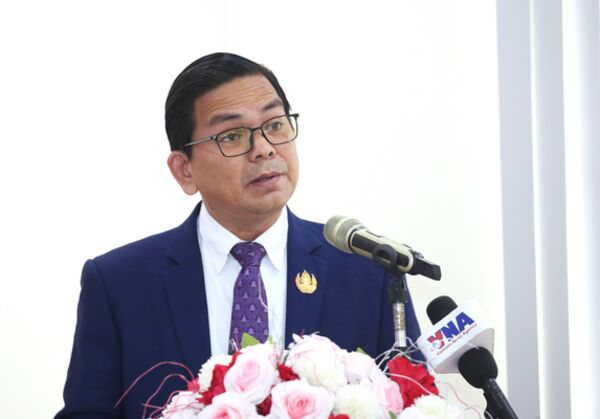
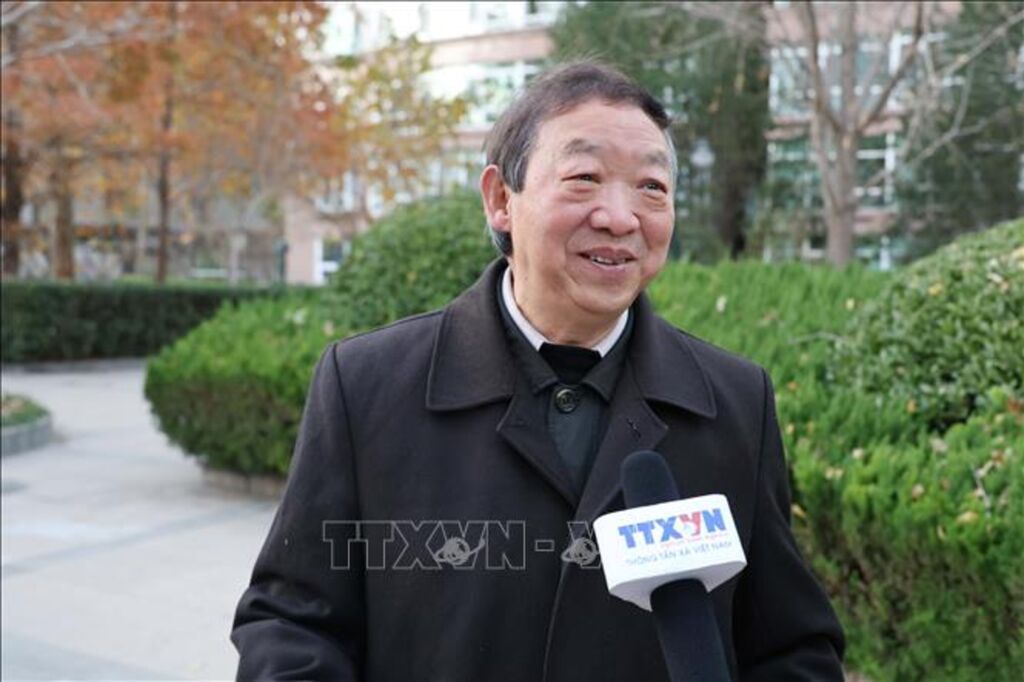
| Professor Zhu Chenming, Honorary Director of the South Asia–Southeast Asia Research Institute under the Yunnan Academy of Social Sciences. (Photo: VNA) |
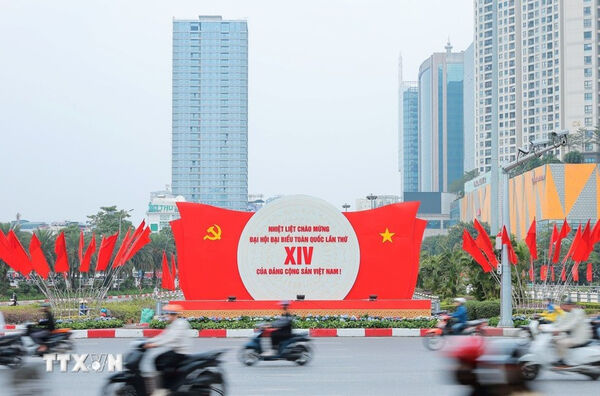
Hanoi (VNA) – The 14th National Congress of the Communist Party of Vietnam (CPV) is an extremely important political event that serves as a bridge between the past and the future. It is taking place at a time when Vietnam has made major strides over the past decade and is entering a new development era, according to a Chinese scholar.
Professor Zhu Chenming, Honorary Director of the South Asia–Southeast Asia Research Institute under the Yunnan Academy of Social Sciences, made the assessment in an interview with the Vietnam News Agency (VNA)'s resident correspondents in China, noting that under the leadership of Party General Secretary To Lam, Vietnam has outlined a new development vision for the years ahead. In this context, the 14th National Party Congress holds special importance as it reaffirms the CPV’s leadership role and the country’s steadfast commitment to the socialist path.
Zhu said the congress plays a crucial role in shaping Vietnam’s future development, as it discusses development pathways and policy directions to achieve targets set for 2030 and realise the long-term vision towards 2045. The convening of the congress is truly a major political event in the life of the Vietnamese people.
He expressed his hope that Vietnam will continue to achieve stronger development by persisting in its chosen socialist-oriented development path. After the 14th National Party Congress, Vietnam is expected to further consolidate its development trajectory, firmly upholding the Party’s leadership, building on past achievements and generating stronger momentum for future growth. According to the professor, Vietnam is moving in the right direction, as evidenced by its recent deep reforms and continuous innovation.
Commenting on new perspectives highlighted in the congress's documents such as environmental protection, economic development, and national defence and security, Zhu said these orientations are well aligned with Vietnam’s current realities. In any country, he noted, once economic and social development reaches a certain level, environmental issues become increasingly prominent and critical to sustainable growth.
He said Vietnam has accurately identified pressing practical challenges by linking environmental solutions with socio-economic development, an approach that not only suits national conditions but also reflects common concerns faced by many developing countries. In his view, this represents a fresh and appropriate perspective raised by the CPV within Vietnam’s specific context.
Looking ahead, Zhu emphasised that Vietnam needs to further strengthen environmental governance while paying close attention to climate change, a major challenge that is significantly affecting the country through natural disasters such as storms, floods and droughts.
The professor praised Vietnam’s proactive approach to addressing environmental issues at its current stage of development, noting that waiting until 2030 or later, when the country is more developed, could result in heavy losses.
He affirmed that integrating environmental governance with socio-economic development provides a solid foundation for Vietnam’s future progress, including the successful implementation of plans through 2030 and 2045. He also highlighted Vietnam’s recent strong reform efforts, including streamlining the state apparatus, merging ministries, sectors and localities, and removing the district-level administrative unit in line with practical requirements. “I personally believe these measures are highly practical, effective, and directly address key issues,” Zhu said.
Beyond environmental concerns, Zhu added that linking security with economic development is also an important issue. The inclusion of such perspectives in the documents of the 14th National Party Congress reflects a sound and comprehensive approach, viewing security, economy and society as an integrated whole rather than as separate elements, he said./.