 |
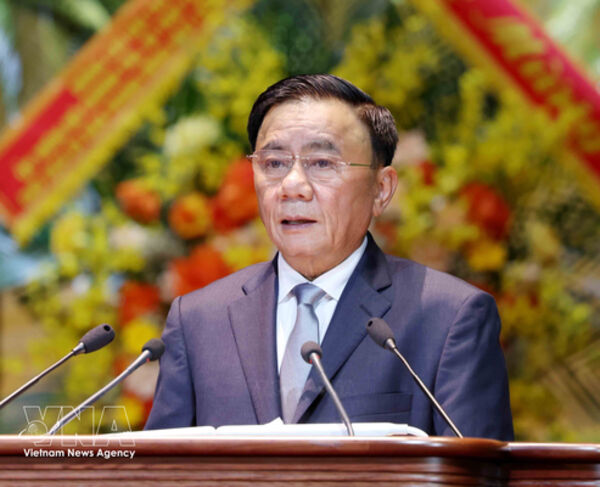
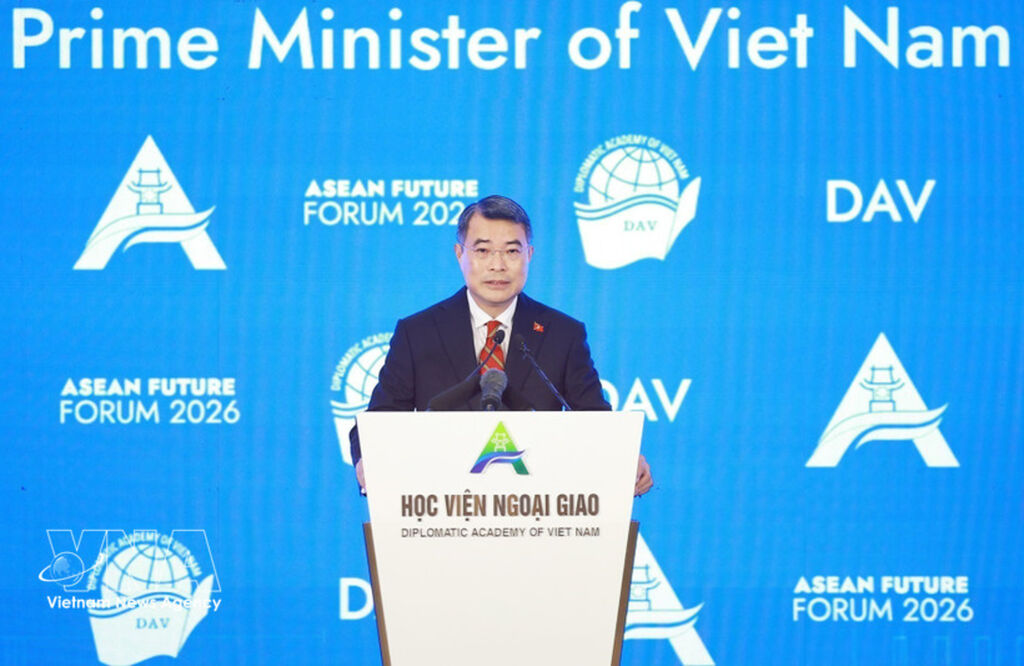
| Vietnamese Prime Minister Le Minh Hung addresses the opening of the ASEAN Future Forum (AFF) 2026 in Hanoi on June 9 (Photo: VNA) |
Hanoi (VNA) – ASEAN must evolve from a participant in global trends into an active force shaping the rules and standards of a rapidly changing world, Prime Minister Le Minh Hung said at the opening of the ASEAN Future Forum (AFF) 2026 in Hanoi on June 9.
Held under the theme “Shaping Our Future Together: Peace, Prosperity and People-Centred,” the forum brings together more than 600 delegates, including senior leaders, ministers, representatives of ASEAN member states and dialogue partners, international organisations, research institutes, businesses and localities.
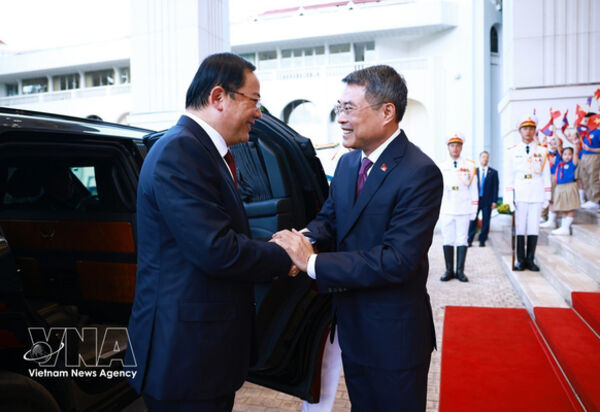
Among those attending the opening session are Lao Prime Minister Sonexay Siphandone, Cambodian Prime Minister Hun Manet, Thai Prime Minister Anutin Charnvirakul, Timor-Leste Prime Minister Kay Rala Xanana Gusmão, and ASEAN Secretary-General Kao Kim Hourn.
Launched by Vietnam at the 2023 ASEAN Summit, the AFF has emerged as an important platform for strategic dialogue. Ideas and recommendations generated during its 2024 and 2025 editions have been reflected in ASEAN Summit documents, demonstrating the forum’s growing contribution to ASEAN’s official processes and future development agenda.
This year’s event takes place as ASEAN begins implementing the ASEAN Community Vision 2045 and marks Vietnam’s first major high-level multilateral event following the success of the 14th National Party Congress and the election of deputies to the 16th National Assembly and People’s Councils at all levels.
In his keynote address, PM Hung said ASEAN is at a pivotal moment in its development as the foundations of the global economy, technology and power structures are being reshaped.
He noted that ASEAN’s greatest achievement over nearly six decades lies not only in its population of almost 700 million people or its position as one of the world’s most dynamic growth centres, but also in its ability to overcome differences, build trust and foster cooperation to create a resilient and united community while preserving diversity.
According to the Vietnamese leader, if the past six decades were devoted to building ASEAN’s identity, the coming decades will be about shaping ASEAN’s future amid profound global transformation. Technology is redefining competitiveness, artificial intelligence is transforming productivity, data is reshaping power, and green transition is creating new development models.
In such an environment, advantages will belong not only to countries with abundant resources but also to those capable of helping establish new rules and standards of the era, he said. Vietnam believes ASEAN must become an active contributor to that process rather than simply adapting to global trends.
To realise this ambition, ASEAN should continue upholding the values that have underpinned its success - solidarity, resilience and unity in diversity, while embracing greater innovation in both thinking and action. The bloc should remain firm in its principles while becoming more agile in its responses to emerging challenges and opportunities.
As ASEAN implements its Community Vision 2045, PM Hung proposed three strategic directions for the bloc.
First, ASEAN should not only participate in global trends but also help shape them. In an increasingly fragmented and competitive world, the grouping needs a stronger voice in building new norms, rules and cooperative frameworks while resolving differences in accordance with international law. ASEAN should serve as a centre for dialogue, a hub for cooperation and an anchor of trust, thereby contributing to peace, stability and development in the region and beyond.
Second, ASEAN must move beyond its role as a manufacturing hub and become a centre of innovation. While its workforce and strategic location have made it a key link in global supply chains, the future belongs to economies that create, innovate and lead technological development.
ASEAN should strive to become a place where technology is developed, not merely consumed, and where value chains are created rather than simply passed through. This requires stronger investment in science and technology, innovation, digital transformation and high-quality human resources, as well as efforts to build a distinctive ASEAN digital and technology ecosystem that contributes to global standards-setting.
Third, ASEAN must become not only a community of nations but a genuine community of people. PM Hung stressed that the ultimate objective of development is improving people’s quality of life rather than achieving growth figures alone.
Innovation that widens inequality cannot be regarded as progress, while growth that is not inclusive cannot be sustainable, he said. ASEAN’s success should therefore be measured not only by GDP but also by opportunities for young people, the role of women, protection of vulnerable groups and the extent to which citizens feel they are part of the ASEAN community.
PM Hung underscored that ASEAN’s greatest contribution over the past six decades has been demonstrating that differences do not have to lead to division, unity does not diminish diversity, and integration does not erase identity.
In the decades ahead, he said, ASEAN must continue proving that a united and resilient community can play an active role in shaping peace, cooperation and development at both regional and global levels.
Reaffirming that Vietnam’s future is closely linked to ASEAN’s future, the PM pledged that Vietnam will continue working alongside fellow member states with a future-shaping aspiration, helping build a peaceful, stable and prosperous region./.