 |
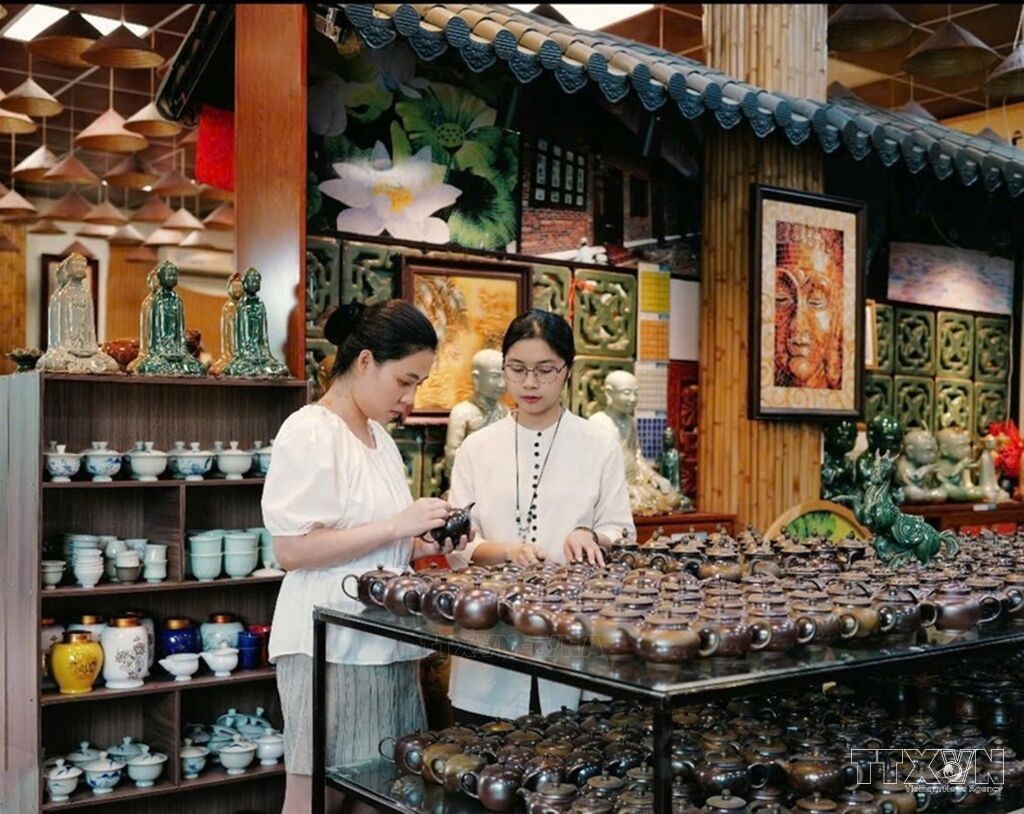
| The product display area at Bat Trang pottery village in Hanoi attracts visitors. (Photo: qdnd.vn) |
Hanoi (VNA) - Amid increasingly modern production methods, artisans in Bat Trang pottery village in Hanoi still carefully shape clay, draw patterns, and apply glaze by hand before firing their products.
The combination of modern machinery and traditional craftsmanship reflects the craft village’s efforts to preserve values handed down through generations while embracing technological advances.
Technology has transformed many stages of pottery production. Traditional coal-fired kilns, which relied heavily on experience, are being replaced by gas and electric kilns equipped with automated temperature-control systems. This helps reduce defective products, save fuel, and limit emissions.
Technology is also used in clay processing, material grinding, glaze filtering, moulding and drying. Many workshops have invested in laboratories and applied artificial intelligence (AI) and automated control systems to monitor firing temperatures and kiln timing.
Digital tools are also being utilised for product design, material management and order tracking, while websites, social media and e-commerce platforms have helped local producers reach wider markets.
Vu Dinh Manh, Chairman of the Board of Directors of Bat Trang Ceramic Space JSC, said science and technology help businesses improve productivity, stabilise quality, reduce costs and handle large orders. However, for handicrafts, machinery remains a supporting tool, while the experience, skills and creativity of artisans determine the value of each product.
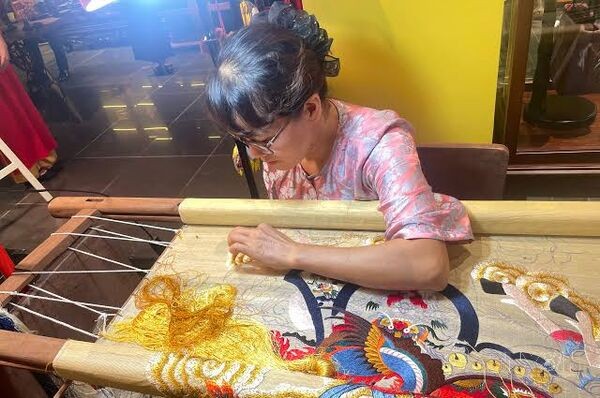
Technology cannot fully replace artisans in such processes as shaping, engraving, painting and glaze blending, which require experience, precision and artistic sensibility. Many Bat Trang producers therefore combine modern equipment with manual craftsmanship, allowing machinery to handle repetitive or labour-intensive stages while artisans focus on creative work.
For visitors, Bat Trang is not merely a place to buy ceramics. Many come to experience pottery making, painting, and the cultural heritage of the craft village. This means the value of Bat Trang ceramics lies not only in their practical use but also in the cultural stories embedded in each piece.
The village’s transformation reflects the spirit of the Politburo’s Resolution No. 57-NQ/TW on breakthroughs in science and technology development, innovation and national digital transformation, with people remaining at the centre of development.
For the coming period, experts say Bat Trang needs to pursue both modernisation and preservation. Automation is essential for mass-produced goods, while traditional techniques should be maintained for artistic and one-of-a-kind products.
With cleaner technologies, greater digital access, and training for younger artisans, Bat Trang can harness technology to improve competitiveness and, at the same time, preserve the distinctive spirit of its centuries-old pottery heritage./.