 |
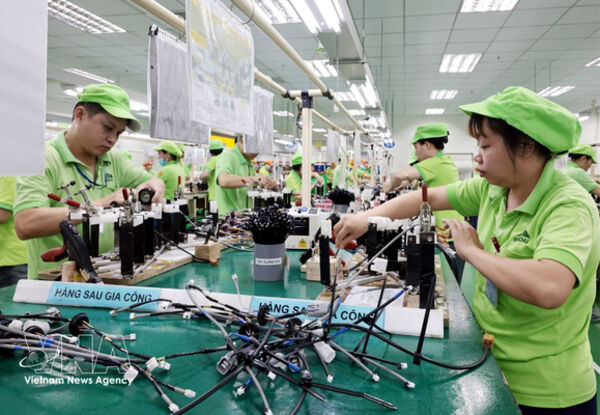
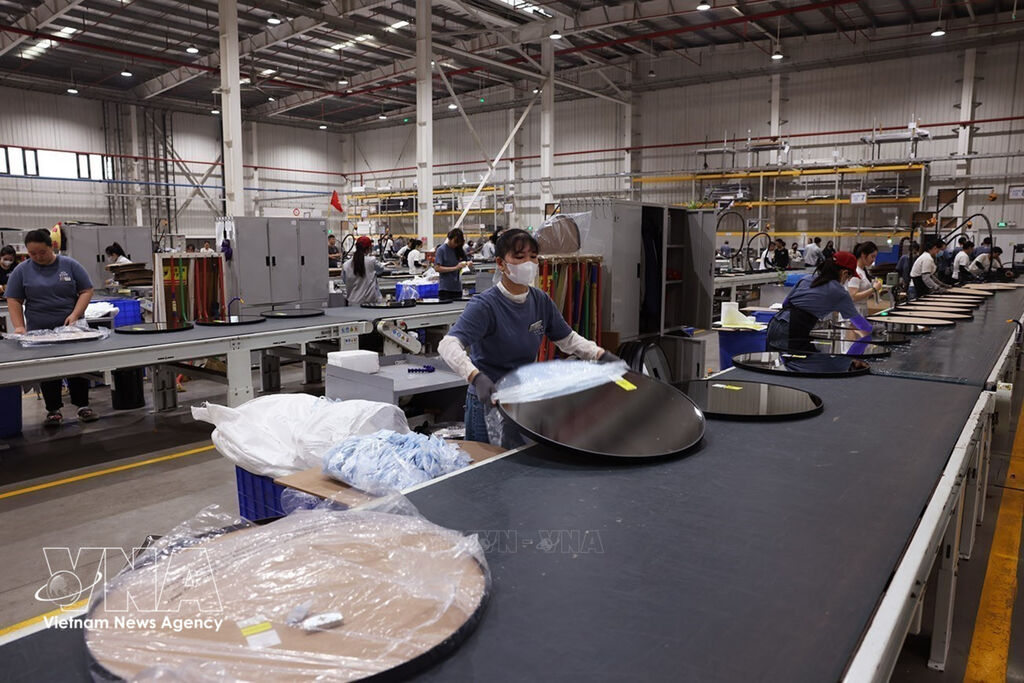
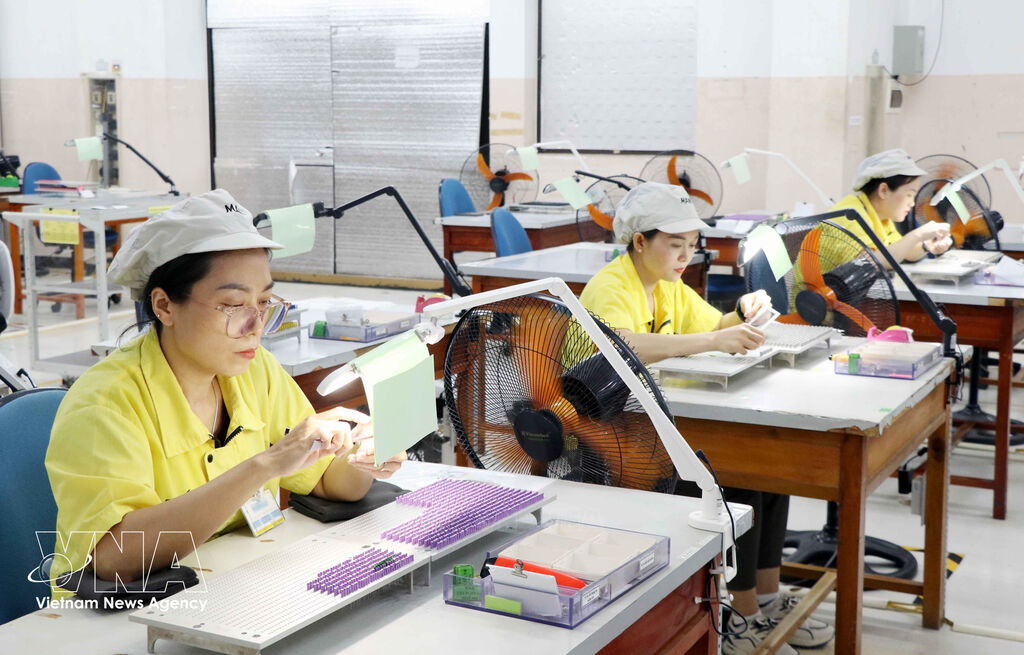
| Workers manufacture export-bound picture frames at the factory of INTCO Vietnam Industry Co., Ltd., a wholly Singapore-owned enterprise, in the Bim Son Industrial Park, Thanh Hoa province. (Photo: VNA) |
Hanoi (VNA) – Nearly 40 years after opening its economy to tap international resources for national development, Vietnam is shifting its focus from simply attracting more foreign investment to using it more effectively to strengthen domestic capacity, enhance competitiveness and bolster economic self-reliance, the central message of the Politburo’s Resolution No. 10-NQ/TW.
The adoption of the Foreign Investment Law in 1987 ushered in a new development vision for Vietnam. Moving away from a largely closed economy, the country embraced integration into the world as part of the Doi Moi (Renewal) process. The immediate priorities were to break the blockade and embargo, and attract capital, technology and management expertise to gradually revive the economy and put it on a path toward dynamic growth.
The past four decades have validated that decision. Vietnam has transformed from a capital-starved economy dependent on external assistance into one of the world’s most open economies, deeply connected to regional and global markets. Foreign trade turnover now exceeds 180% of GDP, and the foreign-invested sector contributes around 75% of the total. Tens of thousands of investment projects have fuelled growth, accelerated industrialisation, generated employment, expanded export markets, and brought in advanced technology and modern management practices.
At the same time, those achievements have highlighted a new challenge: how to turn external resources into stronger domestic capacity, greater technological capability, improved competitiveness and a more self-reliant economy.
This shift reflects not only demands in reality but also an evolution in Vietnam’s development thinking. As national objectives change, development policies must change with them.
With that in mind, the Politburo issued Resolution No. 10-NQ/TW on developing the foreign-invested economic sector. Instead of concentrating mainly on attracting foreign capital, the resolution emphasises building a foreign-invested sector that is closely integrated with the domestic sector to create new growth drivers for the country.
 |
| MANI Hanoi Co., Ltd., located in the Vang residential area of Van Xuan ward, Thai Nguyen province, is a wholly foreign-owned enterprise. (Photo: VNA) |
While foreign investment was once regarded primarily as a supplementary source of capital, the foreign-invested sector is now recognised as an organic component of the Vietnamese economy, developing alongside the state, private and cooperative sectors in support of national development. This marks not only a broader policy framework but also a fundamental change in how the FDI sector is viewed in the country’s new stage of development.
That thinking is embodied in six major shifts set out in Resolution No. 10-NQ/TW: from attracting foreign investment to developing the foreign-invested sector; from prioritising capital volume to prioritising quality, efficiency and value added; from input-based incentives to performance-based incentives; from developing isolated FDI projects to forming a comprehensive ecosystem for international capital flows; from managing investment to creating a favourable environment for investment and development; and from competition in investment attraction among localities to nationally coordinated development.
Together, these six shifts pursue a single goal: transforming the foreign-invested sector into a force that strengthens national capacity and competitiveness rather than merely adding more capital to the economy.
The resolution sets targets for 2030 and a vision for 2045, placing less emphasis on the sheer scale of FDI inflows.
Vietnam aims to attract 200–300 billion USD in registered FDI by 2030, including 150–200 billion USD in disbursed capital. More significantly, 75% of newly registered capital is expected to come from developed economies with strengths in advanced technology and modern governance. Localisation rates in key industries are targeted at 45–50% while around 10,000 Vietnamese firms are expected to join the supply chains of foreign-invested enterprises. The country also aims to upgrade its stock market to emerging-market status before 2030.
These targets indicate that success will no longer be measured simply by the number of projects or the amount of capital attracted. Instead, it will be assessed by the extent of technology transfer, the rise of Vietnamese businesses within global value chains, and the share of value added retained in the domestic economy.
Experience has shown that chasing project numbers alone can trigger competition based on incentives, land and low costs while placing pressure on the environment. Domestic firms have often remained outside higher-value segments, technology transfer has been limited, and localisation rates have stayed below the level needed for sustainable development.
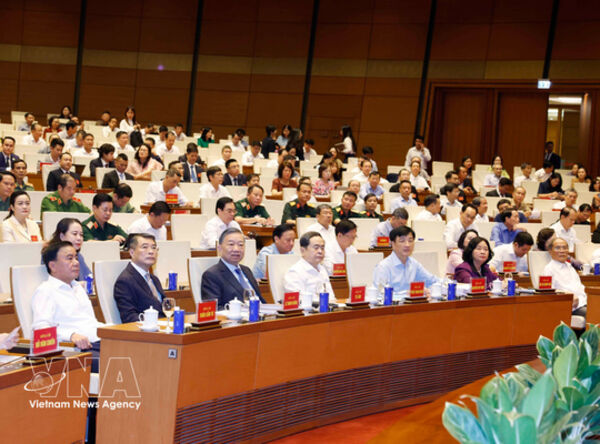
That is why Party General Secretary and State President To Lam emphasised that the spirit of Resolution No. 10-NQ/TW is clear: foreign investment is intended not to replace domestic strength, but to reinforce it and enhance self-reliance; not merely to deliver fast growth, but to achieve sustainable, inclusive and high-quality development.
As Vietnam enters a new stage of development with a renewed mindset, it is determined not to pursue investment at all costs. Instead, the country will proactively select and work closely with high-quality investors that are committed to long-term operations, comply with the law, respect the legitimate interests of workers, communities and the nation, share technology, develop human resources, support Vietnamese enterprises and help elevate Vietnam’s position in global value chains./.